
—Barrington Williams, B1Daily
The long-running battle over who gets to be called an American just found fresh oxygen in Washington. Rand Paul has introduced a constitutional amendment aimed at ending birthright citizenship, reopening one of the most explosive debates tied to immigration, identity, and the Constitution itself.
According to reports, the proposal seeks to fundamentally alter how the 14th Amendment is interpreted, specifically its Citizenship Clause, which has long guaranteed that nearly anyone born on U.S. soil is automatically a citizen.
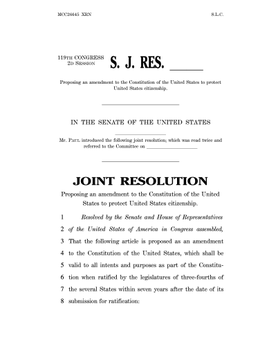
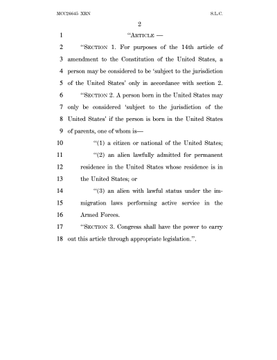
Paul’s argument, echoed by others in his political lane, is that the current interpretation is too broad and was never intended to apply to children born to non-citizens or those in the country unlawfully. By introducing a constitutional amendment rather than a standard bill, he is acknowledging a hard truth: changing birthright citizenship isn’t something Congress can tweak casually, it requires rewriting the Constitution itself.
That’s no small feat. Constitutional amendments demand overwhelming support, two-thirds of Congress and ratification by three-fourths of the states, a political mountain that few proposals ever climb. Even early reactions suggest the measure faces steep odds, with analysts noting it is unlikely to pass in its current form.
Still, the timing isn’t random. The proposal lands as the Supreme Court of the United States weighs high-stakes legal challenges surrounding birthright citizenship, including efforts to reinterpret who is “subject to the jurisdiction” of the United States. The courtroom and the legislature are now running parallel tracks on the same constitutional question.
At its core, this fight is about interpretation versus tradition. For over a century, the U.S. has operated under a jus soli framework, the idea that citizenship is determined by birthplace rather than bloodline. That principle was cemented after the Civil War to ensure formerly enslaved people and their descendants would be recognized as full citizens, not permanently excluded from the nation’s legal fabric.
Critics of Paul’s proposal warn that altering that framework could create a fragmented system where citizenship depends on parental status, potentially leaving some children born in the United States without clear legal standing. Supporters, meanwhile, argue it would close what they see as loopholes in immigration law and restore what they believe to be the original intent of the amendment.
What makes this moment volatile is not just the policy itself, but what it represents. Birthright citizenship has long been one of the clearest, simplest rules in American law: if you’re born here, you belong here. Paul’s amendment challenges that simplicity, replacing it with a more conditional vision of national identity.
Whether the amendment goes anywhere legislatively is almost secondary. The real impact is already unfolding in the national conversation. The question is no longer buried in law textbooks or court precedent. It’s front and center, political, emotional, and deeply tied to how the country defines itself.
And once that kind of question is opened, it doesn’t close easily.
—Barrington Williams, B1Daily





Leave a comment