—Barrington Williams, B1Daily
The U.S. Supreme Court is sending a message that’s hard to misread: the judicial winds are blowing in favor of expanding executive power, and immigrants may be the ones caught in the storm.
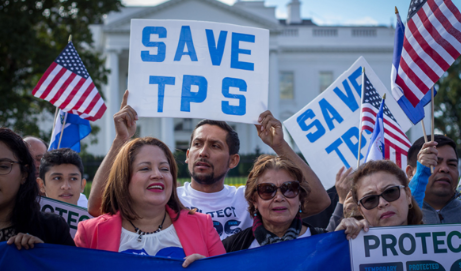
During recent arguments, the Court’s conservative majority signaled it is likely to side with President Donald Trump’s effort to end Temporary Protected Status (TPS) for hundreds of thousands of Haitian and Syrian migrants.
TPS, a humanitarian program created in 1990, allows people from countries ravaged by war or disaster to live and work in the United States temporarily. Haitians were granted protection after the 2010 earthquake, while Syrians received it amid an ongoing civil war.
Now, the central question before the Court isn’t just about immigration, it’s about power. Trump’s legal team argues that decisions to grant or end TPS fall squarely within the executive branch’s authority and should be largely shielded from judicial review. Several conservative justices appeared receptive to that argument, suggesting courts may not even have the right to second-guess such decisions.
If that logic holds, the implications stretch far beyond Haiti and Syria. It could effectively close the courthouse doors to future challenges, giving presidents broad, near-unchecked control over the fate of TPS holders, more than 1 million people across multiple countries.
Not everyone on the bench is buying it. Liberal justices raised sharp concerns about whether the policy changes were influenced by racial bias, pointing to past inflammatory remarks about immigrants from certain nations. They also questioned whether the administration followed proper legal procedures when attempting to terminate protections.
Outside the courtroom, the stakes are deeply human. Many TPS recipients have lived in the U.S. for decades, building families, careers, and communities. Ending the program could force them back into countries still grappling with instability, violence, or economic collapse.
Lower courts previously blocked the administration’s efforts, citing procedural failures and concerns over discriminatory intent. But the Supreme Court’s current posture suggests those rulings may not survive the final decision, expected later this year.
This case is shaping up as more than an immigration dispute, it’s a defining test of how far presidential authority can stretch, and whether humanitarian protections can be undone with the stroke of a pen.
If the Court follows through on its signals, TPS may transform from a shield into a switch, one that future administrations can flip on or off at will.
—Barrington Williams, B1Daily





Leave a comment