—Michael Lyles, B1Daily
The internet media empire that once taught corporate America how to “go viral” just got sold for what many analysts are calling a digital clearance-rack price.
BuzzFeed, once valued at roughly $1.7 billion during the peak of the social media publishing boom, is now handing majority control to media mogul Byron Allen in a $120 million deal that many see less as a triumphant acquisition and more as an emergency financial rescue.
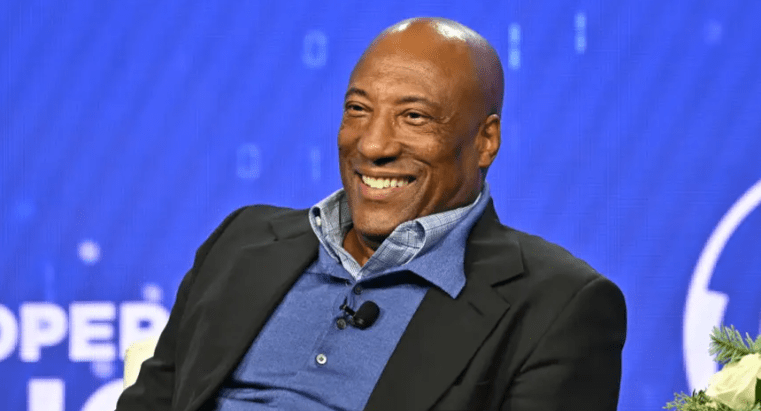
Under the agreement, Allen Family Digital will acquire 40 million shares at $3 per share, giving Byron Allen roughly 52% ownership of the company while also installing him as BuzzFeed’s new CEO and chairman. Founder Jonah Peretti will step aside after two decades leading the company and transition into a newly created role as president of “BuzzFeed AI.”
The numbers themselves tell a brutal story about the state of modern digital media.
BuzzFeed once symbolized the future of internet publishing. The company mastered viral distribution during the Facebook era with quizzes, listicles, memes, celebrity content, and eventually politically influential reporting. For years, investors believed outlets like BuzzFeed, Vice, and Vox would permanently replace legacy media institutions.
Instead, the entire business model imploded.
The core problem was economic dependence on platforms the companies did not control.
BuzzFeed’s rise happened during an era when Facebook aggressively pushed publisher content into user feeds, creating enormous traffic pipelines for digital media companies. BuzzFeed optimized itself around algorithmic virality better than almost anyone. Its internal systems reportedly tracked social engagement obsessively, engineering headlines and content structures specifically for maximum distribution velocity.
But once Facebook, Google, TikTok, and other platforms changed their algorithms and monetization priorities, traffic collapsed across the industry.
The economics stopped working.
Digital publishers had built billion-dollar valuations on rented land. Social media platforms controlled audience access while simultaneously absorbing the advertising revenue publishers depended on to survive. Once ad dollars migrated directly toward Meta, YouTube, TikTok, and influencer ecosystems, traditional viral media outlets found themselves trapped inside shrinking margins and declining relevance.
BuzzFeed became one of the clearest casualties of that collapse.
The company shut down BuzzFeed News in 2023, sold Complex in 2024, explored selling off other properties, and recently warned investors about serious liquidity concerns. Reports indicate the company missed key debt payments and faced growing bankruptcy fears before Allen’s deal emerged as a lifeline.
That context makes Byron Allen’s move especially interesting.
Allen has spent years aggressively attempting to expand his media empire through acquisitions. His company already owns dozens of television stations alongside major assets like The Weather Channel. Previous attempts to acquire larger companies like BET and Paramount Global failed, but BuzzFeed suddenly became available at a deeply distressed valuation.
Economically, Allen appears to be betting that BuzzFeed’s brand recognition and massive audience footprint still possess monetizable value if restructured correctly.
His stated strategy involves pivoting BuzzFeed further toward free-streaming video, audio content, user-generated media, and AI-driven publishing systems.
That strategy reflects a larger industry reality.
Text-driven digital publishing no longer commands the advertising economics it once did. Video monetization, creator ecosystems, livestreaming, and AI-assisted content generation increasingly dominate media investment strategies. Allen is essentially attempting to reposition BuzzFeed away from old internet publishing models and toward creator-platform economics more closely resembling YouTube or TikTok infrastructure.
Whether that works remains unclear.
Skeptics argue BuzzFeed’s brand has already suffered irreversible decline. Younger audiences increasingly consume content through decentralized creators rather than centralized media outlets. The “homepage era” of internet publishing is effectively dead. Viral traffic itself became commodified.
And yet Allen may have purchased BuzzFeed at precisely the kind of distressed valuation where even partial stabilization could produce long-term upside.
The structure of the deal itself also reveals how fragile BuzzFeed’s finances became. Only $20 million will reportedly be paid in cash upfront, while the remaining $100 million comes through a five-year promissory note carrying annual interest.
That is not the structure of a booming acquisition.
That is the structure of a company struggling for oxygen.
The broader implications stretch beyond BuzzFeed alone.
Vice collapsed into bankruptcy. Vox reportedly explored partial sales. Numerous digital publishers downsized, merged, or shut down entirely as platform-driven advertising economics deteriorated. The dream that social media virality would permanently sustain massive digital newsrooms now looks increasingly like one of Silicon Valley’s great economic illusions.
The internet did not eliminate gatekeepers.
It replaced them with algorithms.
And those algorithms eventually decided viral publishers were no longer essential.
BuzzFeed’s sale now stands as one of the clearest symbolic endings to the millennial digital media era, when investors believed clicks, shares, and viral traffic alone could sustain billion-dollar journalism and entertainment companies forever.
Turns out the internet’s attention economy was never stable enough to support the empire it created.
—Michael Lyles, B1Daily





Leave a comment