—Vanessa Edwards, B1Daily
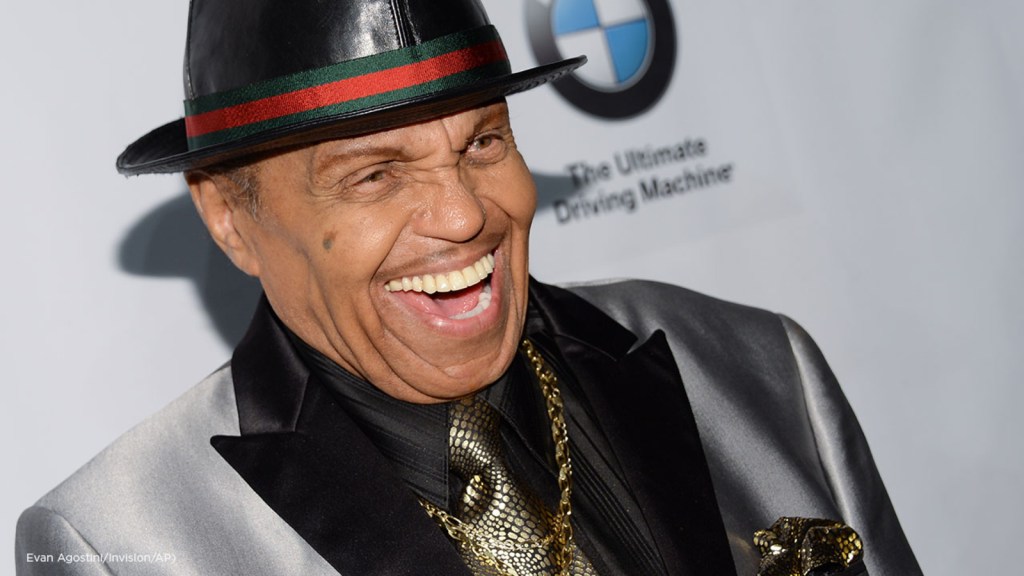
For decades, Joe Jackson has been flattened into a cartoon villain by mainstream media, reduced to a leather belt, a stern glare, and a handful of sensational headlines. In documentaries, biopics, late-night jokes, and tabloid retrospectives, he is often portrayed less like a father from working-class Black America and more like a musical tyrant who single-handedly traumatized his children into greatness. But the full story has always been more complicated than the media’s favorite narrative machine allowed.
The same children who became global superstars repeatedly expressed love, admiration, and gratitude toward their father despite acknowledging his strict discipline. Michael Jackson himself spoke about fear and pressure under Joe’s parenting, but he also credited his father’s relentless work ethic for shaping the precision and professionalism that made the Jackson family legendary. Janet Jackson similarly defended her father at various points throughout her career, describing him as misunderstood and emphasizing that the family’s success did not emerge from thin air.
That nuance rarely survives in mainstream coverage because America prefers simple morality plays over complicated realities, especially when Black fathers are involved. Joe Jackson became an easy cultural scapegoat: the “angry Black father” archetype wrapped neatly into entertainment history. The media had little interest in examining the brutal economic conditions that shaped his worldview or the environment Black families faced in mid-20th century America.
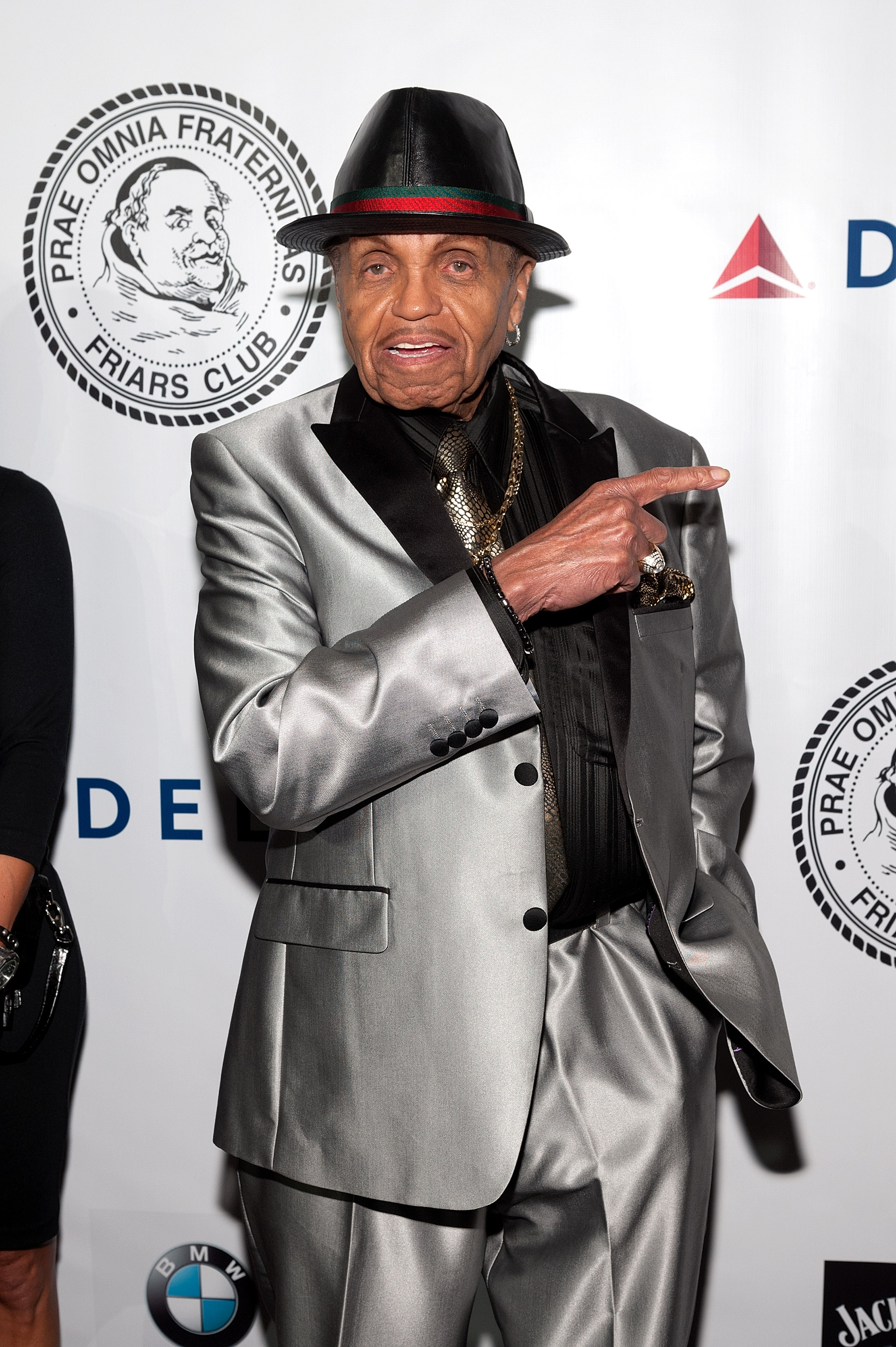
Joe was born into segregation-era poverty in Arkansas before relocating to industrial Indiana, where survival often depended on discipline, toughness, and sacrifice. Gary, Indiana was not Beverly Hills with smoother lighting and Spotify playlists floating through the air. It was a hard steel town where opportunities for Black families were scarce and dreams often died before adulthood. Joe saw music as a ladder out of economic despair, and he pushed his children with an intensity forged in that reality.
Critics focus heavily on his strict methods, and some criticisms are certainly valid. Several Jackson siblings openly discussed harsh punishments and emotionally difficult childhood experiences. But what gets conveniently erased is the result: one of the most successful entertainment dynasties in world history. The The Jackson 5 did not merely become famous. They transformed global pop culture. Michael became arguably the biggest entertainer the world has ever seen. Janet shattered records of her own. The Jackson family name became a permanent pillar in music history, stretching across generations like a neon constellation.
That outcome does not erase pain, but it complicates the simplistic “monster father” framing pushed for decades. Millions of immigrant, working-class, and minority families around the world recognize versions of Joe Jackson’s mentality: parents who sacrificed softness in pursuit of survival and opportunity. America celebrates ruthless coaches, militaristic CEOs, and hyper-demanding tech founders as “visionaries,” yet Black fathers who push their children toward excellence are often discussed with uniquely harsh moral scrutiny.
There is also a racial component embedded in how Joe Jackson’s story has been marketed. Hollywood has repeatedly profited from portraying Black fathers as emotionally cold, abusive, or dysfunctional while rarely applying the same cultural obsession to white patriarchs in entertainment dynasties. The public can acknowledge the intense parenting styles behind elite athletes, classical musicians, or Silicon Valley prodigies, but Joe Jackson became a near-mythological symbol of cruelty in ways that often overshadowed his accomplishments as a strategist and builder.
Without Joe Jackson, there is no Jackson empire. There is no Motown phenomenon exploding into suburban America’s living rooms. There is no Thriller era reshaping global music videos. There is no blueprint for the modern pop superstar machine. Joe organized rehearsals, negotiated opportunities, sharpened discipline, and transformed raw talent into generational wealth at a scale almost unimaginable for a Black family emerging from Gary in the 1960s.
The conversation surrounding Joe Jackson should not require pretending every parenting decision was flawless. Human beings are rarely that simple. But reducing him to a one-dimensional abuser ignores the complexity of Black family survival, ambition, and excellence under American racial capitalism. It also ignores the fact that many of his own children, despite acknowledging painful moments, never fully embraced the caricature the media desperately wanted them to confirm.
Joe Jackson became a cultural punching bag because America loves consuming Black greatness while demonizing the difficult machinery behind its creation. The same society that profits endlessly from the Jackson legacy still struggles to reckon honestly with the man who helped build it.
—Vanessa Edwards, B1Daily




Leave a comment