—Jaheim Rockwell
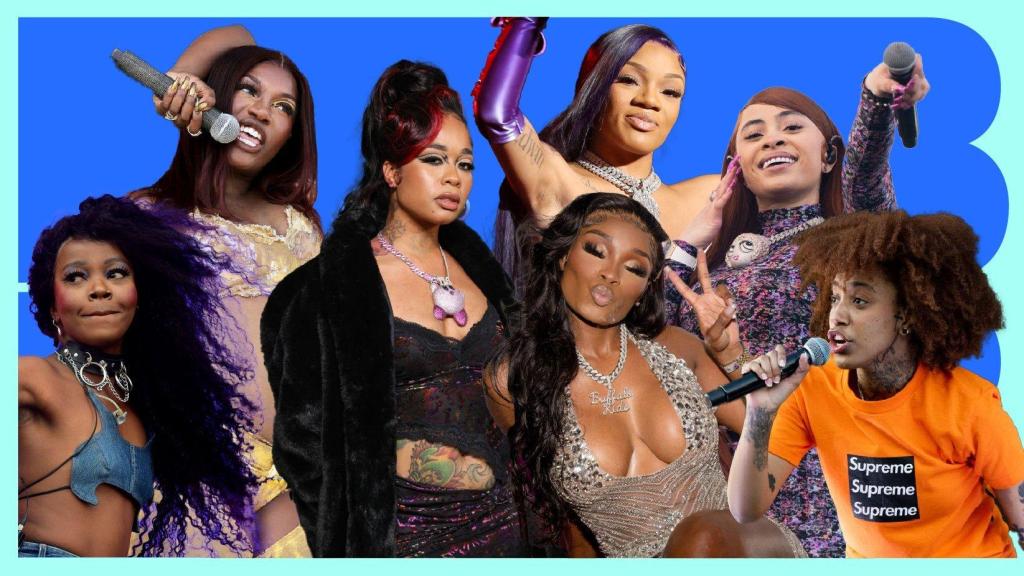
There’s a convo bubbling up in the culture right now, and it ain’t coming in quiet. Folks been sayin female rap done lost some of its edge, like the pen game ain’t hittin the same and the artistry got swallowed up by the algorithm.
Now let’s be real, female rap used to shake tables. It used to feel unpredictable, raw, sharp like glass in a velvet glove. But nowadays, a lot of listeners feel like the soundscape done flattened out. Same subject matter, same flex patterns, same beats cycling through like a factory preset. And a growing crowd is sayin the bar done been lowered so far it’s scraping the floor.
One of the loudest critiques is the repetition. Sex, money, body image, luxury branding. All of it got a place in rap, always did. But critics argue it’s become the whole stage instead of a verse in the story. When every track start sounding like a mirror reflection of the last one, the hunger for originality starts fading out the room.
And it ain’t just about lyrics neither. There’s a shift in priorities folks keep pointing to. Instead of chasing classic album moments or bodies of work that age like wine, the game allegedly feels more tilted toward viral moments, brand partnerships, and endorsement deals. The music, in that view, becomes less of a destination and more of a billboard you rap on top of.
But that’s where the conversation gets messy. Because the industry itself changed the rules. Streaming rewards singles over albums. Attention spans move like lightning. And female artists, like everybody else, are navigating a system that often pays more for visibility than depth. So what looks like “decline” to some might actually be adaptation to a different battlefield.
Still, the critics ain’t letting up. They say rap was built on storytelling, personality, and competition at the pen level. And when that pen feels outsourced to trends, the genre loses its bite. The fear ain’t just repetition, it’s replacement of craft with branding—where persona outshines performance.
On the flip side, supporters argue female rap is more visible and profitable than ever, and that expansion comes with diversity of style, not limitation. What some call “overexposure,” others call access. What some call “empty bars,” others call evolution of sound and audience.
So where does that leave things? Somewhere in the middle of a loud, unfinished sentence. Female rap ain’t dead, but it is under a microscope right now, and every release feels like it’s being graded against an invisible gold standard from another era.
The truth is, culture don’t stand still. It stretches, snaps, reinvents, and sometimes disappoints before it surprises again. Whether the genre is in decline or just in transition depends on who you ask—and what you’re listening for when the beat drops.
—Jaheim Rockwell



Leave a comment