—Barrington Williams, B1Daily
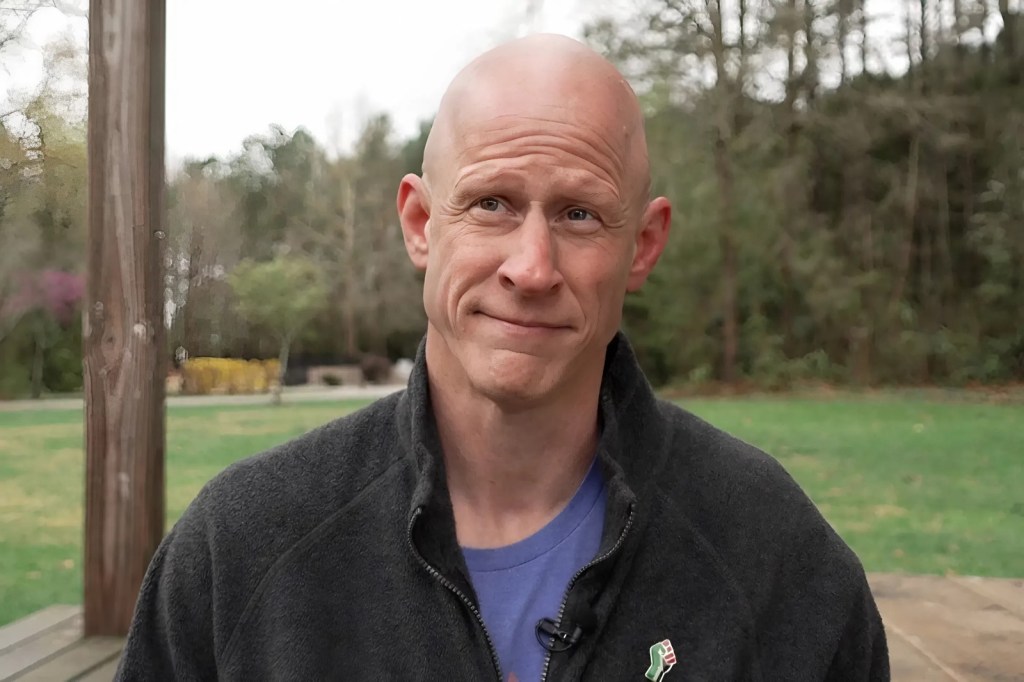
In a North Carolina Senate race already flooded with establishment money, party consultants, and nationalized messaging, Brian McGinnis has emerged like a flare shot into the middle of the campaign map.
The former Marine, firefighter, wrestling competitor, and Green Party Senate candidate is not running the kind of race that Democratic or Republican strategists know how to process. He is running an insurgent anti-war campaign fueled less by donor infrastructure than by raw political combustion. And after a violent confrontation inside the U.S. Capitol turned him into a viral national figure, Washington is beginning to realize he may become impossible to ignore.
Brian McGinnis campaign website
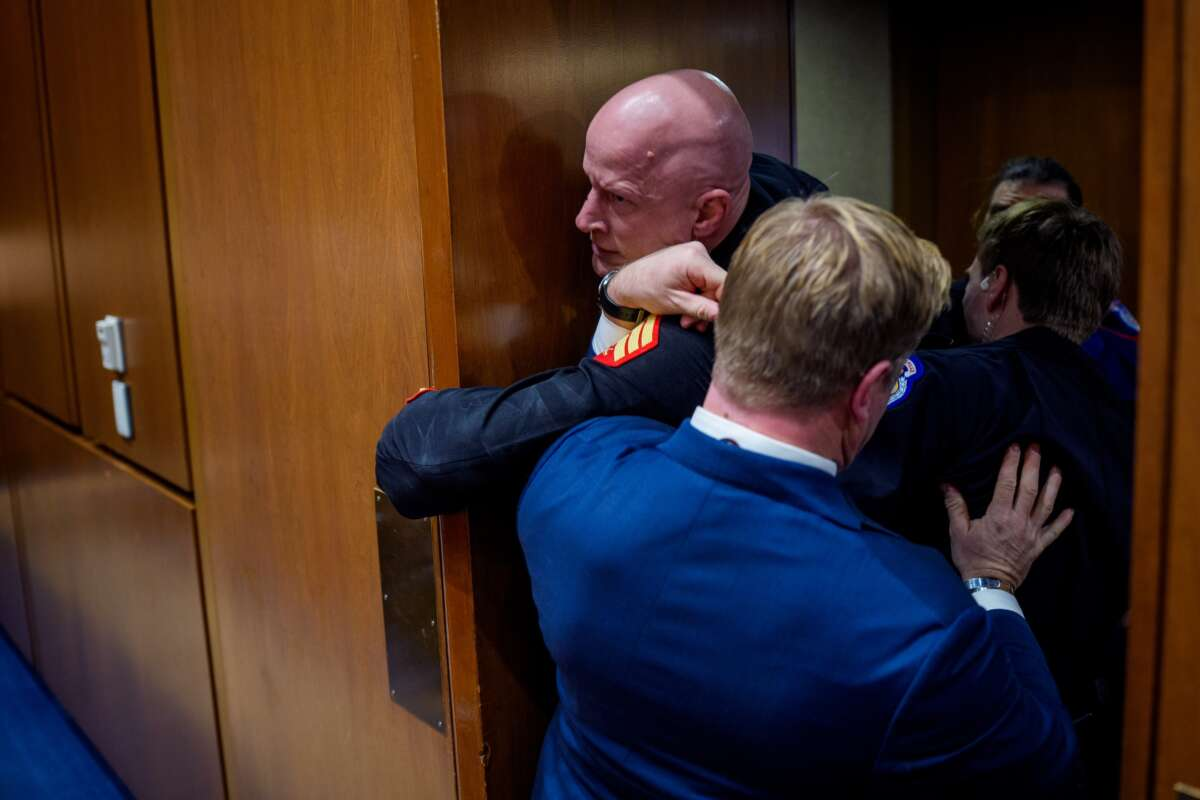
McGinnis entered the national spotlight in March after interrupting a Senate Armed Services hearing to protest escalating U.S. military involvement in Iran. Videos captured the Marine veteran shouting anti-war slogans before Capitol Police and Senator Tim Sheehy physically removed him from the hearing room. During the struggle, McGinnis suffered a broken arm. The footage ricocheted across social media within hours.
To supporters, the moment transformed McGinnis from fringe third-party candidate into something much more volatile: a living symbol of anti-war dissent colliding headfirst with the machinery of the modern national security state.
To critics, he became something else entirely: a potential spoiler candidate threatening to siphon votes in one of the most consequential Senate races of 2026.
That tension now hangs over North Carolina politics like electrical static before a thunderstorm.
McGinnis is running as the Green Party candidate for the U.S. Senate seat currently occupied by retiring Republican Senator Thom Tillis. The race is already viewed as one of the country’s major battleground contests, with Democrats rallying around former Governor Roy Cooper while Republicans scramble through an increasingly combative primary environment.
But McGinnis is attempting something neither party fully anticipated: building a coalition around anti-war politics at a moment when both Democrats and Republicans remain deeply entangled with America’s military posture abroad.
That message has become central to his political identity.
A Marine who served during the Iraq War, McGinnis now frames himself as part of a growing bloc of veterans disillusioned with perpetual military intervention. His campaign rhetoric blends anti-war populism, working-class frustration, and sharp criticism of what he calls bipartisan loyalty to military escalation overseas.
The imagery surrounding his candidacy is unusually cinematic even by modern political standards. A former Marine in uniform dragged from a Senate hearing while shouting opposition to another Middle Eastern conflict is the kind of visual that slices straight through algorithmic politics. It does not require explanation. It arrives fully weaponized for the social media era.
And unlike many third-party candidates, McGinnis already possesses something consultants obsess over: authenticity that cannot easily be focus-grouped into existence.
That authenticity is precisely what worries operatives in both major parties.
Democrats fear Green Party candidacies could peel away younger anti-war voters frustrated with establishment foreign policy positions. Republicans, meanwhile, face the uncomfortable reality that McGinnis’s veteran profile and populist rhetoric could resonate with libertarian-minded conservatives exhausted by interventionist politics.
His campaign exists in the political space neither party comfortably occupies anymore: skeptical of war, distrustful of corporate influence, openly hostile toward bipartisan military consensus, and culturally combustible enough to attract voters alienated from institutional politics entirely.
Washington usually treats third-party campaigns like decorative weeds growing at the edge of the electoral sidewalk. But every few election cycles, one candidate emerges capable of disrupting the atmosphere even without winning outright.
McGinnis increasingly looks like that kind of candidate.
The irony is hard to miss. A political system built on endless invocations of “supporting the troops” now finds itself confronted by a combat veteran publicly arguing that America’s political class has learned nothing from twenty years of war.
And unlike polished Senate candidates wrapped in donor-tested messaging, Brian McGinnis speaks with the unpredictable energy of somebody who no longer seems particularly interested in institutional permission.
That makes him dangerous politically.
Not necessarily because he can win, but because he represents a type of political anger both parties struggle to contain once it escapes containment lines.
In a Senate race already shaping into one of 2026’s national proxy wars, Brian McGinnis is attempting to build an entirely different argument altogether: that America’s exhausted middle and working classes are being asked yet again to finance, fight, and emotionally absorb another cycle of endless geopolitical conflict while the political establishment treats dissent itself like a security threat.
Whether voters embrace that message remains unclear.
But Washington has started paying attention.
Usually, that means the ground is already moving beneath their feet.
—Barrington Williams, B1Daily




Leave a comment