—Barrington Williams, B1Daily
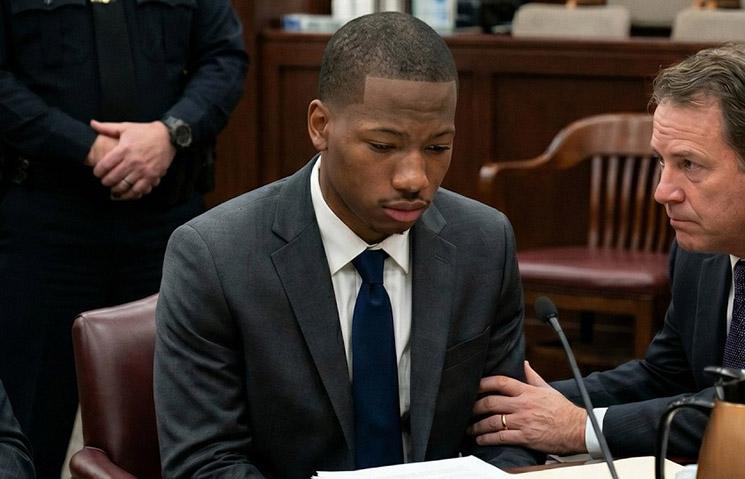
Karmelo Anthony has suffered a major setback in his attempt to overturn his murder conviction, but the courtroom battle is moving into a new and potentially more consequential phase: the Texas appellate courts.
On August 22, retired District Judge Michael Chitty denied Anthony’s motion for a new trial. Anthony was convicted in June of murdering 17-year-old Austin Metcalf during their confrontation at a Frisco track meet in April 2025 and was sentenced to 35 years in prison. Anthony maintained that he acted in self-defense.
Chitty’s order was brief. He said that after reviewing the motion, record, evidence, arguments, briefs and applicable law, the court determined that Anthony was not entitled to another trial.
The decision comes only days after Anthony’s defense scored a significant victory by successfully seeking the recusal of Judge John Roach Jr., who presided over the original trial. Another judge concluded that Roach’s post-verdict public comments could cause a reasonable observer to question his impartiality, although the recusal ruling did not establish that Roach was actually biased.
The Defense’s “Gentleman’s Agreement” Argument Falls Short
A central issue raised by Anthony’s new defense team involved an alleged informal agreement between prosecutors and the original defense attorneys.
According to Anthony’s lawyers, the sides had agreed to keep potentially damaging character evidence involving both teenagers away from the jury and concentrate primarily on what happened during the fatal confrontation.
The new defense argued that a dispute surrounding that arrangement affected trial strategy and Anthony’s decision not to testify in his own defense. Prosecutors disputed the defense’s characterization of the agreement and maintained that Anthony received a fair trial.
Chitty ultimately wasn’t persuaded that those circumstances justified throwing out the conviction.
But that doesn’t necessarily mean the arguments disappear.
What Comes Next: The Fifth Court of Appeals
Anthony’s defense now has a clearer road ahead: direct appeal.
His attorneys have indicated that they intend to continue challenging the conviction in the Fifth Court of Appeals in Dallas.
That changes the battlefield considerably.
Instead of asking a trial judge to grant another trial, Anthony’s appellate attorneys can ask a panel of appellate judges to examine the trial record for reversible legal or constitutional errors.
Potential appellate arguments could include issues already raised by the defense, such as courtroom-access restrictions, rulings affecting Anthony’s ability to present his defense, disputes surrounding the alleged informal evidentiary agreement, and whether any combination of trial errors deprived Anthony of his constitutional right to a fair trial. Exactly which claims his attorneys ultimately pursue will depend on their appellate filings.
The distinction is important. An appellate court generally isn’t conducting the murder trial again or deciding from scratch whether it believes Anthony acted in self-defense. Instead, it examines whether the proceedings that produced the conviction complied with the law and whether any preserved errors were serious enough to affect the outcome.
The Recusal Could Still Matter
Judge Roach’s removal doesn’t automatically invalidate anything he did during Anthony’s trial.
But his recusal gives Anthony’s appellate lawyers another piece of an increasingly complicated procedural history.
The defense can scrutinize Roach’s rulings individually and argue that particular decisions constituted reversible error. His later recusal may provide context for their criticism, but the appellate court will still need a legitimate legal basis for disturbing the conviction.
That is a much higher hurdle than simply demonstrating controversy surrounding the original judge.
Anthony Still Has Legal Ammunition
Saturday’s ruling was unquestionably a defeat for Anthony.
His conviction remains intact.
His 35-year sentence remains intact.
And he will not receive the immediate retrial his attorneys wanted.
But describing the case as finished would be premature.
The next fight moves away from the trial courtroom and into appellate review, where Anthony’s attorneys can attack the legal foundation beneath the conviction rather than simply asking another trial judge to reconsider it.
If the Fifth Court of Appeals ultimately rejects those arguments, additional avenues of appellate or post-conviction review may potentially follow, depending upon the claims and procedural posture of the case.
For Anthony’s defense, the strategy now becomes less about persuading another jury and more about convincing appellate judges that something legally significant went wrong before the first jury ever delivered its verdict.
The door to a new trial has been slammed shut for now.
The defense’s next task is convincing a higher court that the door should never have been locked in the first place.
—Barrington Williams, B1Daily



Leave a comment