—Kerry Hill, B1Daily
Imagine paying your electric bill every month, only to discover that when the electrical system suffers its greatest test, your family could spend nearly two weeks in the dark.
That is the reality confronting thousands of people in Gary, Indiana.
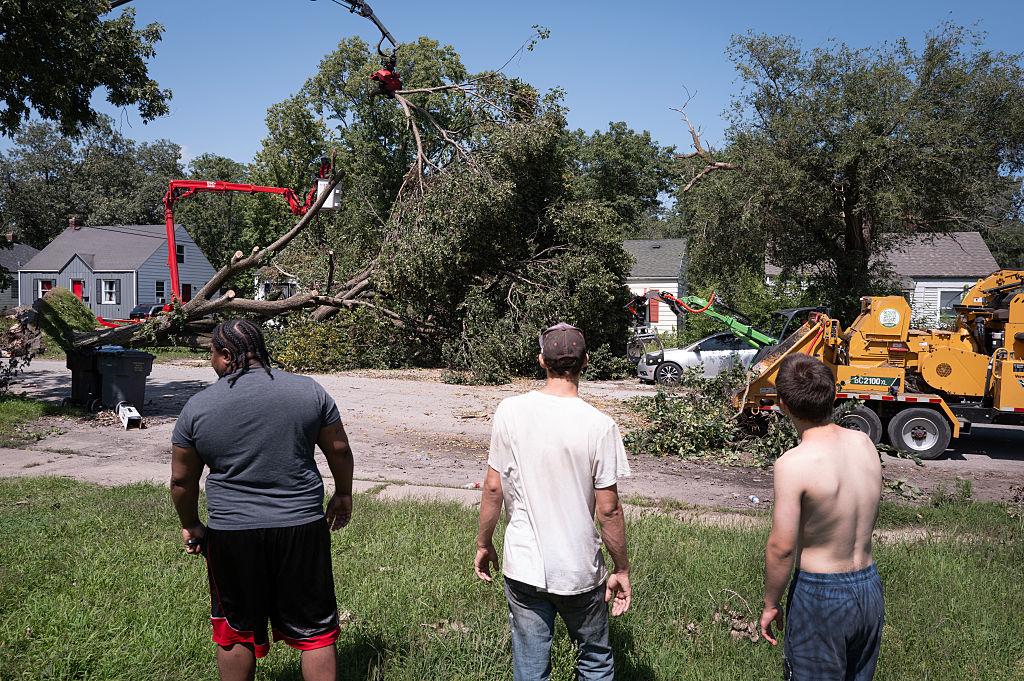
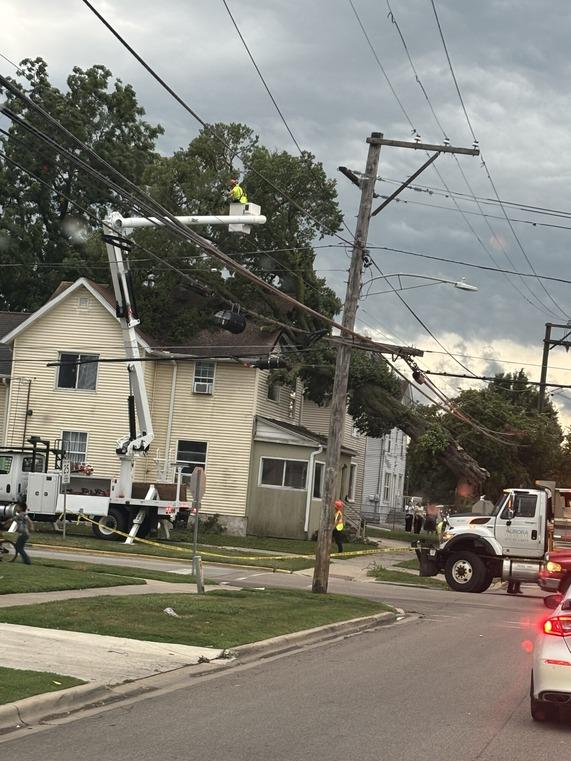
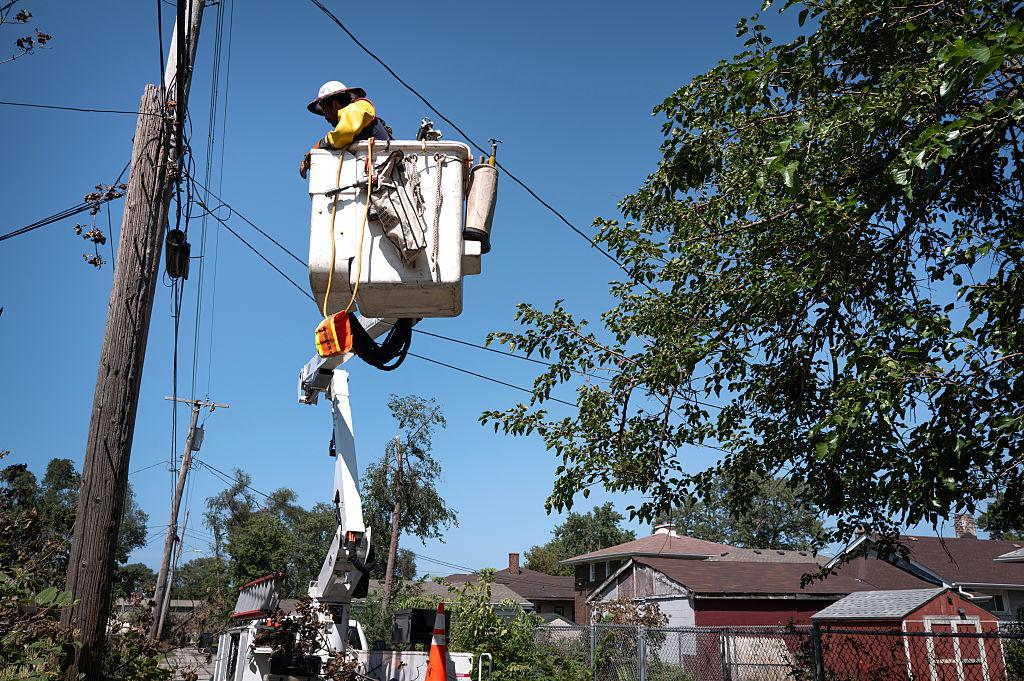
Severe storms struck northwest Indiana beginning August 11, bringing winds reportedly reaching 99 mph, toppling trees, destroying utility infrastructure and initially knocking out electricity to hundreds of thousands of customers. The damage was unquestionably extraordinary. NIPSCO has said nearly 300 distribution poles and 44 transmission poles required replacement across the affected territory.
But for residents of Gary, the calendar has become almost as infuriating as the destruction.
As of August 22, thousands remained without electricity more than 10 days after the storms. NIPSCO’s full-restoration target for Gary is 11:59 p.m. Tuesday, August 25, meaning some residents could approach two full weeks without power.
And this isn’t happening in just any American city.
It is happening in Gary, a city that is 76.2% Black and where roughly one-third of residents live in poverty.
That context cannot simply be brushed aside.
Eleven Days Without Electricity Is Not an Inconvenience
A prolonged blackout isn’t merely about sitting in a dark living room.
Refrigerators stop working.
Food spoils.
Air conditioners disappear.
Phones cannot easily be charged.
Traffic lights go dark.
Businesses lose revenue.
People dependent upon refrigerated medicine or electrically powered medical equipment suddenly face a potential health emergency.
Gary residents have experienced precisely those problems. Reporting from the city describes residents struggling without reliable refrigeration, cooking facilities, fans, air conditioning and power for medical equipment.
Schools have also been affected. Gary’s school district, serving roughly 4,300 students, remained closed as the outage dragged through its second week.
At some point, an outage stops being an inconvenience.
It becomes an economic and public-health crisis.
Black Businesses Are Paying the Price Too
The financial damage doesn’t disappear when electricity eventually returns.
Local businesses have already lost thousands.
Joslyn Kelly, owner of Gary’s J’s Breakfast Club, told Business Insider that her restaurant was without electricity for more than a week and lost approximately $19,000 in sales, representing about 90% of its normal revenue during that period.
That is what prolonged infrastructure failure looks like in the real economy.
A large corporation may survive two weeks of interrupted business.
A neighborhood restaurant may not.
Workers lose shifts. Owners lose inventory. Families lose groceries. People buy generators and gasoline they hadn’t budgeted for.
And the community is effectively handed the bill for surviving the outage.
NIPSCO Says Gary Wasn’t Singled Out
There is an important distinction between identifying a racial disparity and proving racial discrimination.
NIPSCO has denied that Gary or other low-income and minority communities were deliberately neglected. The utility says restoration priorities are determined by the severity and complexity of storm damage, not neighborhood demographics.
The destruction was indeed enormous.
That fact shouldn’t be minimized merely to sharpen criticism.
But neither should the scale of the storm end the conversation.
The relevant question isn’t simply whether NIPSCO intentionally discriminated against Gary.
It is whether the infrastructure serving a predominantly Black, economically distressed city was sufficiently resilient before the storm arrived, whether vegetation and grid maintenance were adequate, whether emergency planning anticipated an outage of this magnitude, and whether restoration resources were mobilized quickly enough afterward.
Those are legitimate accountability questions regardless of anyone’s intent.
Now There Is a Lawsuit
The controversy has already moved into court.
A class-action lawsuit has been filed against NIPSCO alleging that inadequate vegetation management contributed to the prolonged outages. NIPSCO disputes that accusation and says it has increased spending on vegetation management since 2016.
Those allegations will have to be tested through evidence.
But the lawsuit reflects the depth of frustration on the ground.
Residents aren’t merely angry that a storm knocked their electricity out.
They want to know why it has taken so long to put the electrical system back together.
Gary Knows What Neglect Looks Like
Gary’s frustration also exists inside a much longer economic history.
The city once stood at the heart of America’s industrial machine. Generations of Black families moved there seeking industrial employment and built communities around the steel economy.
Then came industrial restructuring, population loss, shrinking tax bases, abandoned properties and decades of disinvestment.
Gary’s estimated population has fallen to about 67,300, compared with more than 80,000 as recently as 2010.
That history is precisely why infrastructure failures in places such as Gary deserve additional scrutiny.
Poorer cities frequently possess fewer household resources for absorbing disasters.
A wealthy homeowner may purchase a generator, throw away hundreds of dollars in groceries and temporarily move into a hotel.
A family living paycheck to paycheck may have none of those options.
The electrical outage may be identical.
The consequences are not.
Where Was the Emergency-Level Urgency?
Outside assistance is now arriving.
More than 60 workers from ComEd were dispatched from Illinois on Saturday to assist NIPSCO restoration crews, while more than 30,000 customers across northwest Indiana were still without electricity Saturday afternoon.
That help is welcome.
But residents have every right to ask why a crisis approaching two weeks was allowed to become this severe before their lives returned to anything resembling normal.
Emergency preparedness cannot begin after refrigerators are already full of rotten food.
Utilities operating critical infrastructure have an obligation to prepare for catastrophic weather, maintain their systems, communicate honestly with customers and mobilize extraordinary resources when ordinary restoration procedures clearly aren’t enough.
Gary Deserves More Than an Apology
Once the final house has electricity again, everyone will be tempted to move on.
They shouldn’t.
Indiana regulators and elected officials should demand a transparent accounting of what failed, how restoration decisions were made, which portions of Gary’s electrical infrastructure suffered the greatest damage, whether maintenance practices contributed to those failures, and what investments are necessary to prevent another prolonged blackout.
Residents who suffered documented losses also deserve serious consideration for appropriate relief where legally warranted.
Because the question isn’t whether NIPSCO controls the weather.
Of course it doesn’t.
The question is whether the institutions responsible for critical infrastructure were prepared for what happened after the weather arrived.
Gary’s residents survived the storm.
They should not have been required to spend nearly two weeks surviving the electrical grid too.
A predominantly Black American city should never become accustomed to being last in line for functioning infrastructure. Gary deserves electricity, investment and accountability with the same urgency Americans would demand if tens of thousands of people in a wealthy suburb were staring at their second week in the dark.
—Kerry Hill, B1Daily





Leave a comment