—Michael Lyles, B1Daily
In economics, trust is a form of currency.
Every time a customer hands cash to a merchant, both parties assume the money is genuine, accepted by others, and backed by the authority of the state. When counterfeit currency begins circulating widely, that trust starts to erode. Benin’s lawmakers appear determined to prevent that scenario before it becomes a larger threat to the country’s economy.

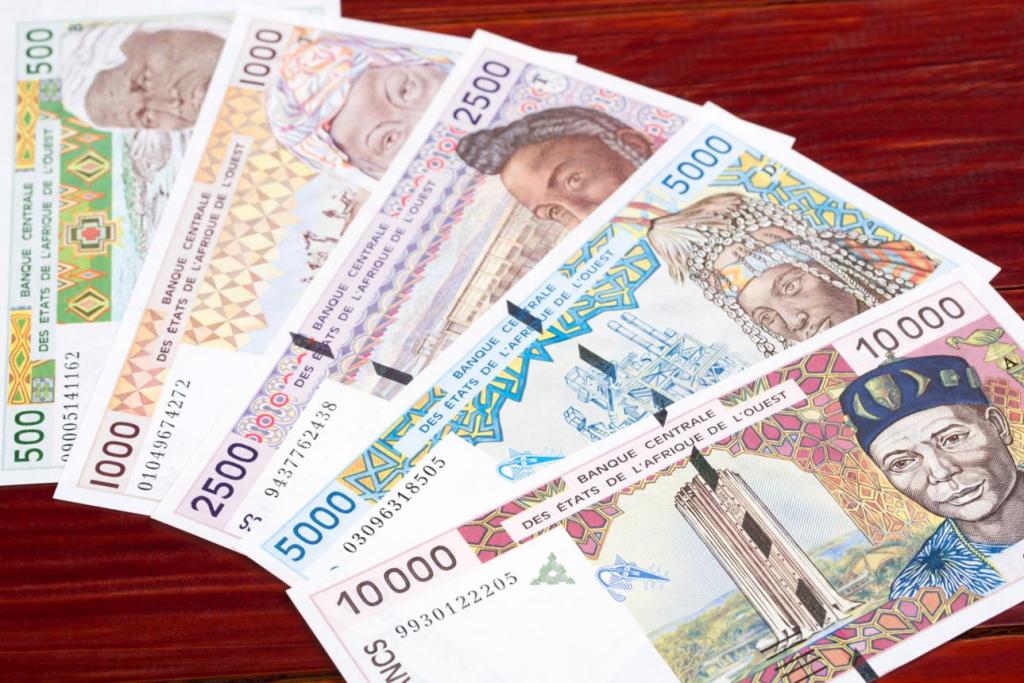
The National Assembly has unanimously adopted a new legal framework that significantly strengthens penalties for the production, distribution, and circulation of counterfeit banknotes and coins. The legislation also targets individuals and businesses that refuse to accept legitimate currency issued by the Central Bank of West African States (BCEAO), even when the notes are worn or slightly damaged.
The economic rationale behind the law is straightforward.
Counterfeit currency acts like a hidden tax on the economy. Businesses become reluctant to accept cash, consumers lose confidence in transactions, and financial institutions must devote more resources to verification and fraud prevention. These inefficiencies slow commerce and increase transaction costs across the economy.
Under the new legislation, individuals involved in counterfeiting or falsifying currency can face prison sentences ranging from 10 to 20 years. Authorities may also impose fines worth up to ten times the value of seized counterfeit currency, with minimum penalties reaching 20 million CFA francs. Those who knowingly transport or distribute fake money face additional prison terms.
What makes the reform particularly noteworthy is its focus on technology-driven financial crime.
Benin’s previous anti-counterfeiting law dated back to 2003, an era before today’s widespread availability of high-resolution printers, advanced graphic software, digital editing tools, and sophisticated forgery techniques. The updated legislation specifically addresses the use, possession, manufacture, and importation of technological equipment intended to facilitate counterfeiting operations. Lawmakers argued that the old framework was no longer adequate for modern financial threats.

From a macroeconomic perspective, the law also seeks to improve monetary circulation.
In many West African markets, merchants sometimes refuse worn banknotes despite their continued legal validity. While seemingly minor, such practices can create friction throughout the economy. Consumers spend additional time attempting to exchange notes, businesses face transaction delays, and confidence in physical currency weakens. Benin’s new law introduces penalties for refusing legal tender and for charging excessive fees to exchange valid currency. Officials believe these measures will improve payment efficiency and reinforce confidence in the CFA franc monetary system.
The reforms also align Benin more closely with broader West African Monetary Union standards.
As regional economies become increasingly interconnected, inconsistent anti-counterfeiting enforcement can create vulnerabilities across borders. Harmonizing legal frameworks makes it more difficult for criminal networks to exploit regulatory gaps between neighboring countries. Benin’s lawmakers specifically cited the need to modernize sanctions and align national policy with regional monetary commitments.
The broader significance extends beyond counterfeit bills.
Financial crime is evolving rapidly across the globe. Criminal organizations increasingly blend traditional counterfeiting, digital fraud, cybercrime, money laundering, and cross-border financial schemes. Countries that fail to modernize their legal frameworks risk creating opportunities for illicit actors to exploit outdated regulations.
For investors and businesses, strong monetary protections send an important signal. A country that aggressively protects the integrity of its currency demonstrates a commitment to financial stability, rule of law, and economic modernization. Those factors can influence everything from foreign investment decisions to consumer confidence.
Benin’s new law will not eliminate counterfeit currency overnight. No country has completely solved that problem. However, by increasing penalties, targeting modern counterfeiting technologies, and reinforcing public confidence in legal tender, the government is attempting to strengthen one of the most important foundations of any economy: trust in money itself.
In the end, the legislation is not simply about punishing counterfeiters. It is about protecting the invisible infrastructure that allows markets to function. When citizens trust the cash in their pockets, commerce moves faster, businesses operate more efficiently, and economic growth becomes easier to sustain.
—Michael Lyles, B1Daily






Leave a comment