—Vanessa Edwards, B1Daily
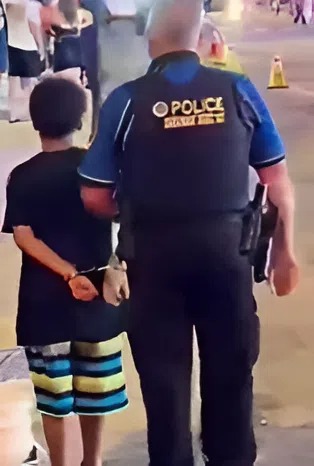
The moment the police handcuffs clicked around Aiden’s wrists, Nashville gained another statistic, a Black child detained for breaking curfew. But behind that statistic is a story far more complicated than a simple violation of city rules.
Aiden, according to those who know him, wasn’t out late causing trouble. He was performing, singing, dancing, or maybe playing an instrument, on a street corner, hoping strangers would toss a few dollars his way. His mother passed away two years ago. His father struggles with failing health. The money wasn’t for sneakers or games; it was survival.
And yet, when authorities encountered him, their response wasn’t to ask why, it was to enforce.
His arrest has reignited a painful but necessary debate: How do we treat Black children in moments of vulnerability?
Discipline vs. Humanity
Curfew laws exist, proponents argue, to protect minors and maintain public safety. But critics point to cases like Aiden’s as evidence of systemic failure, where Black youth are disproportionately criminalized instead of met with empathy. Studies show that Black children are more likely than their white peers to be perceived as older, less innocent, and more threatening, even when engaging in the same behaviors.
In Aiden’s case, the question isn’t just about whether curfews are right or wrong. It’s about what happens when a child is in distress.** Should the priority be punishment? Or should cities invest in outreach workers, social services, and community-based solutions that address the root causes of why kids like Aiden end up on the streets in the first place?
The Bigger Picture
Nashville isn’t alone in this struggle. Cities across the U.S. grapple with how to balance public policy with compassion, especially when dealing with marginalized youth. Some jurisdictions have shifted toward **diversion programs, connecting at-risk kids with counseling, mentorship, or housing support instead of funneling them into the justice system.
But for every step forward, stories like Aiden’s remind us how far there is left to go.
What Comes Next?
Aiden’s story has already become a rallying point for advocates and community organizations, with hashtags such as #ProtectBlackChildren and #JuvenileJustice gaining traction across social media.
What began as outrage over a single case has evolved into a broader conversation about how society treats vulnerable children, particularly those dealing with trauma, instability, or difficult home circumstances. Supporters argue that punitive responses often fail to address the root causes of a child’s behavior and instead deepen existing hardships.
As public attention grows, advocates are calling for meaningful reforms. Some are questioning whether juvenile curfew laws remain effective or whether they should be significantly reformed or abolished altogether.
Others are pushing for improved law enforcement training that helps officers recognize signs of trauma and crisis rather than viewing every situation solely through the lens of rule violations. The case has also highlighted the need for stronger support systems for families facing economic hardship, mental health challenges, and other barriers.
For many observers, Aiden’s experience is no longer just one family’s struggle, but a catalyst for a larger discussion about justice, compassion, and the responsibilities communities have toward their children.
One thing is clear: when a child is fighting invisible battles, handcuffs should never be the first answer.
#NashvilleTennessee #JusticeForAiden
—Vanessa Edwards, B1Daily





Leave a comment