—Kerry Hill, B1Daily
For more than four decades, Ervin Harris lived under one of the most serious labels the criminal justice system can impose.
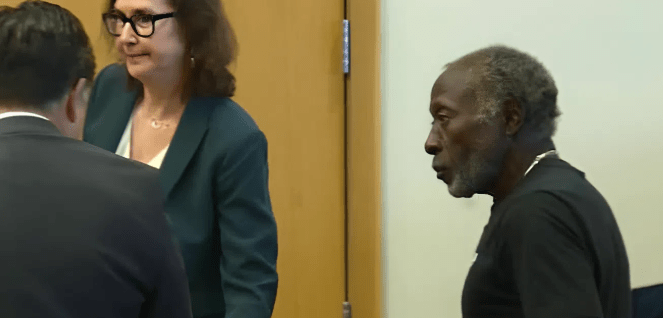
Convicted in 1975 of rape and sentenced to 99 years in prison, Harris spent 42 years behind bars before being paroled. Now, more than half a century after his conviction, an Alabama judge has vacated the conviction entirely, removing both the sentence and the requirement that he register as a sex offender. The Jefferson County District Attorney’s Office did not oppose the decision. Modern scientific research on memory and eyewitness identification played a significant role in the court’s review of the case.
The ruling closes a painful chapter in one man’s life, but it also reopens a larger conversation about race, evidence, and wrongful convictions in America.
The Problem of Eyewitness Misidentification
At the heart of Harris’ case was eyewitness identification.
During the recent proceedings, experts raised concerns about the identification methods used during the original investigation and trial. Modern research has shown that human memory is far less reliable than many people assume. Witnesses can be sincere and confident while still being mistaken. Courts and researchers today recognize risks that were poorly understood decades ago.
According to reports on the case, there was no physical evidence tying Harris to the crime, and key questions were raised about the reliability of the identification process that led to his conviction.
Why Wrongful Convictions Matter
Every wrongful conviction represents two injustices.
An innocent person loses years, sometimes decades, of freedom while the true perpetrator may never be held accountable.
Organizations dedicated to reviewing wrongful conviction cases have documented numerous exonerations across the United States involving mistaken eyewitness testimony, flawed forensic methods, prosecutorial misconduct, or inadequate legal representation. These cases have affected people of all races, but studies have consistently found that Black Americans are disproportionately represented among those later exonerated.
Civil rights advocates argue that racial stereotypes can sometimes influence investigations, witness identifications, charging decisions, and jury perceptions. Critics contend that these factors can increase the risk of wrongful convictions when evidence is weak or incomplete.
The Need for Strong Evidence
Cases like Harris’ highlight why criminal convictions should rest on thorough investigations and reliable evidence.
Eyewitness testimony can be important, but many legal experts argue it should be supported whenever possible by physical evidence, forensic analysis, corroborating witnesses, or other independently verifiable facts.
Modern reforms adopted in some jurisdictions include improved lineup procedures, recording witness identifications, enhanced access to DNA testing, and expanded post-conviction review processes.
Supporters of these reforms say they help protect both the innocent and crime victims by increasing confidence that the right person is held accountable.
A Life That Cannot Be Returned
For Harris, the legal victory comes after decades that can never be recovered.
The years spent behind bars, separated from family, opportunities, and ordinary life experiences, cannot be restored by a court order.
Yet the vacating of his conviction carries symbolic weight. It represents official recognition that serious questions existed about the evidence that led to his conviction and that the outcome might have been different had today’s understanding of eyewitness reliability existed at the time.
Lessons Beyond One Case
The story of Ervin Harris is ultimately bigger than one individual case.
It serves as a reminder that justice systems are run by human beings, and human beings can make mistakes. The answer is not to abandon accountability for serious crimes but to ensure that convictions are built on reliable evidence, fair procedures, and rigorous scrutiny.
When a person loses 42 years to a conviction that is later overturned, the question is not simply what went wrong in one courtroom decades ago.
The question is how society can build a system that reduces the chances of such a tragedy happening again.
For many Americans, the exoneration of Ervin Harris stands as both a moment of relief and a warning: justice requires certainty, especially when a person’s freedom is at stake.
—Kerry Hill, B1Daily





Leave a comment