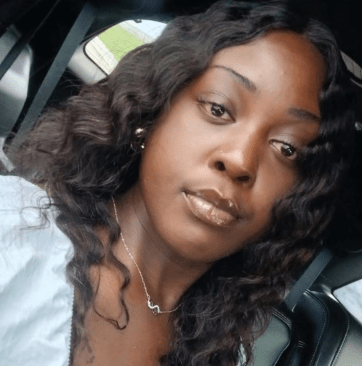
—Vanessa Edwards, B1Daily
“They did it or they know who did it.”
That is the sentiment echoing through the community in Flint, Michigan, as news of Tonea Miller’s passing in Miami filters back home. But as the details emerge, the tragedy is shifting from a narrative of loss to a narrative of suspicion. The official word from local authorities in Miami is leaning toward a “self-inflicted tragedy”, a suicide. Yet, for those who knew Miller, the geometry of the scene and the speed of the conclusion suggest something far more sinister.

Tonea Miller didn’t just travel to Florida for a getaway; she carried with her the vibrancy and ambition of a woman with everything to live for. The transition from the grit of Flint to the neon lights of Miami is a common trajectory for many seeking new opportunities, but for Miller, that journey appears to have ended in a calculated horror that mirrors the darkest chapters of American history.
The whispers among family and advocates are not of a woman in crisis, but of a woman targeted. The reports emerging from the scene suggest a death by lynching, a brutal, public, and politically charged method of murder designed not just to kill, but to terrorize.
If the death was indeed a lynching, the question becomes: Why is the state calling it a suicide?
In the realm of forensic investigation, “suicide” is often the default label used by law enforcement when they wish to avoid the paperwork of a homicide investigation, especially when that homicide involves hate crimes or systemic violence. By labeling the death a suicide, the authorities effectively erase the culprits from the equation. There is no one to arrest, no one to interrogate, and no motive to uncover. It transforms a crime of hate into a tragedy of mental health.
The rush to close the case is where the suspicion hardens into certainty. A proper investigation into a death involving a ligature or suspension requires a meticulous analysis of the site: the height of the anchor point, the presence of a stool or platform, and the physical capabilities of the deceased. To determine a death as a suicide without a comprehensive forensic autopsy and a thorough scene reconstruction is not just lazy policing; it is a cover-up.
For the people of Flint, this is a familiar pattern. The disregard for Black lives is not a Miami phenomenon; it is a systemic plague. Tonea Miller left Flint to find something better, only to be met with a violence so ancient and visceral that it defies the “modern” sensibilities of the Florida police department.
The contrast is jarring: on one side, you have a woman whose life was a testament to resilience and beauty; on the other, you have a cold, bureaucratic rush to clear a case file.
As the community demands answers, the question remains: Who benefited from Tonea Miller’s silence? And why is the Miami law enforcement agency so eager to ensure that silence remains permanent?
Justice for Tonea Miller cannot be found in a closed file or a convenient label. It can only be found in the truth, a truth that is currently being strangled by the very people tasked with protecting it.
—Vanessa Edwards, B1Daily





Leave a comment