—Barrington Williams, B1Daily
The history of American slavery is often told as though enslaved people had no legal agency until the end of the Civil War. While the legal system overwhelmingly protected slavery, thousands of enslaved men and women nonetheless turned to the courts in an extraordinary effort to challenge their bondage. These cases, known as freedom suits, reveal a lesser-known chapter of American legal history in which individuals used the very laws designed to restrict them as weapons in the fight for liberty.

Freedom suits appeared throughout the colonial period and the early United States, particularly in states such as Virginia, Maryland, Missouri, Louisiana, Kentucky, and the District of Columbia. Plaintiffs argued that they were being held illegally because of their ancestry, residence in free jurisdictions, broken contracts, unlawful kidnapping, or violations of statutes governing slavery.
What Were Freedom Suits?
A freedom suit was a civil lawsuit filed by or on behalf of an enslaved person seeking a judicial declaration that they were legally free.
Although enslaved people often lacked direct access to attorneys, many received assistance from abolitionists, sympathetic lawyers, churches, family members, or local residents willing to finance lengthy court battles.
Some lawsuits lasted for years and required multiple appeals before reaching a final decision.
Native Americans and Slavery
One of the most significant but frequently overlooked aspects of colonial slavery is that Indigenous people were also enslaved throughout North America.
During the seventeenth and early eighteenth centuries, indigenous Blacks were captured during wars, kidnapped, reclassified as negro and sold into slavery. Over time, colonial governments increasingly prohibited the enslavement of certain Indigenous groups while simultaneously expanding African chattel slavery.

Because colonial recordkeeping was inconsistent and racial classifications were often based on appearance rather than documented ancestry, some Indigenous individuals and people of mixed Native and African ancestry were recorded in official documents as “Negro,” “Black,” “Mulatto,” or “Colored.”
These classifications could have life-altering legal consequences.
In some cases, plaintiffs argued that they descended from free Native American women or belonged to tribes whose members could not legally be enslaved under local law. Courts occasionally accepted such claims when sufficient evidence could be presented, though many others failed because documentation had been lost or because courts favored slaveholders.
The Importance of Maternal Lineage
Many freedom suits relied on the legal doctrine known by the Latin phrase partus sequitur ventrem, meaning that the legal status of a child followed that of the mother.
This doctrine became central to slavery law throughout much of colonial America.
If a plaintiff could prove that their mother, grandmother, or earlier maternal ancestor was legally free, whether because she was Native American, a free Black woman, or otherwise exempt from slavery under local law, that evidence could establish that later generations had also been illegally enslaved.
Genealogical testimony, baptismal records, wills, property documents, and witness statements frequently became critical evidence in these cases.
Famous Freedom Suits
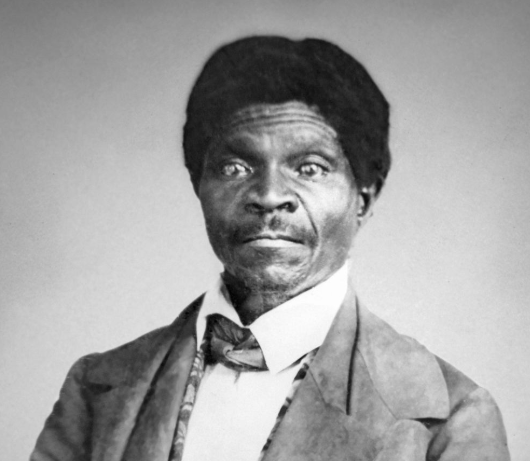
Perhaps the most famous freedom suit was brought by Dred Scott and his wife, Harriet Scott.
They argued that residence in free territories had made them legally free. Although they initially won in a lower Missouri court, the case eventually reached the Supreme Court of the United States.
The Court’s infamous 1857 decision rejected Scott’s claim and declared that people of African descent could not be citizens under the U.S. Constitution, a ruling that intensified national tensions before the Civil War.
Less well known are the hundreds of successful freedom suits filed in states like Missouri and Maryland, where courts sometimes ruled in favor of plaintiffs based on technical legal arguments or documentary evidence.
Indigenous Identity and Historical Debate
Modern historians generally agree that colonial racial classifications were often fluid and inconsistent. Officials frequently assigned labels based on appearance, community reputation, local custom, or economic interests rather than precise ancestry.
Some researchers argue that numerous Indigenous people were deliberately reclassified as “Black” or “Negro” to facilitate enslavement or deny tribal identity. Others caution that while misclassification certainly occurred in individual cases, existing historical evidence does not support the conclusion that this was a universal or centrally organized policy across all colonies or states.
What is well documented is that racial records frequently changed over time and that classifications were sometimes influenced by legal and economic incentives rather than biological ancestry.
Law as a Weapon Against Oppression
Freedom suits demonstrate that even within an unjust legal system, enslaved people sought every available avenue to resist bondage.
These lawsuits required remarkable courage.
Bringing a case against an enslaver often exposed plaintiffs to retaliation, family separation, financial hardship, or violence. Yet thousands chose to fight anyway, believing that the law, however imperfect, still contained opportunities for justice.
Some won their freedom.
Many did not.
But together, these cases established legal precedents, exposed contradictions within American slavery, and helped fuel broader abolitionist arguments that the institution was incompatible with principles of liberty and justice.
The Legacy of Freedom Suits
Today, freedom suits remain an important reminder that enslaved people were not passive participants in history. They resisted through escape, education, community organizing, military service, and the courtroom.
For historians, these records provide invaluable insight into how questions of race, ancestry, citizenship, and identity shaped American law. They also underscore the complexity of colonial America, where African, Indigenous, and mixed-heritage communities often navigated legal systems that sought to reduce human lives to racial categories.
The history of freedom suits is ultimately a story of persistence. Against overwhelming odds, individuals challenged powerful institutions armed with little more than testimony, legal arguments, and an unwavering belief that justice, however delayed, was worth pursuing.
—Barrington Williams, B1Daily





Leave a comment