—Kerry Hill, B1Daily
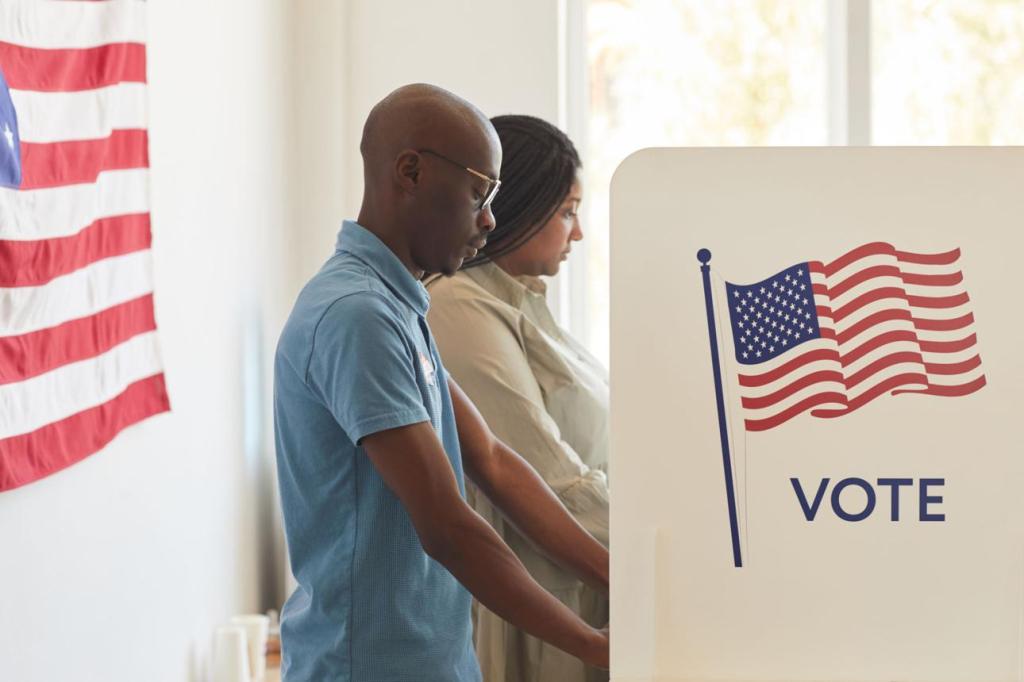
The Democratic Party still holds a commanding advantage among Black voters. But commanding is not the same thing as automatic.
Heading toward the 2026 midterms, the more interesting question isn’t whether Black voters suddenly become a Republican constituency. Current polling gives little reason to expect that. Instead, Democrats face a subtler problem: Can they maintain enthusiasm and loyalty among Black voters who increasingly want measurable improvements in their economic lives?

A July Pew Research Center survey found 68% of Black registered voters supporting the Democratic candidate for Congress, compared with just 8% supporting the Republican candidate. Yet another 25% either supported another candidate or weren’t sure. That is still an enormous Democratic advantage, but it also leaves a politically meaningful pool of voters who are not firmly committed to either major-party candidate.
And increasingly, the conversation surrounding those voters comes down to something brutally ordinary:
How much does it cost to live?
The Economy Is Sitting in the Driver’s Seat
Economic issues are dominating the 2026 midterm conversation nationally.
When Pew asked registered voters what single issue they most wanted congressional candidates to discuss, economic concerns topped the list by a wide margin, particularly prices and affordability. The same survey found Americans almost evenly divided over which party’s economic policies they preferred, with 37% choosing Democrats and 36% Republicans.
Reuters/Ipsos found an even sharper emphasis on household finances. In polling conducted from July 29 through August 3, 48% of Americans said the cost of living would be the most important factor in deciding their midterm vote. Democrats held an advantage on that particular question, with 35% saying they trusted Democrats more to handle living costs compared with 27% choosing Republicans.

For Black voters, those economic concerns can intersect with longstanding disparities in wealth, housing and income.
A Brookings analysis published in June argued that Black and Latino households are being disproportionately squeezed by affordability pressures and noted that economic concerns had contributed to some voters shifting toward Trump in 2024.
That makes economics more than another plank in a campaign platform.
It can become the measuring stick.
Representation and Material Policy Aren’t Opposites
The temptation in political commentary is to frame this debate as economics versus identity.
Reality is considerably messier.
Symbolic representation can matter. Appointing Black officials, defending voting rights, confronting discrimination and recognizing historically excluded communities can have substantive political significance.
But representation and economic policy answer different questions.
One asks: Who has a seat at the table?
The other asks: What changed after they sat down?
A voter struggling with rent, groceries, healthcare premiums, childcare or debt can support greater Black political representation while simultaneously demanding policies addressing those expenses.
Those positions aren’t contradictory.
The danger for Democrats would be assuming that symbolic victories can substitute indefinitely for material ones.
Housing Could Become the Giant in the Room
Housing provides perhaps the clearest example.
A family cannot build substantial housing equity if purchasing a home remains financially unreachable. A renter receiving a raise can still lose ground if rent increases consume it. A first-time buyer can earn a respectable salary and still struggle with a down payment, mortgage rates, property taxes and insurance.
That makes housing policy particularly relevant to Black economic mobility.
Candidates attempting to appeal to economically frustrated Black voters therefore face questions extending far beyond campaign rhetoric: What will increase housing supply? What can reduce barriers to homeownership? How should governments address discriminatory appraisal or lending practices? What policies actually lower the monthly cost of housing?
Those are policy questions with outcomes voters can eventually measure.
Younger Black Voters Complicate the Old Formula
Generational change adds another layer.
Recent reporting on the 2026 Democratic primaries has identified differences between younger Black voters and older Black political constituencies. Axios reported that younger Black voters have shown greater willingness to challenge establishment-backed Democratic candidates, while researchers cautioned against exaggerating the generational divide. Issues such as housing, healthcare, education and economic security have been particularly prominent among younger voters.
Reuters similarly reported this month that candidates associated with the democratic-socialist movement are encountering a complicated Black electorate. Economic concerns including housing, healthcare and living costs are important, but ideological positioning and generational differences also shape voter attitudes.
That suggests Democrats cannot safely treat “the Black vote” as a single political personality.
A 24-year-old renter in Atlanta, a 47-year-old union worker in Detroit and a 72-year-old homeowner in Philadelphia can all be Black Democratic voters while having very different priorities.
A successful economic message would have to recognize those differences rather than flatten them.
Black Voters Still Give Democrats an Economic Advantage
There is also evidence that Democrats aren’t beginning this contest from zero.
A May Data for Progress survey found 74% of Black respondents trusted Democrats more on inflation and the cost of living, compared with 16% who trusted Republicans more. Because that subgroup contained only 132 weighted respondents, the precise percentages should be interpreted cautiously, but the result points in the same broad direction as other evidence showing continued Democratic strength among Black voters.
The challenge is converting trust into results voters recognize.
Consider what an economically focused political conversation could include:
Higher wages.
Affordable housing and pathways to homeownership.
Healthcare costs.
Small-business financing.
Childcare.
Job creation and apprenticeship programs.
Consumer debt.
Retirement security.
Infrastructure investment in neglected neighborhoods.
And, particularly within Black political debates, proposals addressing the enormous racial wealth gap and the continuing debate over reparations.
Those subjects are not particularly glamorous. Nobody is putting mortgage closing costs on a campaign T-shirt.
But they reach directly into people’s bank accounts.
Republicans Have Their Own Test
This isn’t solely a Democratic problem.
Republicans seeking larger shares of the Black electorate also have to demonstrate what their economic policies would accomplish for Black households.
Republicans made notable gains among some nonwhite voters in the 2024 election, but political gains are not permanent possessions. Voters who change parties because they are dissatisfied with economic conditions can change again if those conditions remain unsatisfactory.
Current national polling illustrates that volatility. AP-NORC found Republicans had lost ground in public trust on the economy compared with last year, but Democrats had not automatically inherited that lost confidence. More Americans instead moved toward trusting neither party.
That’s an important warning to both parties.
Economic dissatisfaction does not necessarily produce ideological conversion.
Sometimes it produces political homelessness.
The Question Isn’t Whether Symbolism Matters
The sharper question for Democrats is whether symbolism can carry political relationships when voters believe their material circumstances aren’t improving.
Black voters remain one of the Democratic Party’s strongest constituencies. The current numbers make that unmistakable. A 68-to-8 congressional preference is hardly evidence of a Republican takeover.
But the 25% of Black registered voters who told Pew they were either uncertain or preferred another candidate deserves attention too.
Political loyalty can coexist with frustration.
And frustration can eventually become abstention, third-party interest, primary challenges or movement between parties.
For Democrats, the economic opportunity is therefore larger than simply telling Black voters that Republican policies would be worse. The party can make a case around what Democratic governance would tangibly deliver on housing, wages, healthcare, business formation and wealth.
Republicans have the same burden when asking Black voters to reconsider their traditional Democratic allegiance.
Ultimately, Black voters will decide for themselves which issues matter most.
But the emerging 2026 landscape contains a fairly unmistakable message for politicians of every stripe:
Representation may open the door. Economic results determine what voters find when they walk through it.
—Kerry Hill, B1Daily





Leave a Reply