—Sylvester Loving, B1Daily
America has monuments for presidents, generals and wars.
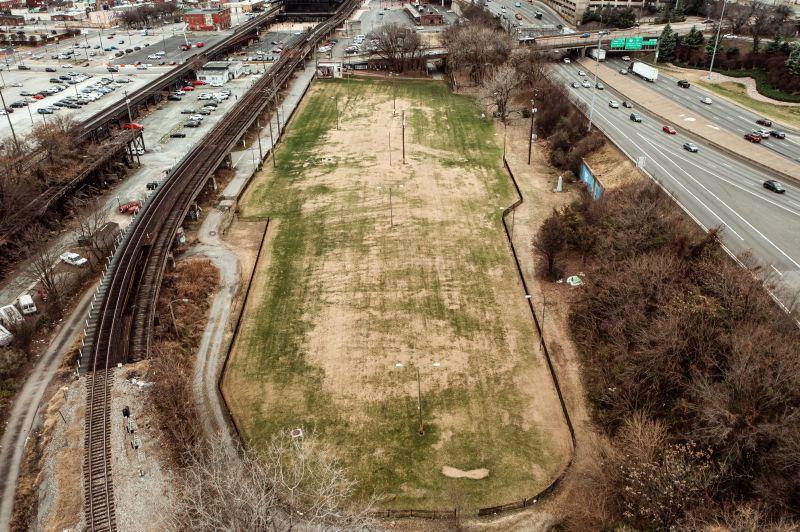
But underneath highways, parking lots, construction sites, forests and forgotten patches of land are the remains of thousands upon thousands of Black Americans whose graves were never properly marked, whose cemeteries were abandoned, or whose resting places were swallowed by development.
Some were enslaved.
Some were newly emancipated.
Some were Black soldiers.
Some built the cities that eventually expanded directly over their graves.

And one of the most controversial stories in this enormous landscape of forgotten Black dead begins near Natchez, Mississippi, at a place ominously known as the Devil’s Punchbowl.
Devil’s Punchbowl Is Part of a Much Larger Story
The truly staggering story isn’t one disputed burial site in Mississippi.
It’s what happened to Black burial grounds across America.
During slavery and segregation, Black Americans were frequently excluded from white cemeteries. Communities therefore established their own cemeteries through Black churches, families, fraternal organizations and burial societies.

Many lacked the financial resources enjoyed by white cemeteries.
Graves might be marked with inexpensive stones, wooden markers, plants, shells or other materials instead of expensive carved monuments.
Over time, those markers deteriorated.
Families moved.
Churches disappeared.
Property changed hands.
Records vanished.
Vegetation reclaimed the land.
And developers arrived.
Historic Black cemeteries became particularly vulnerable because many lacked clear boundaries, permanent maintenance funds or surviving ownership records. Preservation researchers have documented cases where homes and roads were constructed over Black graves.
The dead didn’t move.
America simply built around them.
New York City Had Thousands Beneath Its Feet
Perhaps the most astonishing example sits in Manhattan.
During construction of a federal office building in 1991, workers discovered human remains beneath Lower Manhattan.
Archaeologists eventually determined that the site had been an enormous burial ground for enslaved and free Africans.
The cemetery covered approximately six acres.
The National Park Service estimates that as many as 15,000 people were buried there between the 1630s and 1795.
Think about that.
Thousands of Africans and African descendants were beneath one of the richest cities on Earth, while generations of New Yorkers walked above them largely unaware that the cemetery existed.
Today the location is protected as the African Burial Ground National Monument.
But it required accidental rediscovery before much of America remembered it existed.
Richmond Has Another City of the Dead
Then there is Richmond, Virginia.
The Shockoe Hill African Burying Ground was established in 1816 and may contain the remains of upward of 22,000 enslaved and free people of color.
Today portions of the landscape are surrounded by roads, industrial infrastructure and development.
Many graves are unmarked.
Elsewhere in Richmond, historic East End Cemetery contains an estimated 15,000 burials.
Researchers using drones and geographic-information technology identified thousands of potential unmarked grave locations there. The cemetery historically received little public funding for maintenance.
Thousands here.
Thousands there.
Eventually the numbers stop looking like isolated accidents.
They begin looking like a national preservation failure.
Graves Have Been Found Beneath Modern Development
This isn’t merely ancient history.
Across the country, forgotten Black cemeteries have been rediscovered beneath or alongside modern development.
Investigations in Tampa have identified hundreds of graves associated with historically Black burial grounds beneath developed property.
Communities in Miami have fought to restore neglected Black cemeteries.
Washington, D.C., preservationists continue working to protect historic Black burial grounds containing enslaved and free African Americans.
The Associated Press has documented a nationwide movement trying to recover cemeteries that suffered abandonment, destruction and development.
In Washington’s historic Georgetown area alone, Mount Zion Cemetery and the Female Union Band Society Cemetery contain the graves of more than 10,000 enslaved and free African Americans, according to preservation advocates. Many graves are unmarked, and the sites have endured decades of neglect.
America doesn’t even possess a definitive national count of every lost African American burial ground.
That may be the most disturbing statistic of all.
We don’t know how many there are.
Segregation Followed Black Americans Into Death
Racial segregation didn’t stop at the cemetery gate.
Black Americans were segregated in life and frequently segregated in death.
White cemeteries could possess ornate monuments, landscaped grounds and institutional systems for perpetual maintenance.
Black cemeteries were often pushed toward less desirable land and left dependent upon families, churches and community organizations with fewer resources.
When those organizations disappeared, there was frequently nobody with money or political influence to protect the cemetery.
National Geographic documented how Black burial grounds across the country were neglected, lost or redeveloped while descendants struggled simply to locate where their ancestors had been buried.
That disparity creates a cruel historical irony.
The people whose labor helped build American wealth became some of the easiest Americans to erase from the physical landscape after death.
Black Soldiers Were Forgotten Too
Even military service couldn’t completely protect Black graves from obscurity.
During and after the Civil War, the federal government established national cemeteries and began relocating the remains of Union soldiers.
Among those reinterred were members of the United States Colored Troops, Black men who fought for the Union and their own liberation.
The federal government eventually required national cemetery graves to receive markers, and Congress later authorized headstones for previously unmarked veterans buried in private cemeteries.
But countless civilian Black Americans never received anything comparable.
No marble.
No permanent inscription.
Sometimes no surviving record.
Only ground.
Archaeology Is Giving Names Back to the Forgotten
Modern technology is beginning to recover some of what history erased.
Ground-penetrating radar can identify disturbances consistent with graves without digging them up.
Drones can map subtle depressions invisible from ground level.
Historical maps can be overlaid against modern streets.
Property records, death certificates, church registers and newspaper archives can help researchers reconstruct cemeteries that disappeared from official maps generations ago.
At East End Cemetery, researchers demonstrated how relatively inexpensive drone technology could help locate thousands of potential graves in historically underfunded Black cemeteries.
Technology is effectively allowing the landscape to testify.
The graves were always there.
We simply stopped looking.
Congress Finally Recognized the Problem
The scale of the problem eventually forced federal attention.
Proposals for an African-American Burial Grounds Network sought to create mechanisms for identifying, documenting, researching and preserving Black burial grounds, including unmarked and previously unrecorded cemeteries.
The Department of the Interior acknowledged that such a network could help document burial grounds connected to the African American experience and make information about them publicly accessible where appropriate.
That work matters because preservation isn’t merely about protecting bones.
A cemetery can contain information that never survived anywhere else.
Names.
Family relationships.
Birthplaces.
Religious practices.
Military service.
Migration patterns.
Community organizations.
The lives of people who may have left almost nothing in America’s written archives can remain physically documented beneath the soil.
Destroy the cemetery and you can destroy the final surviving chapter of an entire community.
America Has a Memory Problem
The Devil’s Punchbowl illustrates both sides of America’s problem with Black history.
Sometimes genuine Black suffering becomes entangled with exaggerated or unsupported stories.
Those stories should be corrected.
But America also has the opposite problem:
Documented Black history has repeatedly been physically erased.
Cemeteries disappeared beneath weeds.
Graves lost their markers.
Developers built over burial grounds.
Government records forgot locations.
Communities were displaced.
And eventually Americans began asking why nobody knew who was buried underneath their cities.
The African Burial Ground in Manhattan contained potentially 15,000 people.
Shockoe Hill may contain upward of 22,000.
East End Cemetery contains thousands more.
Those aren’t internet legends.
Those are documented burial landscapes.
And they represent only pieces of a much larger national story.
Let the Dead Be Found
America cannot repair every injustice committed against people who died centuries ago.
It can at least stop pretending they never existed.
Historic Black cemeteries should be mapped.
Unmarked graves should be identified where possible.
Descendant communities should have a central role in deciding how burial grounds are preserved.
Developers should be required to investigate credible evidence that construction sites contain historic graves.
And governments should treat forgotten Black cemeteries with the same seriousness afforded other sacred and historically important ground.
Because beneath America’s modern landscape lies another America.
An America of enslaved workers, freedpeople, Black soldiers, mothers, fathers, children, ministers, laborers and families whose names disappeared while their bodies remained.
The Devil’s Punchbowl should remind us to distinguish documented history from legend.
But the thousands of verified Black graves scattered across forgotten cemeteries tell an even more haunting story.
Black Americans weren’t merely written out of portions of American history. In some places, America literally built over their graves.
—Sylvester Loving, B1Daily



Leave a Reply