—Kerry Hill, B1Daily
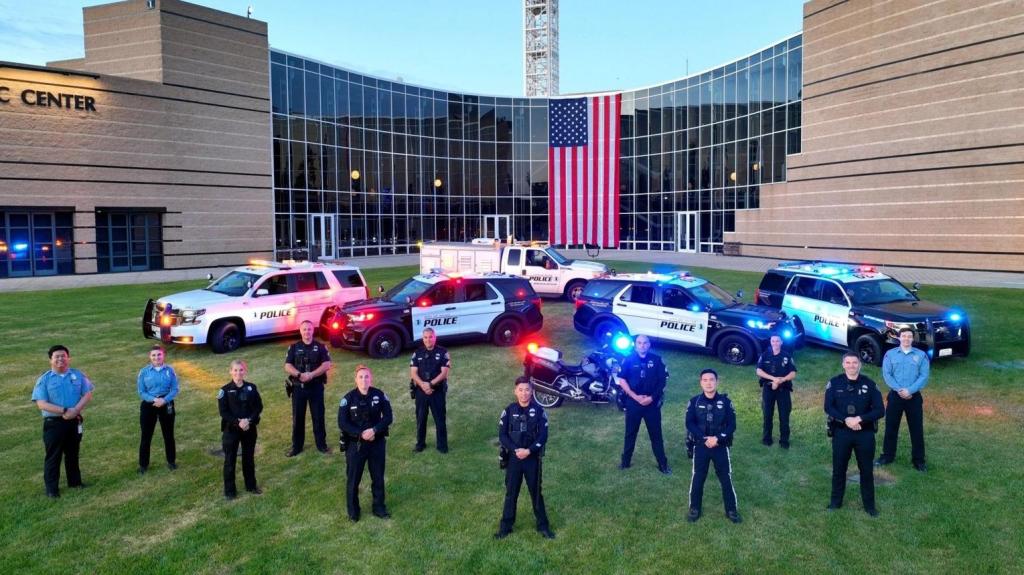
American policing has become vastly more expensive than it was when John F. Kennedy was president.
In 1960, state and local governments spent about $2 billion a year on police services. By 2024, that figure had reached roughly $179 billion, according to Bureau of Economic Analysis data compiled by the Federal Reserve Bank of St. Louis. Those are nominal dollars, so much of that enormous increase reflects six decades of inflation, population growth and economic expansion. But even after adjusting for inflation, the longer-term expansion of police spending remains substantial.

The numbers tell a story that gets lost whenever America’s police-budget debate is reduced to slogans about either “defunding” departments or blindly “backing the blue.”
The United States has already spent decades dramatically expanding the financial footprint of policing.
From $2 Billion to Nearly $179 Billion
The historical numbers are striking.
State and local police expenditures were approximately $2.0 billion in 1960. They climbed to $5.2 billion in 1970, $14.6 billion in 1980, $34.3 billion in 1990, $67.2 billion in 2000 and $111 billion in 2010.
By 2020, spending had surpassed $151 billion.
In 2024, it reached approximately $178.9 billion.
That means nominal spending increased almost 88-fold between 1960 and 2024.
Inflation obviously makes that comparison look more dramatic than the underlying expansion actually was. A dollar in 1960 purchased considerably more than a dollar today.
So look at inflation-adjusted figures instead.
The Urban Institute calculates that state and local police spending increased from approximately $47 billion in 1977 to $135 billion in 2021, measured in constant 2021 dollars.
That’s a 189% increase after adjusting for inflation.
The balloon is real.
Police Spending Kept Growing Even After Crime Fell
Perhaps the most interesting part of the story is what happened after America’s violent-crime explosion began reversing.
Police spending didn’t reverse with it.
Urban Institute researchers found that inflation-adjusted state and local police spending increased from approximately $42 billion in 1977 to $115 billion in 2017. They noted that violent and property crime had fallen sharply from their 1990s levels while police spending remained elevated.
That doesn’t automatically prove the money was wasted.
A police department isn’t simply a crime meter whose budget should mechanically rise and fall alongside the homicide rate. Departments have salaries, pensions, vehicles, training, technology, facilities, emergency-response responsibilities and increasingly complex investigative duties.
But the divergence should raise questions.
If declining crime doesn’t substantially reduce police spending, what exactly determines how large a police budget should become?
That is a question taxpayers should be allowed to ask without being accused of opposing public safety.
The Entire Criminal-Justice System Expanded
Police departments weren’t alone.
America built a much larger criminal-justice apparatus during the late twentieth century.
The Bureau of Justice Statistics found that inflation-adjusted spending on police, corrections and judicial and legal services increased 171% between 1982 and 2007, reaching approximately $228 billion.
Employment across the justice system increased from about 1.3 million people in 1982 to 2.5 million in 2007, a 93% increase.
Police protection represented the largest individual component of justice expenditures throughout much of that period.
In inflation-adjusted 2007 dollars, police expenditures increased from roughly $44.6 billion in 1982 to $103.6 billion in 2007.
America wasn’t merely hiring a few more officers.
It was constructing an enormously larger public-safety bureaucracy.
Then Came the War on Drugs and Tough-on-Crime Era
The spending expansion occurred alongside some of the most consequential criminal-justice policies in modern American history.
The War on Drugs intensified.
Mandatory sentencing expanded.
Prison populations exploded.
Politicians competed to demonstrate who could be tougher on crime.
Police departments expanded personnel, specialized units, narcotics operations and technology.
Federal involvement also grew.
The result was an era in which public safety became increasingly synonymous with expanding the criminal-justice system.
The spending figures reveal how profound that transformation became.
Between 1977 and 2021, inflation-adjusted police spending rose 189%.
Corrections spending grew even faster, increasing 346%, from roughly $19 billion to $87 billion.
America didn’t simply increase police budgets.
It poured enormous resources into policing and incarceration simultaneously.
Police Departments Became Expensive Institutions
Modern police departments also do considerably more than departments did 60 years ago.
Today’s agencies can maintain SWAT teams, helicopters, body-camera systems, forensic laboratories, license-plate readers, digital-evidence units, cybersecurity capabilities, armored vehicles, sophisticated communications networks and increasingly expensive databases.
Personnel costs are another major expense.
Police officers require salaries, benefits, overtime, training and retirement programs. Local governments can also face substantial pension obligations associated with decades of public-safety employment.
And because policing is primarily a local-government function, those costs can become especially visible in municipal budgets.
In 2021, police accounted for about 6% of direct local-government expenditures, compared with roughly 1% of state-government direct expenditures.
National averages can also hide enormous differences between individual cities.
A city may spend considerably more or less depending on crime, labor agreements, population density, governmental structure and which agencies provide particular services.
The Defund Debate Obscured the Bigger Historical Picture
After George Floyd’s murder in 2020, “defund the police” became one of America’s most combustible political phrases.

Some activists demanded major reductions in police budgets and shifting money toward housing, mental-health treatment, violence prevention and social services.
Opponents argued that reducing police resources would endanger communities and worsen crime.
But the historical budget debate is larger than what happened after 2020.
Police spending had already been expanding for decades.
Even before the national protests, Urban Institute researchers found that inflation-adjusted police spending had risen from $42 billion in 1977 to $115 billion by 2017.
So the real historical question isn’t simply:
Should America defund police?
It is also:
What did America receive from decades of increasing police expenditures, and could some public-safety objectives be achieved differently?
Those are legitimate budget questions.
Police Spending Didn’t Grow Faster Than Everything
There is also an important piece of context critics of police budgets shouldn’t ignore.
Police spending has grown enormously in absolute and inflation-adjusted terms, but it hasn’t swallowed state and local government budgets as a whole.
Between 1977 and 2021, total inflation-adjusted state and local expenditures increased 202%, while police spending increased 189%.
Public-welfare spending increased 485%, health and hospital spending 266%, corrections 346%, housing 329%, higher education 168% and elementary and secondary education 136%.
Urban Institute researchers also found that police spending remained just below 4% of total state and local direct expenditures over a long historical period.
That complicates the narrative.
Police budgets ballooned enormously in dollars.
But so did government itself.
Both facts can be true simultaneously.
The Better Question Is What Americans Are Buying
The most useful police-budget debate shouldn’t begin with an arbitrary demand that every department receive more money or every department receive less.
It should begin with outcomes.
How much crime reduction does another $100 million purchase?
Are officers spending enormous amounts of time responding to mental-health emergencies that could sometimes be handled by specialized civilian teams?
Are cities investing enough in homicide clearance, forensic laboratories and detective staffing?
How much money is consumed by overtime?
How much is spent settling misconduct lawsuits?
Are expensive technologies producing measurable public-safety improvements?
Could some responsibilities currently assigned to armed police officers be handled less expensively by other public employees?
And when a department says it needs another budget increase, what measurable improvement should taxpayers expect in return?
These aren’t anti-police questions.
They’re budget questions.
Every government agency receiving billions of public dollars should face them.
Sixty Years Changed the Meaning of American Policing
The police department of 1960 and the police department of 2026 occupy vastly different financial worlds.
America has spent decades professionalizing departments, expanding their responsibilities, increasing staffing and benefits, building specialized units and purchasing technologies that would have sounded like science fiction to officers walking beats in the 1960s.
Some of that expansion unquestionably reflects legitimate changes in what Americans expect police to do.
But the numbers also reveal something worth remembering whenever politicians describe police budgets as though they were fragile institutions perpetually surviving on scraps.
They aren’t.
State and local police spending has grown from roughly $2 billion annually in 1960 to nearly $179 billion in 2024 in nominal dollars, while comparable historical research shows enormous growth even after inflation is removed from the equation.
The question for the next 60 years shouldn’t simply be whether that number continues climbing.
It should be whether every additional dollar makes Americans safer, and whether policing is always the most effective place to spend it.
—Kerry Hill, B1Daily



Leave a Reply