—Pān Hě, B1Daily
China is having a surprisingly consequential argument about three school subjects: Chinese, mathematics and English.
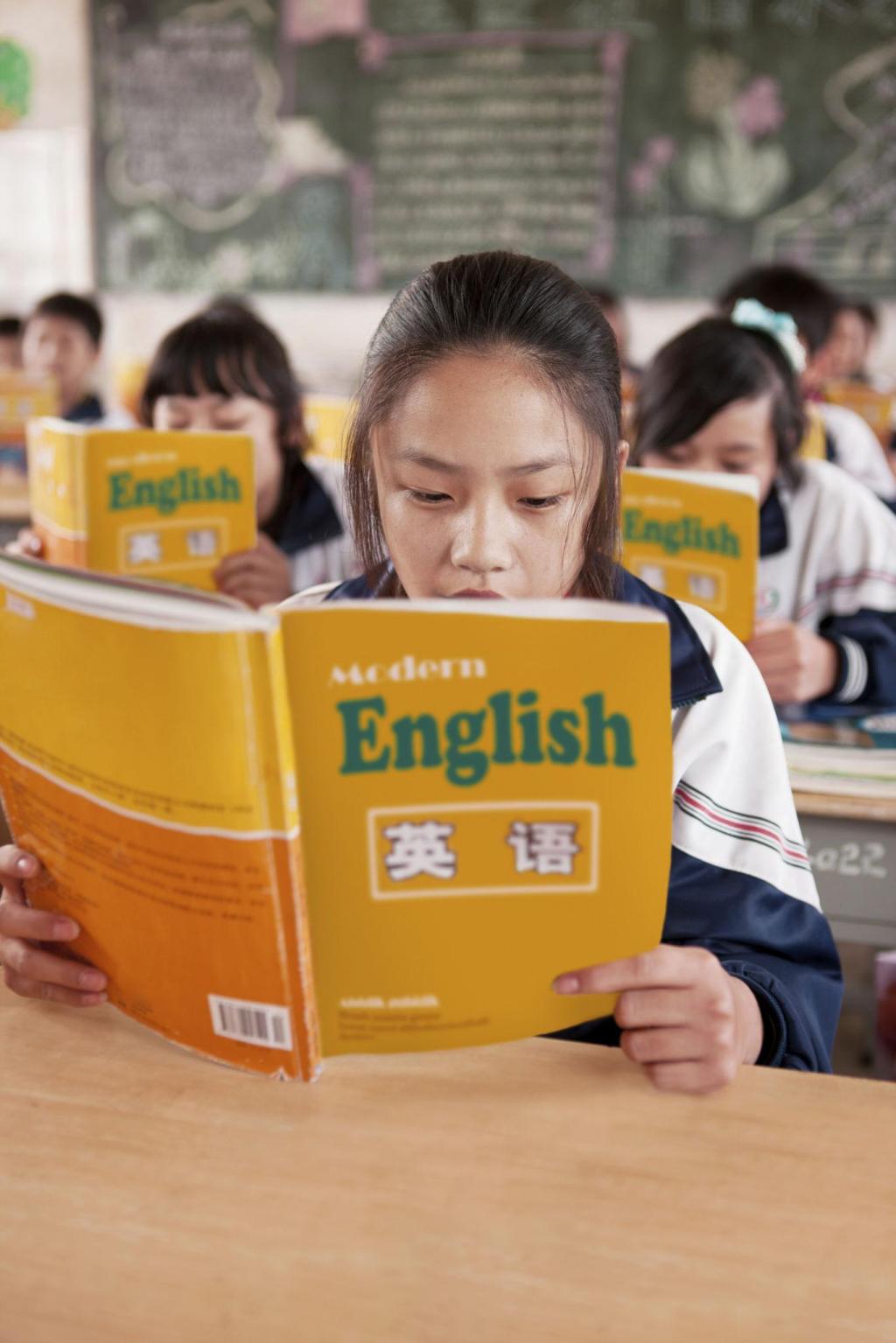
English currently stands alongside Chinese and mathematics as one of the three core subjects in China’s basic education system. Under the traditional 750-point gaokao, China’s hugely important national college entrance examination, each is worth 150 points. But a renewed debate is asking whether English deserves that privileged position anymore.

The latest spark came from prominent mathematics teacher and online education personality Tang Jiafeng, who called for English to be stripped of its core-subject status. Tang argues Chinese students spend disproportionate amounts of time studying a language many will rarely use professionally, sometimes beginning intensive English study before fully mastering Chinese.
His argument touches a nerve much larger than homework.
It asks whether a rising China still needs to organize part of its education system around the language of the Western-dominated international order.
English Is Suddenly Fighting for Its Seat
This isn’t the first attempt to downgrade English.
Chinese lawmakers and political advisers have previously proposed reducing its weight in major examinations. In 2022, China’s Ministry of Education rejected a proposal to reduce the proportion of English instruction, while in 2023 an NPC deputy argued that English’s gaokao weighting should be lowered because many students rarely use the language after finishing school.
The debate has returned in a different China.
The country is more technologically powerful, increasingly confident about promoting Chinese culture internationally and engaged in considerably sharper competition with the United States and other Western governments.

Artificial intelligence has added another ingredient. Supporters of reducing English instruction argue that increasingly sophisticated AI translation could eventually make years of intensive foreign-language education less necessary.
There is also frustration with China’s famously examination-driven approach to English. Students can spend years memorizing vocabulary and grammar yet struggle with ordinary conversation, a phenomenon sometimes described in China as “mute English.”
So perhaps the real question isn’t whether Chinese students should learn English.
It’s whether English should continue occupying the same educational throne as Chinese and mathematics.
But Dropping English Could Backfire
Former Global Times editor Hu Xijin has emerged as one prominent critic of the proposal.
Hu argues that English remains enormously important for accessing international research, business and professional opportunities. He has also raised an uncomfortable class issue: if public schools reduce English instruction, affluent families can simply purchase private tutoring while poorer and rural students may lose one of their few affordable routes to English proficiency.
That could produce an ironic outcome.
A policy intended partly to reduce the excessive importance attached to English could turn English proficiency into an even greater marker of privilege.
There is also science.
Whatever China’s geopolitical ambitions, enormous amounts of international scientific research, technical documentation and academic communication remain available in English. Chinese researchers and companies competing globally therefore still have practical reasons to produce workers capable of communicating beyond China’s borders.
China’s English proficiency isn’t exceptionally strong already. The 2025 EF English Proficiency Index, based on test results collected in 2024, ranked China 86th among 123 countries and regions, placing it in the organization’s “low proficiency” category.
Reducing access could push that number further downward.
China Is Already Changing What English Means
Perhaps the most interesting development isn’t whether China eliminates English as a core subject.
It’s what China is doing inside English classes.
New primary and middle-school English textbooks have increasingly incorporated Chinese history, traditions and national achievements. Revised textbooks rolled out nationally for the 2026 autumn semester contain more material involving subjects such as the Dragon Boat Festival, Chinese historical figures and China’s overseas activities, while reducing some of the older emphasis on Western societies and culture.
That represents a fascinating compromise.
China can essentially say: Learn their language, but tell our story with it.
English then becomes less of a cultural window into Britain and America and more of an international communications tool through which Chinese students explain China to the outside world.
English Isn’t Gone Yet
Headlines suggesting China is preparing to simply eliminate English would therefore go too far.
There has been no nationwide decision to remove English as a core subject. What exists is a renewed public and political debate over whether English deserves its current weighting, accompanied by broader changes in how the language is taught.
But the debate itself matters.
English became the world’s dominant international language partly because British and later American economic, scientific and geopolitical influence made learning it extraordinarily valuable.
China’s growing confidence is now testing whether that dominance should automatically translate into equal educational importance inside Chinese classrooms.
Beijing may ultimately keep English exactly where it is. It may reduce its examination weight. Or China could pursue the middle road already emerging in its textbooks: maintain English proficiency while separating the language from Western cultural influence.
Whatever happens, millions of Chinese students will be affected.
And the larger symbolism is difficult to miss.
One of the world’s most powerful countries is beginning to ask whether mastering the English-speaking world should still occupy such a large piece of its children’s education.
—Pān Hě, B1Daily



 B1Daily
Leave a comment