—Kel McKnight, B1Daily
There is an uncomfortable question floating around Black literary circles, bookstores and social media: Do Black readers actually support Black authors, or do we simply celebrate the idea of supporting them?
The easy answer is yes. The more complicated answer is: sometimes, enormously. But not consistently enough to blame the entire struggle of Black authors on publishers alone.

The numbers make the conversation worth having. Publishers Weekly reported that U.S. print sales of books by Black authors fell 14% in 2025 compared with 2024, according to data assembled for the BLK Bestseller List using Circana BookScan. The dataset covered more than 100,000 titles, although its compiler acknowledges that it cannot capture every book written by a Black author.
Yet Black books clearly have an audience. The BLK Bestseller project tracked 711 different titles by 483 Black authors across 98 publishing houses during its first 23 months of data collection.
So where is the disconnect?
We Celebrate the Superstar, But What About the Unknown Writer?
Percival Everett can become a bestseller. Octavia Butler continues selling books years after her death. Major Black celebrities can transform a memoir into an event.
But those aren’t necessarily the authors who reveal whether a literary ecosystem is healthy.
The real test is the Black novelist with 2,000 followers. The historian publishing a carefully researched book through a small press. The children’s author trying to get into schools. The independent writer paying for editing, cover design and advertising out of pocket.

Those writers don’t need 50,000 people posting “support Black authors.”
They need people purchasing the book.
And there is a brutal little difference between liking the announcement and buying the product.
But Publishers Don’t Get to Wash Their Hands Either
It would be ridiculously convenient for the publishing industry to look at disappointing sales and declare, “See? Black people don’t support Black books.”
That stereotype has circulated within publishing for years.
Publishers Weekly documented industry complaints going back decades that Black books were frequently inadequately marketed, pigeonholed as appealing only to Black audiences and denied promotional opportunities capable of introducing them to broader readerships. More recent Black publishing professionals have similarly described difficulty convincing sales teams to invest in unfamiliar Black writers.
That creates an ugly circular machine.
Publishers expect smaller sales, provide smaller marketing pushes, bookstores receive fewer copies, consumers encounter the books less frequently, sales disappoint, and the disappointing sales become evidence that the original assumption was correct.
The snake eats its own sales report.
Black writers have also raised concerns about disparities in publishing advances and investment. The 2020 #PublishingPaidMe discussion exposed major arguments within the industry about whether Black writers receive comparable financial backing and opportunities.
Social-Media Support Isn’t Economic Support
This is where Black readers deserve some scrutiny too.
There is an enormous online culture surrounding “support Black businesses,” “support Black creatives” and “support Black authors.”
But hashtags don’t pay royalties.
An author doesn’t receive a royalty when somebody reposts the cover. A bookstore doesn’t pay rent because its Instagram post received 4,000 likes. An independent publisher cannot print its next title with retweets.
Actual literary infrastructure requires transactions.
That doesn’t mean anyone owes an author a purchase merely because the author is Black. A mediocre book doesn’t become excellent through racial solidarity. Black readers should demand quality just like every other consumer.
But if someone genuinely wants a stronger Black literary ecosystem, buying books is the rather unavoidable ingredient.
Black Readers Have Already Proven They Can Create Literary Phenomena
The idea that Black Americans simply don’t read has long been challenged by publishing professionals themselves. Industry reporting has documented the importance of Black reading communities, book clubs and word-of-mouth networks in creating sustained sales.
The existence of successful Black authors also demolishes the simplistic argument.
The more interesting question is whether that purchasing power reaches enough different writers.
If nearly all attention concentrates around a small collection of celebrities and bestselling authors, the ecosystem underneath them remains fragile.
A thriving Black literary culture needs the literary equivalent of a middle class: authors who aren’t household names but can reliably sell enough books to continue writing.
Black Bookstores Are Feeling the Same Pressure
The issue extends beyond writers.
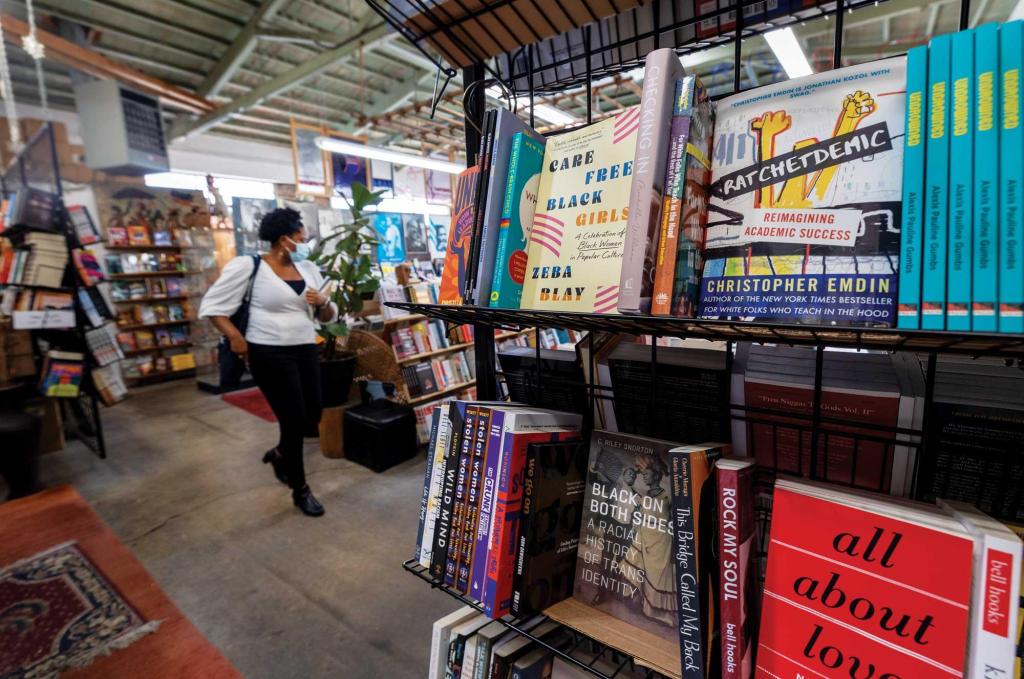
Black-owned bookstores frequently function as discovery engines for authors who might otherwise disappear beneath thousands of releases from major publishers. They host readings, recommend unknown writers and create physical spaces where Black literature isn’t relegated to one shelf labeled “African American.”
But those institutions require consistent customers too.
That is why supporting Black literature cannot become something people remember exclusively during Black History Month or whenever a racial controversy explodes.
Culture cannot survive entirely on emergency enthusiasm.
So, Do Black Readers Support Black Authors?
Yes.
There is abundant evidence that Black readers buy, discuss and propel Black writers into successful careers.
But the 14% decline in print sales of Black-authored books in 2025 should make everyone involved in the ecosystem curious about what happened rather than reaching for a convenient culprit.
Publishers should examine marketing investment.
Bookstores should examine discoverability.
Schools and libraries should examine acquisition.
Authors should examine quality, pricing and audience development.
And readers who publicly emphasize supporting Black literature should occasionally examine their bookshelves.
Because supporting Black authors cannot merely mean demanding that somebody else publish them.
Eventually, somebody has to buy the book.
—Kel McKnight, B1Daily



 B1Daily
Leave a comment