—Kerry Hill, B1Daily
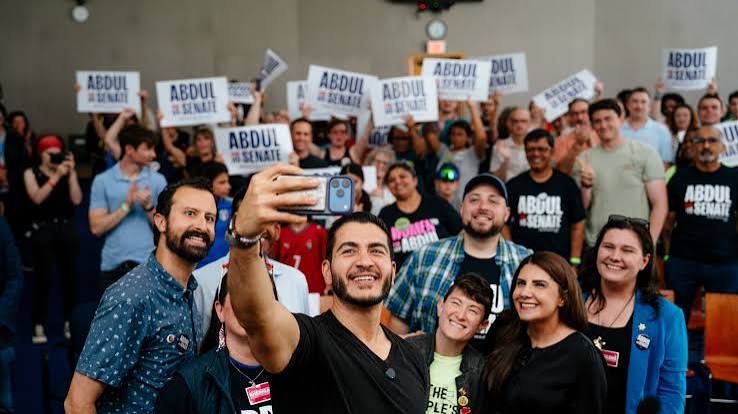
Abdul El-Sayed won Michigan’s Democratic Senate nomination as a progressive insurgent. Now comes a considerably more complicated assignment: convincing enough Black voters that his movement is also their movement.
The warning lights are already blinking.
A September Washington Post poll found 83 percent of likely Black voters wanted Democrats to control the Senate, but only 67 percent supported El-Sayed. That 16-point gap is striking in a constituency Democrats normally depend upon heavily in Michigan.
The problem didn’t suddenly appear after the primary.
An April Detroit Regional Chamber survey found El-Sayed viewed favorably by just 14.9 percent of Black Democratic primary voters, compared with 25.5 percent of white voters. El-Sayed subsequently won the Democratic nomination, but Haley Stevens carried Detroit by 28 points, according to the Washington Post. Black voters interviewed there complained they had not seen enough of El-Sayed or weren’t convinced he understood specifically Black concerns.
Then There’s Reparations
El-Sayed isn’t exactly against reparations. In fact, he has gone considerably further than many Democrats.
At a Detroit town hall earlier this year, he said America owes reparations and called for investing in them. During an August Fox News appearance, however, when directly asked whether he supported reparations, El-Sayed instead called for an “honest conversation” about the debt created by slavery and discussed investments in schools and communities damaged by redlining.
That distinction has become more noticeable because El-Sayed recently unveiled his THRIVE Agenda, a policy package specifically marketed toward Michigan’s Black communities.
It includes Black-business lending, housing assistance, maternal health programs, HBCU investment, clean-water policies and voting-rights legislation.
What’s missing?
Reparations.
The Gander noted that despite El-Sayed’s earlier statements supporting reparations, the word and a specific reparations proposal are absent from THRIVE.
That doesn’t prove El-Sayed has abandoned reparations. His campaign can point to numerous policies intended to address historical and contemporary racial disparities, and El-Sayed has repeatedly described an unpaid national debt to Black Americans.
But politically, the omission creates an awkward question: If reparations are important enough to endorse before Black audiences, why aren’t they important enough to put into the Black policy agenda?
Progressives Meet the Black Electorate
El-Sayed’s difficulty is also part of a larger tension inside progressive politics.
Reuters reported this month that democratic-socialist candidates have faced challenges winning over portions of the Black electorate, particularly older voters who may prioritize bread-and-butter economic issues and hold more moderate political views than younger progressives.
Michigan demonstrated that divide vividly. The Michigan Chronicle reported younger Black voters showing more enthusiasm for El-Sayed during the primary while older Black voters were more inclined toward Stevens.
El-Sayed therefore enters the final stretch with an unusual political puzzle.
Black voters overwhelmingly prefer Democratic Senate control, according to current polling. Yet a meaningful share isn’t automatically transferring that preference to him personally.
His THRIVE agenda represents an obvious attempt to close that distance.
Whether it succeeds is ultimately for Michigan’s Black voters to decide.
But the numbers already make one thing unmistakable: El-Sayed cannot simply assume that being the progressive Democratic nominee automatically delivers Detroit.
He has to earn it.
—Kerry Hill, B1Daily



Leave a comment