
—Sylvester Loving, B1Daily
The Democratic Party has spent years demanding transparency about Jeffrey Epstein’s relationships with America’s political and financial elite. Yet the same records that have embarrassed Republicans also illuminate an uncomfortable collection of Democratic politicians, presidential advisers, wealthy donors, and institutional power brokers who maintained connections to the convicted sex offender.
There are photographs. There are flight records. There are political contributions, private emails, expensive gifts, and allegations of sexual misconduct.
None of those categories should be confused with a criminal conviction. But taken together, they raise legitimate questions about the access Epstein enjoyed among powerful Americans, including people who publicly championed accountability and social justice.
Bill Clinton: The Photographs, Flights and White House Visits
Former President Bill Clinton remains one of the most recognizable political figures connected to Epstein’s social network.
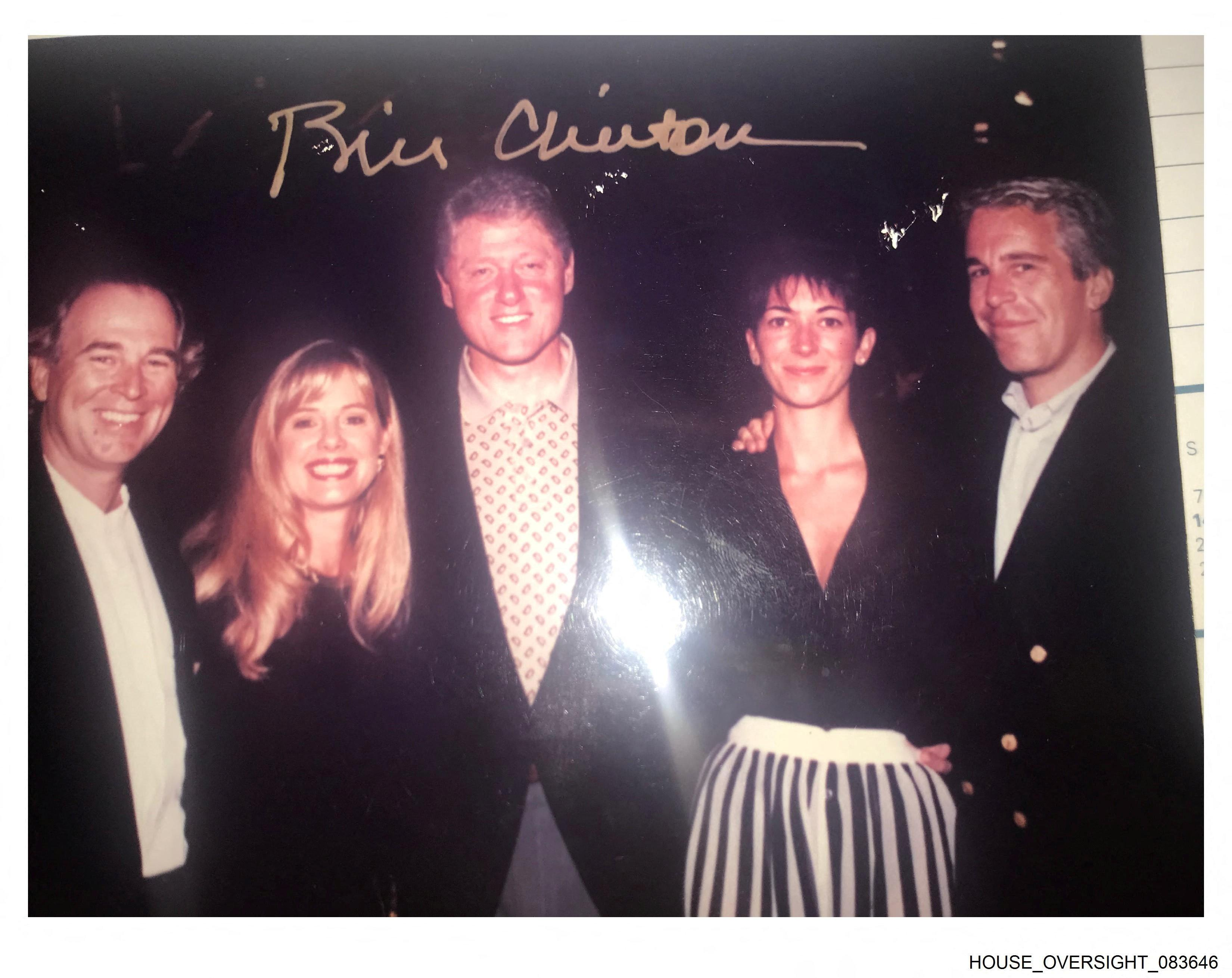
Flight records document Clinton traveling aboard Epstein’s aircraft on multiple occasions after leaving the White House. Clinton has maintained that the trips were connected to humanitarian work and that he knew nothing about Epstein’s sexual offenses.
But the relationship extended beyond a handful of airplane journeys. White House visitor records reviewed by ABC News show Epstein signed in on 17 occasions between 1993 and 1995, during Clinton’s presidency.
Photographs have also shown Clinton with Epstein and Ghislaine Maxwell, who was subsequently convicted of helping Epstein sexually abuse minors. Additional photographs released by congressional investigators in December 2025 renewed scrutiny of Clinton’s association with the financier.
The pictures do not establish criminal misconduct. Nevertheless, they document the extraordinary social access Epstein enjoyed among America’s political leadership.
The financial connections add another dimension. Epstein donated $1,000 to Clinton’s 1992 presidential campaign, while an Epstein-associated foundation contributed $25,000 to the Clinton Foundation in 2006.
Clinton has denied knowledge of Epstein’s crimes and has not been charged in connection with them.
Hillary Clinton and the Democratic Fundraising Machine
Epstein’s financial relationships with Democratic politics extended into Hillary Clinton’s political career.
Federal Election Commission records show that Epstein contributed $20,000 in 1999 through a joint fundraising committee supporting Hillary Clinton’s Senate campaign and the Democratic Party.
Other contributions flowed to Democratic campaign organizations, illustrating how the financier cultivated political access through established fundraising channels.
Receiving a political donation does not establish that a candidate knew about a donor’s criminal conduct. The 1999 contribution also preceded Epstein’s widely publicized criminal prosecution.
But the records demonstrate that Epstein’s political involvement was not restricted to occasional photographs with famous people. He participated in the fundraising networks that helped finance national political campaigns.
Larry Summers: The Harvard President Who Kept Coming Back
Few Epstein relationships have generated more embarrassing correspondence than that involving Larry Summers.
The former Treasury secretary under Bill Clinton, economic adviser to Barack Obama, and president of Harvard University maintained contact with Epstein long after the financier’s 2008 conviction.
Released emails revealed that Summers sought Epstein’s advice concerning a romantic interest, with the two exchanging personal messages about the relationship.
The spectacle was extraordinary: a former Cabinet secretary and internationally prominent economist discussing intimate personal matters with a convicted sex offender.
Summers also traveled aboard Epstein’s aircraft and maintained connections involving academic and financial circles.
Following the disclosure of the correspondence, Summers expressed shame over his judgment and withdrew from prominent institutional responsibilities, including positions associated with Harvard and OpenAI.
There is no established evidence that Summers participated in Epstein’s sexual abuse. The documented controversy concerns his continuing relationship, personal communications, and judgment after Epstein’s criminal history became public.
Kathy Ruemmler: Expensive Gifts From ‘Uncle Jeffrey’
Former Obama White House counsel Kathryn Ruemmler’s relationship with Epstein produced another extraordinary collection of records.
Emails released by the Justice Department showed that Ruemmler accepted expensive gifts from Epstein between 2014 and 2019.
Among the documented items were a Hermès handbag valued at approximately $9,350, a Fendi coat and bag valued at approximately $6,800, wine, flowers, meals, and other personal gifts.
In correspondence, she referred to the financier as “Uncle Jeffrey.”
Ruemmler also provided informal advice about how Epstein should respond to media scrutiny surrounding his criminal history and the favorable treatment he had previously received from prosecutors.
She has maintained that she knew Epstein through professional legal circles, was unaware of ongoing criminal conduct, and never served as his lawyer.
The disclosures nevertheless damaged her professional standing. Ruemmler announced her departure from Goldman Sachs, where she had served as chief legal officer.
The records do not establish that she participated in Epstein’s offenses, but they document a remarkably close relationship with a man whose criminal conviction was already public knowledge.
Stacey Plaskett: Texting Epstein During Congressional Testimony
Democratic congressional delegate Stacey Plaskett of the U.S. Virgin Islands faced scrutiny after released communications showed her exchanging messages with Epstein during Michael Cohen’s February 2019 congressional testimony.
The correspondence suggested Epstein was following the hearing and communicating observations that potentially related to Plaskett’s questioning.
The financial relationship was also documented.
Federal campaign records show that Plaskett received $8,100 from Epstein during the 2016 and 2018 election cycles. Following Epstein’s 2019 indictment, she announced that she would donate an equivalent amount to organizations serving women and children.
Additional correspondence revealed that Cecile de Jongh, wife of former Democratic Virgin Islands governor John de Jongh Jr., had solicited Epstein’s financial assistance for Plaskett’s political campaign.
A 2014 email described the political advantages of supporting Plaskett, while other communications concerned additional campaign contributions.
Plaskett condemned Epstein’s criminal behavior and denied involvement in his offenses. A civil lawsuit naming her and other Virgin Islands officials was dismissed, and a congressional effort to censure her failed.
Still, the combination of campaign contributions, political communications, and the timing of the congressional messages raises substantial questions about the boundaries between donors and elected officials.
Bill Richardson and George Mitchell: The Serious Allegations
Two prominent Democratic figures faced allegations considerably more serious than embarrassing photographs or questionable correspondence.
Former New Mexico governor Bill Richardson and former Senate majority leader George Mitchell were named in allegations made by Virginia Giuffre, one of Epstein’s most prominent accusers.
Giuffre alleged that Epstein and Maxwell directed her into sexual encounters involving powerful men, including Richardson and Mitchell.
Both men denied the allegations.
Neither was criminally charged in connection with Giuffre’s claims, and the allegations were not established through criminal convictions.
Richardson also had a documented financial connection to Epstein. His 2006 gubernatorial reelection campaign received $50,000 from the financier, an amount Richardson’s representatives said was subsequently donated to charity.
The allegations against Richardson and Mitchell must be distinguished from proven criminal conduct. Nevertheless, they remain part of the public record surrounding Epstein’s network and the testimony of his accusers.
The Donor Network Extended Beyond Washington
Epstein’s political connections were not limited to elected officials.
Reid Hoffman, the LinkedIn co-founder and major Democratic donor, acknowledged meeting with Epstein after his 2008 conviction. Their interactions involved discussions of philanthropy and fundraising, including connections to the Massachusetts Institute of Technology.
Hoffman has expressed regret over the relationship and denied involvement in Epstein’s crimes.
The broader pattern illustrates how Epstein maintained access through overlapping networks of philanthropy, academic institutions, technology executives, and political donors.
That access mattered because wealth and institutional prestige can provide opportunities for individuals to rebuild social standing even after serious criminal convictions.
The Democratic Donations That Kept Flowing
Epstein’s political contributions stretched across decades.
His documented donations included money to the Democratic National Committee, Democratic Senate fundraising organizations, Hillary Clinton’s political operation, Bill Clinton’s presidential campaign, and individual Democratic politicians.
Former Secretary of State John Kerry also received contributions during his Senate career. His representatives said the donations were made years before Epstein’s crimes became widely known and that Kerry did not personally know him.
The Democratic Congressional Campaign Committee returned a $10,000 contribution from Epstein in 2018, describing the donation as unsolicited.
These distinctions matter. Donations made before Epstein’s criminal conduct became publicly known are not equivalent to relationships maintained after his conviction.
Still, the financial record reveals how thoroughly Epstein pursued access to political institutions.
The Uncomfortable Question About Elite Accountability
Epstein’s relationships were bipartisan. Donald Trump, Steve Bannon, and other Republican-associated figures have also appeared in photographs, correspondence, or reporting about the financier.
That fact does not diminish scrutiny of Democratic connections. It demonstrates that Epstein’s network extended across ideological boundaries and into institutions that often publicly opposed one another.
The most revealing aspect of the scandal may be the ease with which a convicted sex offender continued interacting with influential people after 2008.
Some relationships were brief. Others involved sustained correspondence, fundraising, travel, gifts, or personal advice. A smaller number became the subject of serious allegations that were denied and never resulted in criminal convictions.
Treating all those connections as equivalent would distort the evidence. Ignoring the documented relationships because the individuals involved belonged to a preferred political party would be equally problematic.
The Epstein Scandal Was Never Just a Republican Problem
The records reveal a financier who cultivated relationships across American political, financial, and academic life.
For Democrats, that history includes an unmistakable collection of embarrassing facts: a former president photographed with Epstein and Maxwell, a former Harvard president seeking personal advice from him, an Obama administration lawyer accepting expensive gifts, a congressional delegate exchanging messages with him during testimony, and decades of political contributions.
The allegations against Richardson and Mitchell add a separate and more serious dimension, although both denied wrongdoing and neither was convicted.
The central issue is not whether every person who encountered Epstein committed a crime. There is no evidence supporting such a sweeping conclusion.
It is why Epstein retained access to so many powerful institutions after his criminal conduct was publicly established, and whether those institutions adequately scrutinized the relationships they maintained.
Democrats have called for disclosure of the Epstein files. Their own historical connections deserve examination under the same evidentiary standards they demand for Republicans.
The Epstein scandal crossed party lines. So must the accountability.
—Sylvester Loving, B1Daily



Leave a Reply