—Vanessa Edwards, B1Daily
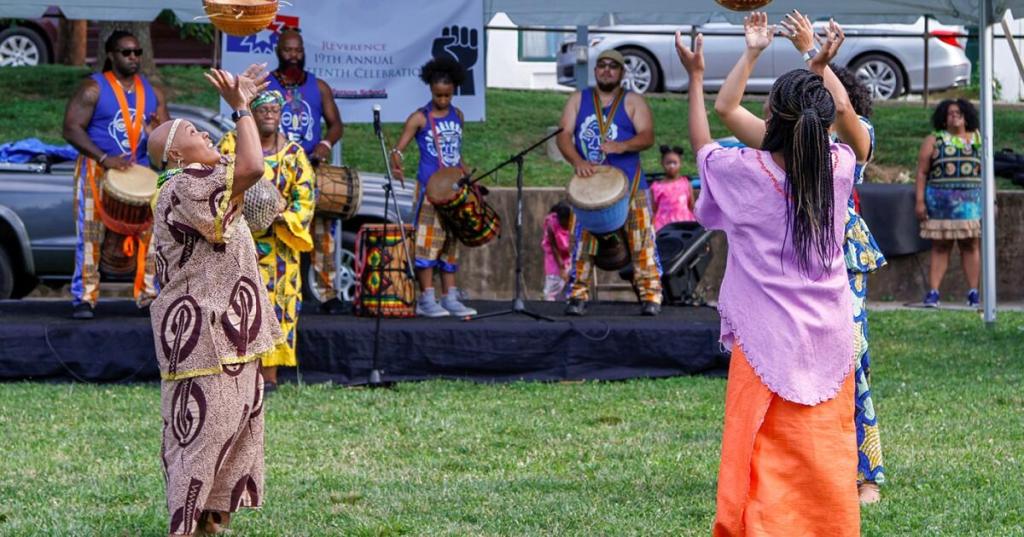
For millions of Black Americans, Africa has long been described as the Motherland, a symbolic ancestral home representing cultural origins, historical belonging, and a connection to the continent from which their ancestors were forcibly taken. But as conversations surrounding Black American identity, lineage, and cultural independence become increasingly prominent, a controversial question deserves serious consideration: Why should Black Americans continue calling Africa the Motherland when their distinct ethnic identity was forged in the United States?
The answer is more complicated than a shared skin color or ancestral connection.
Africa Is Our Ancestral Origin, But Is It Our Homeland?
There is no disputing that most Black Americans descended from enslaved Africans have substantial ancestral roots in West and Central Africa. However, ancestry and nationality are not interchangeable, and neither are ancestry and ethnicity.
Black Americans, particularly descendants of American slavery, developed a distinct ethnic identity through centuries of shared experiences, cultural innovation, resistance, and survival. Our ancestors established communities, created musical traditions, developed unique dialects, built institutions, and fought for citizenship in a country that repeatedly denied them their humanity.
The result was not simply an African population living abroad. It was the emergence of a distinctly American people with their own history, customs, and collective identity.
If Black Americans have spent centuries building their own culture, why should their identity remain permanently attached to a continent rather than the homeland their ancestors helped construct?
The Romanticization of Africa
Pan-Africanism has historically encouraged solidarity among people of African descent, particularly in confronting colonialism, racism, and economic exploitation. That solidarity has produced meaningful political and cultural achievements.
However, romanticizing Africa as a unified ancestral homeland can obscure the continent’s enormous ethnic, linguistic, and political diversity.
Africa is not a single nation, culture, or political community. It contains thousands of ethnic groups with different histories, languages, traditions, and interests. A Black American visiting Ghana, Nigeria, or Ethiopia may discover meaningful ancestral connections without necessarily sharing the ethnic identity, citizenship, or lived experiences of the people residing there.
Furthermore, cultural solidarity does not automatically translate into political representation, citizenship rights, or economic opportunity.
A symbolic Motherland is one thing. A country willing to recognize you as one of its own is another.
Black Americans Have a Homeland: America
Perhaps the most uncomfortable aspect of this debate is the assumption that Black Americans must look elsewhere to discover a legitimate homeland.
Black American ancestors cultivated American farmland, constructed infrastructure, fought in American wars, established businesses, shaped political institutions, and fundamentally transformed the nation’s cultural identity.
Our history is inseparable from America’s development.
The United States may have denied Black Americans equal rights for much of its existence, but that injustice does not erase our ancestral investment in the country.
In fact, the argument can be reversed: Why should descendants of the people who helped build America feel obligated to identify another continent as their true home?
Recognizing America as our homeland does not excuse slavery, segregation, racial violence, or institutional discrimination. It acknowledges that Black Americans have an undeniable historical claim to the nation their ancestors helped create.
That claim carries political implications, particularly concerning reparations, citizenship, historical recognition, and the preservation of Black American cultural heritage.
Respecting Africa Without Surrendering Our Identity
Rejecting the idea that Africa must serve as every Black American’s Motherland does not require hostility toward Africans or dismissal of African ancestry.
Black Americans can celebrate African civilizations, study ancestral languages, develop economic relationships with African nations, and support international cooperation without abandoning their distinct ethnic identity.
Likewise, Africans should not be expected to regard Black Americans as culturally identical simply because their ancestors originated on the same continent.
Mutual respect begins with recognizing differences rather than pretending they do not exist.
For Black American Freedmen, maintaining a distinct identity is especially important when discussing historical reparations and policies intended to address specific injustices committed against their ancestors in the United States.
Shared African ancestry should not erase the political and historical distinctions between populations whose experiences have developed along different paths.
The Motherland Debate Is Really About Self-Determination
Ultimately, the question is not whether Black Americans have African ancestry. That historical connection is undeniable.
The question is whether ancestry alone should determine where a people locate their national and cultural identity.
For some Black Americans, calling Africa the Motherland provides a meaningful spiritual and emotional connection to ancestors whose lives were violently uprooted. That sentiment deserves respect.
For others, particularly those emphasizing the distinct historical experiences of American Freedmen, the United States is not merely the country where they happen to live. It is their ancestral homeland, established through generations of struggle, sacrifice, and cultural achievement.
Africa may be where much of our ancestral story began, but America is where Black Americans became a distinct people.
And perhaps the greatest act of cultural self-determination is recognizing that Black Americans do not need to borrow another people’s national identity to validate their own.
We already have a history, a culture, and a homeland worth claiming.
—Vanessa Edwards, B1Daily


Leave a Reply