—Sylvester Loving, B1Daily
Americans have spent years worrying about foreign governments interfering in their elections. Russia, China, and Iran regularly appear in discussions about disinformation, cyberattacks, and attempts to influence American politics.
But while Washington concentrates on threats originating overseas, another source of extraordinary political influence operates openly within America’s borders.
The nation’s wealthiest individuals can spend enormous sums supporting political candidates, influence public debate through media ownership, and lobby government officials over policies affecting their businesses.
Unlike foreign governments, American billionaires generally enjoy broad constitutional protections allowing them to participate in domestic politics.
That distinction raises a provocative question: Can concentrated private wealth undermine democratic equality even when its political activities are perfectly legal?
The Billionaire Election Has Arrived
The scale of wealthy political spending has become extraordinary.
According to an October 2026 analysis by Public Citizen, 515 donors contributing at least $1 million each have supplied approximately $4.2 billion to super PACs during the current election cycle.
Those contributions account for roughly 73% of all money raised by the political committees examined.
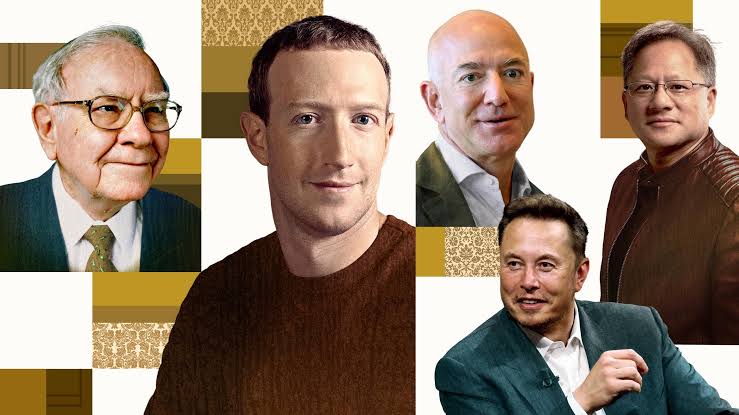
Elon Musk alone contributed approximately $445 million, making him the largest reported super PAC donor in the analysis.
The numbers illustrate how dramatically political financing has changed.
An ordinary American might contribute $20 or $50 to a candidate they support. A billionaire can spend millions financing advertisements, voter outreach, and political organizations.
Both citizens possess one vote.
But their ability to influence the political environment surrounding that vote is vastly different.
Citizens United Changed the Political Marketplace
The Supreme Court’s 2010 Citizens United v. Federal Election Commission decision reshaped American campaign finance by protecting independent political expenditures by corporations and unions.
Subsequent legal developments helped establish the modern super PAC system, allowing political committees to accept unlimited contributions for independent expenditures.
Supporters argue that political spending is a form of constitutionally protected expression and that citizens should be free to advocate for their preferred candidates.
Critics counter that unlimited spending gives wealthy donors disproportionate influence over electoral competition.
The distinction between campaign contributions and independent expenditures is legally important. Direct donations to federal candidates remain subject to limits, and independent spending does not automatically establish corruption.
Nevertheless, the resulting system allows wealthy individuals to exert substantial influence over which candidates receive attention, funding, and organizational support.
Dark Money Makes Accountability Even Harder
The problem extends beyond publicly identified billionaires.
Political organizations can receive funding through nonprofit entities that do not disclose their original donors.
According to the Brennan Center for Justice, dark-money spending reached approximately $1.9 billion during the 2024 federal election cycle.
This creates a transparency problem.
Voters may encounter political advertisements without knowing which wealthy individuals, corporations, or organizations ultimately financed them.
That makes it harder to evaluate potential conflicts of interest.
Democracy depends on informed participation, and financial secrecy can undermine the public’s ability to understand who is attempting to influence elections.
When Wealth Controls the Information Environment
Political spending represents only one dimension of billionaire influence.
Wealthy individuals also own newspapers, television properties, social media platforms, and other businesses that shape how Americans receive information.
Media ownership does not automatically mean editorial manipulation. Many news organizations maintain professional independence despite wealthy ownership.
Nevertheless, concentrated control of major communication platforms creates legitimate concerns about transparency, editorial autonomy, and the power to amplify or restrict particular messages.
The growth of artificial intelligence introduces additional questions.
Technology companies increasingly control systems capable of producing information, recommending content, and influencing how people encounter political arguments.
When the same economic interests participate in political financing, technology development, and information distribution, public oversight becomes especially important.
Foreign Interference Is Still a Serious Threat
Comparing billionaires with foreign governments requires caution.
Foreign intelligence operations may involve covert propaganda, cyberattacks, espionage, and attempts to disrupt democratic institutions.
Those activities are fundamentally different from lawful domestic political advocacy.
Russia, China, and Iran have all been identified in research examining foreign influence campaigns.
Domestic political spending, even when controversial, cannot simply be equated with hostile foreign operations.
Nor is there a reliable measurement establishing that billionaires collectively pose a greater democratic danger than foreign governments.
The more useful comparison concerns accountability.
Foreign influence operations often seek to conceal their origins. Domestic political spending may be disclosed, partially disclosed, or routed through organizations that obscure funding sources.
Both circumstances raise questions about transparency, institutional resilience, and the ability of voters to make informed decisions.
What Happens to Ordinary Americans?
The consequences of concentrated political influence extend beyond election campaigns.
Decisions about taxation, healthcare, housing, labor protections, financial regulation, and corporate oversight affect millions of Americans.
Wealthy donors may advocate for policies that align with their economic interests, just as labor organizations, advocacy groups, and ordinary voters advocate for theirs.
The democratic concern arises when access and influence become so unequal that elected officials pay disproportionate attention to a relatively small donor class.
For working-class communities, including many Black American neighborhoods, this imbalance can deepen existing frustrations over political representation.
A political system cannot guarantee equal economic resources.
But it can establish rules that promote transparency, prevent corruption, and preserve meaningful opportunities for ordinary citizens to participate.
Democracy Needs Stronger Financial Guardrails
Addressing these concerns does not require treating wealth itself as wrongdoing.
Billionaires retain constitutional rights, including the right to express political opinions and support lawful political causes.
However, policymakers can consider stronger disclosure requirements, clearer rules separating campaigns from supposedly independent political committees, and more effective enforcement of existing election laws.
Public financing programs and small-donor matching systems could also help candidates compete without relying as heavily on wealthy contributors.
Media transparency and stronger conflict-of-interest safeguards deserve consideration as well.
These reforms would face legal and political challenges, particularly because campaign finance restrictions implicate First Amendment protections.
But democratic institutions have a legitimate interest in ensuring that political participation remains meaningful beyond the wealthiest households.
The Real Question Is Who Holds Power
Foreign governments and wealthy domestic donors present different challenges to American democracy.
One may attempt to manipulate elections from abroad. The other can exercise substantial influence through legally protected political spending and economic power.
Both deserve scrutiny, but neither should be reduced to a simplistic comparison.
The more important question is whether America’s political institutions can remain accountable to the public when financial influence becomes increasingly concentrated.
Democracy does not require every citizen to possess equal wealth. It does require that government remain answerable to voters rather than becoming disproportionately responsive to those who can afford the largest political investments.
If Americans want a political system that represents the public, they must examine not only who wins elections but also who finances them, who shapes public debate, and whether ordinary citizens can still make themselves heard.
—Sylvester Loving, B1Daily




Leave a Reply