—Michael Lyles, B1Daily
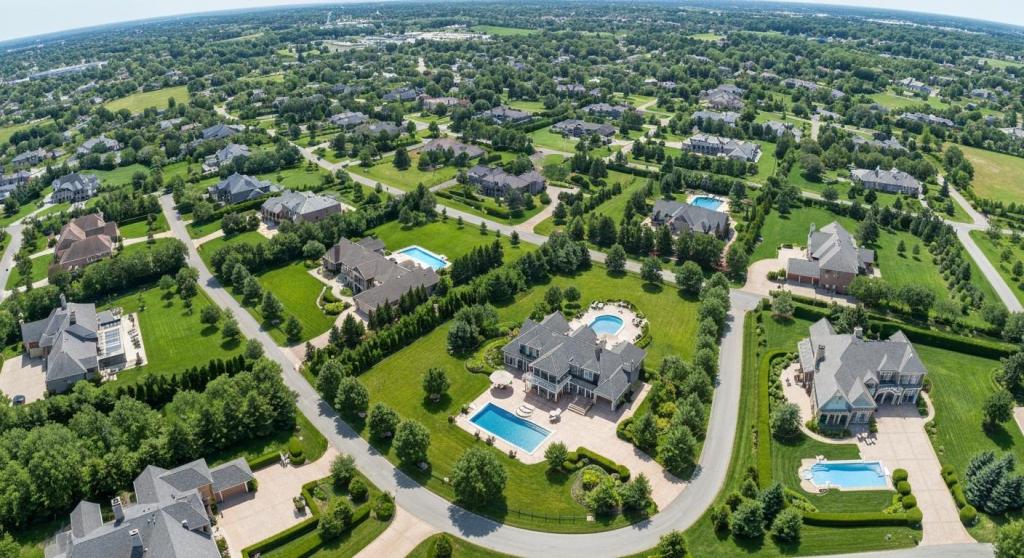
America’s wealthiest neighborhoods rarely need physical walls to keep working-class families out. They have something considerably more effective: zoning laws.
Across the United States, affluent suburbs have used minimum lot sizes, restrictions on apartment buildings, and single-family-only zoning to limit who can afford to live within their boundaries.
These regulations are frequently defended as necessary to preserve neighborhood character, reduce congestion, and protect property values.
But critics argue that they also accomplish something far more troubling: turning public policy into an economic barrier that protects wealthy communities from lower-income residents.
And for Black Americans, the consequences are particularly significant.
From Racial Segregation to Economic Exclusion
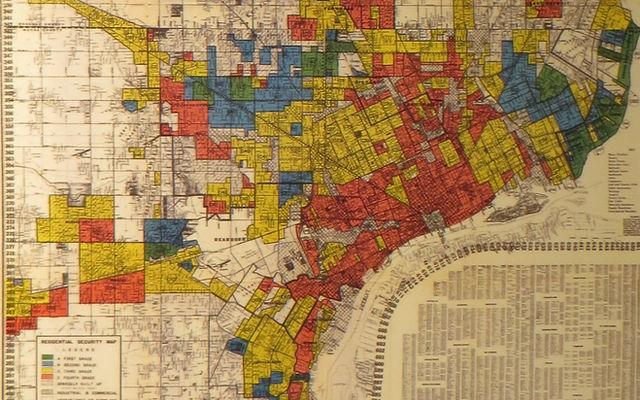
The history of exclusionary zoning cannot be separated from America’s history of racial discrimination.
In the early twentieth century, some municipalities openly attempted to segregate neighborhoods through laws restricting where Black residents could live.
The Supreme Court struck down explicit racial residential zoning in its 1917 Buchanan v. Warley decision.
However, discriminatory housing practices did not disappear.
Communities increasingly relied on land-use restrictions that appeared racially neutral but made housing prohibitively expensive.
Instead of explicitly prohibiting Black residents, municipalities could require large residential lots, ban apartment complexes, or restrict construction to detached single-family houses.
The financial requirements created by these policies disproportionately excluded families with fewer economic resources.
Given the historical wealth disparities produced by slavery, segregation, and discriminatory lending, Black Americans were particularly disadvantaged.
The language of exclusion changed, but many of its consequences survived.
How Zoning Protects Wealthy Neighborhoods
Consider an affluent suburb where local regulations require every new home to occupy a large parcel of land.
A developer might want to construct smaller houses, duplexes, or townhomes that would provide more affordable opportunities for first-time buyers.
But zoning regulations may prohibit those alternatives.
The result is a neighborhood where the only legally permitted housing is expensive by design.
Minimum lot sizes increase land costs, while restrictions on multifamily housing reduce the number of available homes.
Parking requirements, building setbacks, and lengthy approval processes can further increase development expenses.
These policies are not inherently discriminatory in every circumstance. Some address legitimate infrastructure and planning concerns.
However, when restrictive regulations consistently prevent affordable housing from entering wealthy communities, their exclusionary effects become difficult to ignore.
The Research Is Increasingly Clear
A 2023 Urban Institute study examining zoning across Connecticut found that restrictive regulations limiting construction to single-family homes were associated with higher-income communities and greater racial and economic segregation.
Research published in 2026 by Vanderbilt University political scientist Jessica Trounstine similarly found that restrictively zoned neighborhoods tend to have higher property values, greater wealth, and less racial diversity.
The findings reinforce a growing body of evidence suggesting that zoning regulations can contribute to inequality by restricting housing supply and concentrating opportunity.
Harvard’s Joint Center for Housing Studies has also identified the existence of so-called rental deserts, neighborhoods where rental housing represents less than 20% of the residential stock.
These areas are disproportionately suburban, affluent, and White.
When neighborhoods provide few opportunities to rent or purchase affordable homes, lower-income households are effectively excluded from accessing the resources available within them.
Wealthy Neighborhoods Are Protecting More Than Property Values
The benefits of living in affluent communities extend far beyond expensive houses.
Residents often enjoy access to well-funded schools, employment opportunities, recreational facilities, and valuable professional networks.
Because American public education relies heavily on state and local funding arrangements, neighborhood wealth can influence the resources available to students.
Restrictive zoning can therefore create barriers not only to housing but also to educational and economic mobility.
A working-class family may be unable to move into a community with strong schools simply because local regulations prohibit the construction of housing they could afford.
Meanwhile, existing homeowners benefit from limited housing supply and potentially higher property values.
The wealthy are not merely protecting their neighborhoods. In some cases, they are protecting exclusive access to opportunity.
Black Homeownership Pays the Price
For Black Americans, exclusionary zoning compounds generations of housing discrimination.
Federal housing policies historically helped many White families purchase suburban homes while Black families were frequently denied comparable opportunities.
Those properties appreciated over time, helping create wealth that could be passed to future generations.
Today, restrictive zoning can make it harder for Black households to enter the same high-opportunity housing markets.
Even families with stable incomes and good credit may struggle to find affordable homes in communities where smaller houses and multifamily developments are prohibited.
This contributes to the broader challenge of closing America’s racial homeownership and wealth gaps.
Zoning reform alone cannot erase those disparities, but it could remove one important structural barrier.
Why Local Governments Resist Reform
Efforts to change zoning regulations frequently encounter fierce opposition from existing homeowners.
Residents may argue that additional housing will increase traffic, strain public services, reduce neighborhood aesthetics, or lower property values.
Some concerns deserve legitimate consideration.
Communities need adequate infrastructure, schools, utilities, and transportation systems to accommodate growth.
However, those concerns should not become permanent excuses for preventing virtually all new housing construction.
Local governments must balance the interests of existing residents with the needs of people who cannot currently afford to live in their communities.
Otherwise, zoning boards risk becoming institutions that protect established wealth at the expense of broader public opportunity.
America Needs Housing Reform That Expands Opportunity
Several cities and states have begun reconsidering restrictive residential zoning.
Minneapolis, Oregon, California, and other jurisdictions have pursued reforms intended to allow additional housing types in areas previously dominated by single-family development.
These approaches include permitting duplexes, townhomes, accessory dwelling units, and other forms of relatively compact housing.
But changing zoning laws does not automatically produce affordable homes.
Construction costs, financing conditions, land prices, and market demand still influence what developers build.
Meaningful reform should therefore combine increased housing supply with targeted affordability programs, stronger fair-housing enforcement, and assistance for first-time homebuyers.
Communities also need infrastructure investment to ensure new development is sustainable.
Public Policy Should Not Function Like a Private Country Club
Americans should have the freedom to purchase homes in neighborhoods they can afford.
But local governments should not unnecessarily restrict housing choices simply to preserve exclusivity.
There is a difference between protecting residents from harmful development and preventing entire categories of families from accessing desirable communities.
The former serves a legitimate public purpose.
The latter risks transforming local government into an instrument of economic segregation.
America cannot seriously address housing inequality while allowing affluent neighborhoods to use restrictive land-use regulations to keep affordable homes outside their boundaries.
For Black Americans seeking homeownership, better schools, and opportunities to build generational wealth, dismantling unnecessary zoning barriers could represent an important step toward greater economic mobility.
The country’s wealthiest neighborhoods do not need gates when local regulations can accomplish much of the same exclusion.
And until those rules change, the American dream will remain considerably easier to access for families who already possess the wealth to purchase it.
—Michael Lyles, B1Daily




Leave a Reply