—Kel McKnight, B1Daily
Hollywood loves a cinematic universe, but few studios have struggled to build one quite like DC.
Years of inconsistent creative direction, abandoned storylines, controversial executive decisions, and competing visions left Warner Bros.’ legendary superhero properties trapped in a seemingly endless identity crisis.
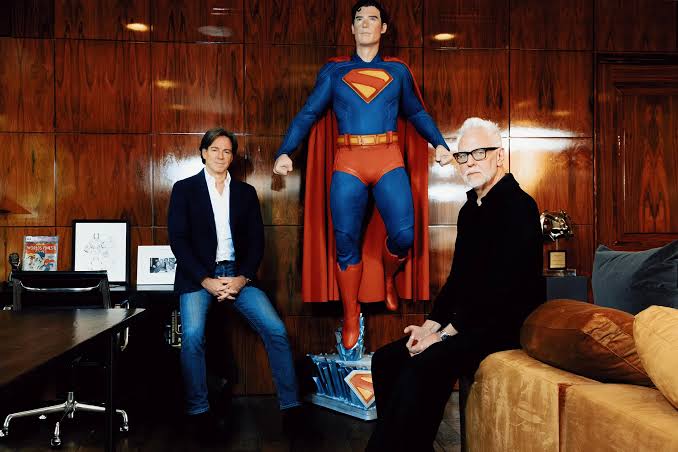
Enter James Gunn and Peter Safran.
Since assuming control of DC Studios in 2022, the filmmaker-producer duo has undertaken one of Hollywood’s most ambitious franchise reconstruction projects. And despite a few setbacks, their approach is beginning to demonstrate something increasingly rare in modern blockbuster filmmaking: genuine creative vision.
Gunn and Safran aren’t simply rebuilding DC. They’re challenging the idea that every superhero movie must follow the same exhausted Hollywood formula.
Superman Was the Statement DC Needed
James Gunn’s Superman (2025), starring David Corenswet, served as the defining introduction to the new DC Universe.
Rather than attempting to reproduce the darker atmosphere of previous interpretations, Gunn embraced Superman’s compassion, optimism, and occasionally eccentric comic-book mythology.
The result was a film that celebrated the character’s humanity without apologizing for his extraordinary powers.
Grossing more than $600 million worldwide, Superman demonstrated that audiences remained interested in DC’s most iconic hero when presented with a compelling creative direction.
More importantly, it established the foundation for a universe where colorful costumes, unusual characters, and emotional storytelling could coexist without embarrassment.
Peter Safran Is the Architect Behind the Ambition
While Gunn receives considerable attention for his filmmaking personality, Peter Safran deserves equal recognition for helping transform ambitious creative ideas into functioning productions.
Safran’s experience producing The Conjuring, Aquaman, The Suicide Squad, and Peacemaker has given him an understanding of both large-scale franchise management and unconventional genre filmmaking.
His partnership with Gunn combines creative experimentation with practical production experience.
Rather than building an entire studio around one director’s aesthetic, the pair have emphasized finding filmmakers capable of delivering distinctive interpretations of DC characters.
That philosophy has allowed DC Studios to explore projects that conventional Hollywood executives might consider commercially risky.
Clayface Proves DC Is Willing to Take Risks
Perhaps the clearest example of their creative ambition is Clayface.
Instead of introducing the Batman villain through another traditional superhero adventure, DC Studios embraced a character-driven horror film developed from a screenplay by Mike Flanagan and Hossein Amini.
Directed by James Watkins, the R-rated production stars Tom Rhys Harries and explores the disturbing consequences of physical transformation.
The decision to give a relatively obscure comic-book villain his own horror film would have sounded absurd under many previous franchise strategies.
Yet Clayface opened atop the North American box office in October 2026, generating approximately $24 million domestically during its opening weekend.
Its promising reception suggests that audiences may welcome superhero properties that explore different genres rather than endlessly repeating the same formula.
DC doesn’t need every movie to resemble Superman. Sometimes it needs a monster movie that happens to exist in Superman’s universe.
Lanterns and the Importance of Creative Diversity
DC’s television strategy has also demonstrated an appetite for experimentation.
Lanterns, featuring Kyle Chandler as Hal Jordan and Aaron Pierre as John Stewart, approaches the Green Lantern mythology through a grounded mystery-drama format.
Meanwhile, Creature Commandos and Peacemaker demonstrate Gunn’s willingness to embrace animation, dark comedy, unconventional protagonists, and mature storytelling.
This diversity matters.
Comic books have never belonged to one genre. They encompass science fiction, detective mysteries, supernatural horror, political thrillers, and deeply personal dramas.
Gunn and Safran appear determined to give those storytelling traditions room to breathe.
Their strategy also creates opportunities for lesser-known characters, including John Stewart, to receive substantial attention beyond DC’s traditional reliance on Batman and Superman.
Not Every Gamble Has Worked
Of course, visionary leadership does not guarantee uninterrupted success.
Supergirl, starring Milly Alcock, struggled commercially during its 2026 theatrical release, demonstrating that DC’s new direction remains vulnerable to audience indifference and financial disappointment.
The studio also faces criticism over delayed projects, changing development priorities, and uncertainty surrounding its long-term plans.
Those concerns are legitimate.
But an unsuccessful film does not automatically invalidate an entire creative strategy.
The more important question is whether Gunn and Safran are building a studio capable of learning from its mistakes while maintaining a recognizable creative identity.
Thus far, their willingness to experiment suggests they understand that DC’s future cannot depend entirely on predictable sequels and interconnected marketing campaigns.
DC Doesn’t Need to Become Marvel
Perhaps Gunn and Safran’s smartest decision has been resisting the temptation to transform DC into a carbon copy of the Marvel Cinematic Universe.
Marvel popularized interconnected storytelling, but that success also encouraged studios to treat individual movies as advertisements for future installments.
Gunn has emphasized that DC projects should work as complete stories rather than exist solely to establish the next crossover.
That distinction could become the new DC Universe’s greatest strength.
A Superman film can deliver traditional superhero spectacle. A Green Lantern series can explore science-fiction mysteries. A Clayface movie can terrify audiences.
And none should require viewers to complete fifteen hours of cinematic homework beforehand.
The DC Universe Finally Has an Identity
James Gunn and Peter Safran have not created a flawless cinematic universe, nor have they guaranteed DC’s long-term commercial success.
But they have accomplished something arguably more important.
They have given DC Studios a coherent creative philosophy.
Instead of forcing every character into the same atmosphere, they are allowing DC’s enormous fictional universe to embrace its diversity.
With Man of Tomorrow scheduled for 2027 and additional Batman, Wonder Woman, and other DC projects in development, the pair still have plenty to prove.
Nevertheless, their early work suggests that DC Studios has finally found leadership willing to take meaningful creative risks.
Gunn and Safran understand something Hollywood occasionally forgets: superheroes became cultural icons because their stories inspired imagination, not because they followed corporate formulas.
And after years of uncertainty, DC’s future is beginning to look genuinely exciting again.
—Kel McKnight, B1Daily






Leave a Reply