—Barrington Williams, B1Daily
New York City’s criminal justice system is facing serious allegations after a Republican-led congressional investigation accused district attorneys across all five boroughs of using plea agreements designed to help noncitizen defendants avoid deportation.
The October 26, 2026, report from the House Judiciary Committee alleges that prosecutors in Manhattan, Brooklyn, Queens, the Bronx, and Staten Island have adopted practices that consider immigration consequences when negotiating criminal charges.
The findings raise an uncomfortable question: Should a defendant’s immigration status influence the criminal charges prosecutors are willing to pursue?
The report’s allegations deserve scrutiny, particularly because some involve serious offenses. However, the investigation is a partisan congressional staff report, not a judicial finding of misconduct. It also addresses noncitizens generally, including lawful immigrants, rather than establishing that every defendant involved was living in the country illegally.
Five Boroughs, Five District Attorneys, One Controversial Practice
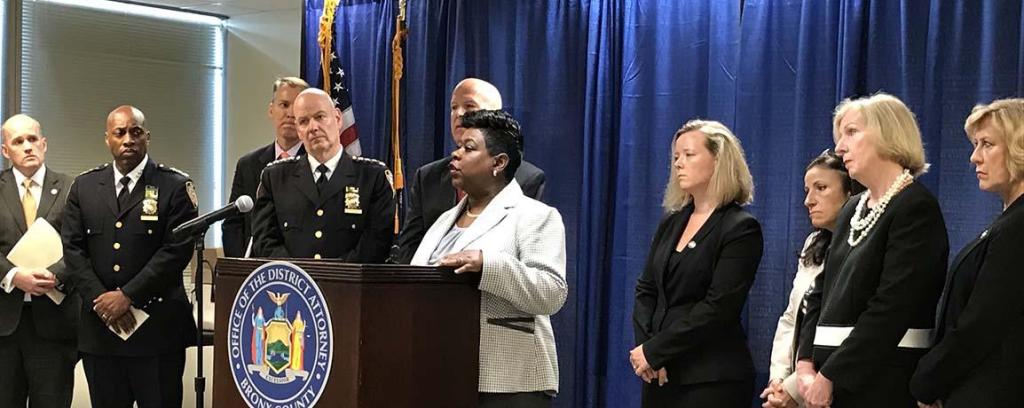
The report identifies Bronx District Attorney Darcel Clark, Queens District Attorney Melinda Katz, Manhattan District Attorney Alvin Bragg, Brooklyn District Attorney Eric Gonzalez, and Staten Island District Attorney Michael McMahon.
According to congressional investigators, prosecutors in these offices have used immigration-conscious plea bargaining to reduce the possibility that criminal convictions will trigger removal proceedings.
In the Bronx, investigators highlighted training materials describing alternatives to charges that could carry severe immigration consequences. The report also questioned guidance involving offenses such as domestic violence, firearms violations, and crimes against children.
Queens prosecutors allegedly received instructions to exercise particular caution when negotiating cases involving noncitizens. Investigators cited a May 2026 email describing an immigration-safe plea agreement in which the defendant nevertheless pleaded guilty to multiple crimes and received jail time.
In Manhattan, the committee pointed to a 2022 memorandum encouraging prosecutors to consider dispositions that would avoid immigration consequences in misdemeanor cases and certain felonies.
Bragg’s office responded that the policy was outdated and had been revised to allow case-by-case discretion.
Brooklyn prosecutors have openly maintained an immigration-conscious prosecution policy since 2017, while the committee also criticized Staten Island’s approach to coordinating criminal prosecutions and immigration enforcement.
But the offices have not responded uniformly.
McMahon’s office called the congressional report politically motivated and disputed its characterization of Staten Island’s practices.
Is Justice Being Negotiated Around Immigration Status?
Prosecutors routinely negotiate plea agreements for many reasons, including evidentiary weaknesses, victim preferences, court resources, rehabilitation prospects, and the seriousness of an offense.
Considering the collateral consequences of a conviction is not automatically unlawful.
Nevertheless, the allegations raise legitimate questions about consistency.
If two defendants commit comparable offenses under comparable circumstances, should one receive a different criminal disposition because a conviction might result in deportation?
Supporters of immigration-conscious prosecution argue that deportation can be a disproportionately severe consequence, particularly for longtime lawful residents convicted of relatively minor offenses.
Critics argue that prosecutors should not manipulate charging decisions to prevent federal immigration laws from taking effect.
The strongest concern arises when immigration considerations potentially affect the handling of serious violent crimes.
Public confidence depends on knowing that prosecutors are evaluating criminal conduct fairly, protecting victims, and applying consistent standards.
This Is Not Just a New York Debate
New York’s policies are part of a broader national debate over how state criminal prosecutions interact with federal immigration law.
California enacted legislation in 2016 requiring prosecutors to consider avoiding adverse immigration consequences during plea negotiations.
Prosecutors in jurisdictions including Philadelphia and Baltimore have also adopted approaches that consider deportation risks when resolving certain criminal cases.
These policies reflect a philosophy that criminal punishment and immigration enforcement should not necessarily operate as a single system.
Opponents see something different: local officials using prosecutorial discretion to soften the consequences established by federal immigration law.
However, the existence of similar policies does not prove that prosecutors throughout Democratic-led states routinely downgrade serious charges or systematically favor undocumented immigrants.
Establishing such a pattern would require comparative case records, charging data, and evidence showing how similarly situated defendants are treated.
Sanctuary Policies Complicate the Debate
The congressional investigation also criticized New York City’s restrictions on cooperation with federal immigration authorities.
According to the committee, the NYPD received more than 20,000 immigration detainers between July 2018 and June 2026 without honoring any of them.
Detainers are federal requests asking local authorities to hold individuals for possible immigration custody. They are distinct from criminal warrants, and local governments have disputed their obligations to comply.
Supporters of sanctuary policies argue that separating local policing from federal immigration enforcement encourages crime victims and witnesses to cooperate with authorities.
Opponents contend that such restrictions can prevent federal agents from taking custody of individuals who may be removable under immigration law.
Both questions deserve examination, but sanctuary policies and immigration-conscious plea bargaining are separate legal practices. Evidence concerning one does not automatically establish wrongdoing involving the other.
Victims Cannot Become an Afterthought
The central issue should be whether prosecutors are delivering justice to victims while treating defendants consistently.
If an individual commits a serious offense, the public has a legitimate interest in knowing whether the resulting charge accurately reflects the conduct and available evidence.
Immigration status should not become an excuse to disregard victims, minimize violence, or conceal material facts.
At the same time, a noncitizen defendant should not automatically face exaggerated criminal charges merely because federal immigration consequences might follow.
The proper standard is equal justice, not preferential punishment or preferential leniency.
That requires transparency about how plea agreements are reached and whether immigration considerations materially change outcomes.
The Five Boroughs Owe New Yorkers Answers
The House Judiciary Committee’s findings warrant a thorough examination, including responses from all five district attorneys and an independent review of relevant case records.
New Yorkers deserve to know how frequently immigration-conscious plea agreements are used, which offenses are involved, and whether comparable defendants receive materially different treatment.
They also deserve to know whether prosecutors have preserved victims’ rights and accurately documented criminal conduct.
The law should not become harsher or softer simply because of a defendant’s immigration status.
New York’s district attorneys have considerable discretion, but discretion must come with accountability.
The allegations emerging from Congress have created a serious public controversy. Whether they establish systematic misconduct remains to be determined.
What should not be controversial is the expectation that prosecutors explain their policies and demonstrate that justice is being administered fairly.
—Barrington Williams, B1Daily





Leave a Reply