—Josh Allen, B1Daily
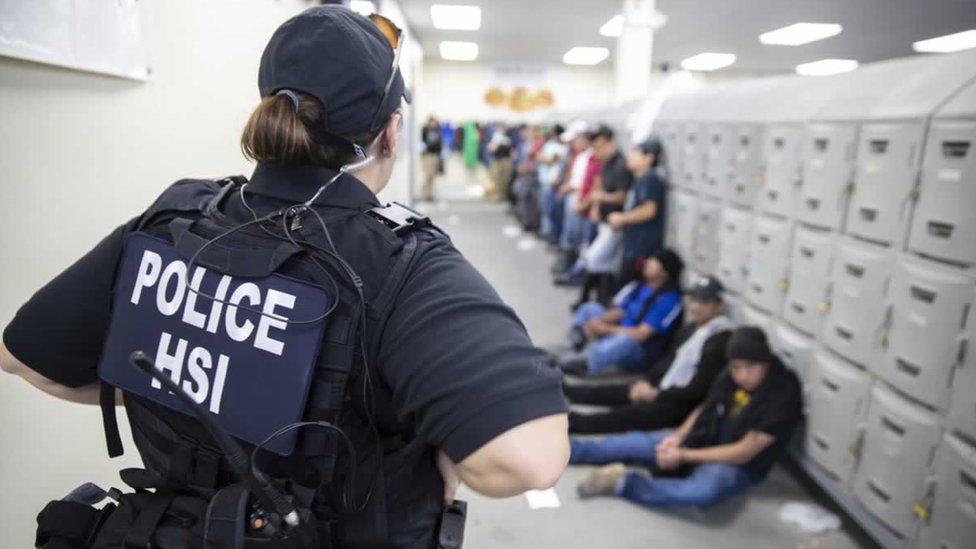
Republicans have spent years making illegal immigration a central political issue. Their campaigns promise stronger borders, expanded deportations, workplace enforcement, and an end to unlawful employment.
Yet one question deserves far more attention: What happens to the American businesses that create the demand for unauthorized labor in the first place?
Agricultural operations, construction contractors, food processors, hospitality companies, and other employers have long depended, to varying degrees, on immigrant labor. Some have knowingly hired workers without legal authorization, while others have faced allegations of ignoring warning signs or using subcontractors that obscure responsibility.
If the objective is to reduce unauthorized employment, enforcement cannot focus exclusively on the people accepting jobs. It must also examine the businesses offering them.
Otherwise, immigration enforcement risks becoming a system in which workers absorb the most visible consequences while employers retain the financial benefits.
Corporate Accountability Cannot Be Optional
Federal law already prohibits employers from knowingly hiring unauthorized workers. Businesses can face civil penalties, and certain patterns of misconduct can trigger criminal consequences.
But employer enforcement has historically been uneven, and workplace investigations are considerably more complicated than political slogans suggest.
The distinction matters because unauthorized employment is not simply an individual decision made by a migrant worker. It is also a transaction involving an employer, a payroll system, and an economic incentive.
A company that knowingly hires unauthorized workers may gain an unfair advantage over competitors that follow employment-verification requirements and pay the costs associated with lawful hiring.
That is why enforcement priorities deserve scrutiny. How many employers are being investigated? How many face meaningful penalties? How often are repeat violations discovered? And are large agricultural and industrial operators receiving the same attention as smaller businesses?
These are measurable questions that should be answered with public enforcement data, not campaign rhetoric.
Agriculture Exposes the Contradiction
American agriculture presents one of the clearest examples of the tension between immigration enforcement and economic dependency.
Farms depend heavily on immigrant workers, including many who lack permanent legal status. Industry groups have repeatedly warned that abrupt labor disruptions could threaten harvests, raise production costs, and destabilize food supply chains.
Those concerns are economically significant. They also reveal why lawmakers face pressure to distinguish between immigration enforcement and the labor needs of politically influential industries.
When agricultural employers argue that they cannot function without a workforce that includes unauthorized labor, the obvious policy question is whether Congress intends to reform legal labor pathways, strengthen employer verification, increase enforcement, or pursue some combination of these approaches.
What cannot be ignored is the role of employers in sustaining the labor market that immigration policy is supposed to regulate.
The Question of White Business Owners
Critics of Republican immigration policy have raised a sharper allegation: that the party is more willing to punish unauthorized workers than to impose serious costs on politically connected business owners, including white owners of farms and other enterprises.
That argument deserves examination, but it requires evidence.
A business owner’s race alone does not establish preferential treatment. Nor does every Republican immigration proposal exempt employers from accountability. Republican lawmakers have supported employment-verification measures, including E-Verify requirements, and federal authorities have conducted employer investigations under administrations of both parties.
The more revealing question is whether enforcement decisions, exemptions, penalties, and legislative compromises systematically favor particular industries or politically influential employers.
If employers receive leniency because of their economic or political connections, that would represent a serious accountability problem regardless of their race.
What About Landlords?
The debate also extends to housing, where some immigration hardliners have questioned whether landlords should face penalties for renting to people without lawful immigration status.
But housing is not legally identical to employment.
Federal immigration law imposes specific duties on employers, including employment-eligibility verification. It does not establish an equivalent nationwide requirement that every private landlord verify a tenant’s immigration status.
Proposals to penalize landlords would therefore require separate legal analysis, including consideration of fair-housing protections, state landlord-tenant laws, and the risk of discrimination against lawful residents.
A policy intended to enforce immigration law should not encourage landlords to reject tenants because of their appearance, surname, language, or perceived nationality.
The central issue is whether lawmakers can establish clear, lawful standards without creating discriminatory housing practices or leaving families vulnerable to exploitation.
A Serious Immigration Policy Must Confront the Money
If Republicans intend to reduce unauthorized immigration through employment enforcement, the financial incentives deserve as much scrutiny as the border itself.
That means examining repeat employer violations, subcontracting arrangements, fraudulent employment documentation, recruitment abuses, and industries where unlawful hiring persists.
It also means acknowledging that aggressive enforcement without workable legal labor systems can create significant economic disruption.
The same scrutiny should apply to Democrats, whose immigration policies have also struggled to reconcile labor demand, worker protections, and legal compliance.
For voters concerned about immigration enforcement, the most useful question is not which party delivers the harshest rhetoric. It is whether the laws being proposed actually address the incentives that sustain unauthorized employment.
Stop Treating Immigration as a One-Sided Transaction
An employer who knowingly violates immigration hiring laws is not a passive observer. That employer participates in the very labor market lawmakers claim they want to regulate.
Any enforcement strategy that repeatedly targets workers while overlooking deliberate employer misconduct leaves a major part of the problem untouched.
Republicans have made immigration a defining test of their governing agenda. Their policies can therefore be judged by whether they impose consistent legal accountability on employers as well as workers, and whether exceptions are justified transparently.
If the goal is genuine enforcement, the money, contracts, hiring practices, and political relationships behind unauthorized employment belong under the microscope too.
Immigration policy cannot be fully understood by examining only the people crossing the border. It must also confront the American economy waiting to employ them.
—Josh Allen, B1Daily



Leave a Reply