
—Vanessa Edwards, B1Daily
Russell Brand spent years building a career around outrageous humor, sexual provocation, and an image of rebellious celebrity excess. On Monday, November 9, the 51-year-old British comedian received a considerably different kind of attention when a London judge sentenced him to 10 years and six months in prison.
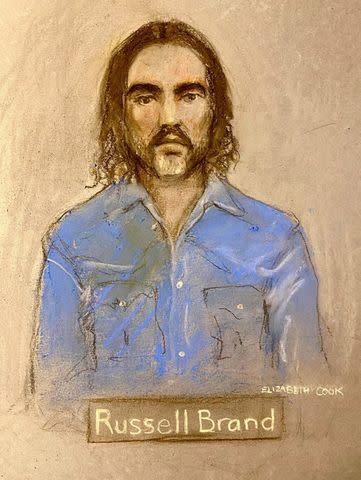
Brand was convicted of raping one woman and sexually assaulting three others in offenses committed between 2004 and 2009.
The verdict followed a four-week trial at Southwark Crown Court, where jurors heard testimony detailing how Brand exploited his celebrity status and access to women.
Judge Joel Bennathan delivered a devastating assessment of the entertainer’s conduct, describing how fame and arrogance had accompanied his transformation into a sexual predator.
For Brand, whose career once included Hollywood films, television appearances, comedy tours, and millions of online followers, the sentence represents an extraordinary collapse.
For the women who testified against him, it represents a measure of accountability that took nearly two decades to arrive.
The Crimes Behind the Sentence
Brand received nine years for rape, with additional consecutive punishment for the sexual assault convictions bringing the total sentence to 10 years and six months.
The judge ordered that Brand serve two-thirds of his sentence in custody before becoming eligible for release under supervision. He will also remain subject to sex offender registration requirements indefinitely.
The comedian had pleaded not guilty and maintained that his sexual encounters were consensual.
Jurors rejected that defense on four charges, although they acquitted him of two additional rape counts and one attempted indecent assault count.
British police have also confirmed that two further rape allegations remain under investigation. Those allegations have not resulted in convictions and must be treated separately from the crimes established at trial.
Fame, Power, and an Industry That Looked Away
Perhaps the most disturbing aspect of the case is the role Brand’s celebrity played in the experiences described by his victims.
One woman explained that his fame and influence left her feeling powerless to report what happened. Another described the distress of repeatedly seeing him celebrated in entertainment media after the assault.
Their experiences raise uncomfortable questions about an entertainment culture that has often rewarded provocative behavior while failing to examine what happens behind the scenes.
Brand’s public persona was built partly around sexual excess, a characteristic frequently treated as amusing or marketable during his rise to fame.
But there is nothing entertaining about sexual violence, and celebrity should never function as a shield against accountability.
The case also illustrates why victims sometimes wait years before reporting abuse, particularly when the accused possesses money, influence, and a substantial public following.
A Reinvention That Could Not Erase the Past
In recent years, Brand moved away from mainstream entertainment and established himself as an online political commentator, wellness personality, and religious convert.
His reinvention attracted an audience that viewed him as an outspoken critic of powerful institutions and established media organizations.
Throughout the criminal proceedings, Brand denied the accusations against him.
But personal reinvention does not erase criminal responsibility, and a carefully constructed public image cannot overturn evidence accepted by a jury.
The court’s findings concern his conduct toward four women, not his political views, religious beliefs, or popularity among online supporters.
That distinction matters because criminal accountability should not depend on whether a defendant is politically fashionable or culturally influential.
The Victims Finally Have Their Day in Court
The women who testified against Brand described lasting emotional and psychological consequences from the assaults.
Their statements underscored how sexual violence can continue affecting victims long after the original crime.
The Metropolitan Police praised their courage, emphasizing the difficulty of participating in a prolonged investigation and public trial involving a famous defendant.
The prosecution also highlighted the abuse of power underlying the offenses, arguing that Brand used his celebrity to gain access to women and disregard their autonomy.
Although the prison sentence cannot reverse what happened, it establishes that the entertainer’s fame did not place him beyond the reach of criminal law.
Hollywood’s Celebrity Immunity Has Another Casualty
Brand’s conviction joins a broader history of entertainment-industry scandals involving powerful men accused or convicted of exploiting their positions.
The recurring question is why celebrity institutions so often struggle to distinguish provocative public behavior from warning signs of serious misconduct.
Entertainment executives, broadcasters, and talent representatives should not be expected to predict every crime committed by someone they employ. But they do have a responsibility to take credible complaints seriously and maintain environments where people can report misconduct without fearing retaliation.
The Brand case demonstrates the consequences of allowing fame and public image to dominate discussions of accountability.
A successful entertainer can attract millions of admirers, command enormous audiences, and reinvent himself repeatedly.
None of those achievements changes the legal and moral obligation to respect another person’s consent.
The Final Curtain
Russell Brand once made a career out of shocking audiences.
Now his name is attached to a criminal conviction, a lengthy prison sentence, and the testimony of four women whose lives were profoundly affected by his actions.
The entertainer who spent years occupying television screens and Hollywood red carpets will instead spend a substantial portion of the next decade behind bars.
His celebrity brought him extraordinary opportunities. It also helped create the imbalance of power described during his trial.
Ultimately, the court determined that his crimes deserved a significant custodial sentence.
And this time, there was no punchline.
—Vanessa Edwards, B1Daily




Leave a Reply