—Vanessa Edwards, B1Daily
Every academic year, another controversy erupts at a predominantly white institution. Racist graffiti appears in a dormitory, Black students report discriminatory treatment, or somebody decides that a university campus is the perfect place to resurrect a racial slur.
And once again, Black students are left demanding accountability from university administrators.
Those demands are justified. But there’s another conversation Black America needs to have: Why are so many Black students convinced that predominantly white institutions offer something inherently superior to historically Black colleges and universities?
Nobody should have to endure racism to receive an education. However, choosing a PWI without seriously considering the cultural environment, institutional history, or available HBCU alternatives can leave students unprepared for challenges they might otherwise have anticipated.
The issue isn’t that Black students complain about discrimination. They absolutely should. The issue is why HBCUs are so frequently dismissed before the college search even begins.
HBCUs Were Built for a Reason
Historically Black colleges and universities weren’t established as some fashionable alternative to mainstream education. They emerged because Black Americans were systematically excluded from educational opportunities.
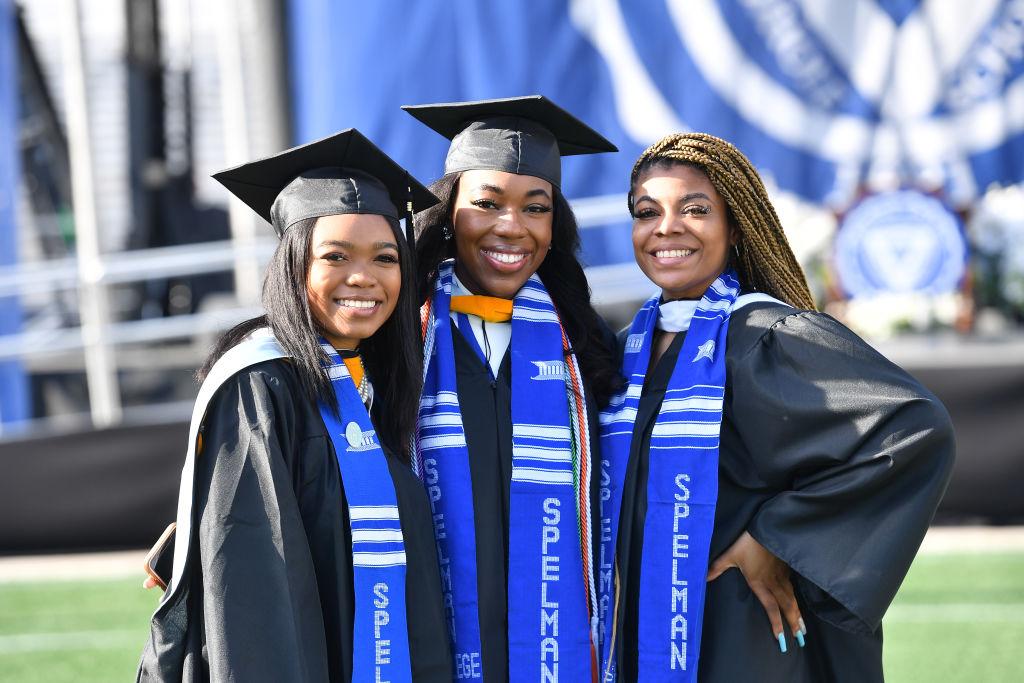
Institutions such as Howard University, Hampton University, Spelman College, and Morehouse College helped educate generations of Black professionals, scholars, physicians, attorneys, and civil rights leaders.
These institutions cultivated academic excellence while providing environments where Black intellectual achievement was central rather than peripheral.
Yet some prospective students still approach HBCUs as though attending one means settling for an inferior education.
That assumption deserves to be challenged.
A university’s prestige should be measured by its academic programs, student outcomes, affordability, and opportunities, not simply by how many wealthy white alumni appear on its donor list.
The Prestige Trap
Some Black families have internalized the idea that attending a predominantly white university automatically carries greater professional credibility.
An acceptance letter from a prestigious PWI becomes a family celebration, while an acceptance letter from an HBCU may receive a considerably less enthusiastic response.
But why?
HBCUs have produced influential leaders across business, medicine, law, engineering, politics, and entertainment. Their graduates have demonstrated that professional success does not require attending a predominantly white institution.
Of course, some PWIs offer specialized programs, generous financial aid, or research facilities unavailable at a particular HBCU. Those are legitimate considerations.
But choosing a college primarily because its name carries greater prestige can become an expensive mistake if the institution fails to provide a supportive educational environment.
Students should examine what a university actually offers rather than assuming its reputation guarantees a better experience.
Being the Only Black Student Isn’t Always a Flex
There’s another uncomfortable aspect of the PWI conversation.
Some students take pride in being among the few Black people in predominantly white academic environments, viewing that distinction as evidence of personal achievement or social advancement.
There’s nothing inherently wrong with attending a university where your racial group is underrepresented. But being one of the few Black students in a classroom doesn’t automatically make the education more valuable.
Nor should proximity to predominantly white institutions be mistaken for proof of intellectual superiority.
Black students can thrive at PWIs, and many do. Others experience isolation, stereotyping, or a lack of meaningful institutional support.
Those experiences should encourage prospective students to investigate campus climate, student organizations, faculty diversity, and discrimination reporting procedures before enrolling.
A university’s academic reputation tells only part of the story.
Meanwhile, HBCUs Need Investment
While Black families debate the prestige of predominantly white universities, many HBCUs continue confronting financial challenges.
Some struggle with aging facilities, limited endowments, deferred maintenance, and inadequate public investment.
These problems aren’t evidence that HBCUs lack academic value. They reflect, in part, longstanding inequalities in educational funding.
But strengthening these institutions also requires sustained enrollment, alumni participation, philanthropy, and public support.
Black communities cannot reasonably demand stronger HBCUs while treating them as an afterthought in conversations about higher education.
Supporting these schools doesn’t mean every Black student must attend one. It means recognizing that HBCUs deserve serious consideration alongside other universities.
And when an HBCU offers a competitive program, affordable tuition, strong career preparation, and a supportive campus environment, dismissing it solely because it lacks the reputation of a famous PWI makes little sense.
Racism Is Still the University’s Responsibility
None of this means students who choose PWIs forfeit their right to demand fair treatment.
A Black student who experiences discrimination at Harvard, Iowa, Alabama, or any other university has every right to challenge it.
Paying tuition is not consenting to racial harassment.
University administrators have an obligation to investigate credible complaints, enforce nondiscrimination policies, and provide an environment where students can learn without intimidation.
The responsibility for racist behavior belongs to those engaging in it and to institutions that fail to respond appropriately.
But Black students and their families can still make more informed choices about where they invest their educational dollars.
Those two arguments are not contradictory.
Black Students Have Options. They Should Use Them.
The real conversation isn’t whether Black students should be allowed to attend predominantly white universities. Of course they should.
It’s whether Black America has become too comfortable treating white institutional prestige as the ultimate measure of educational achievement.
HBCUs are not perfect. They have administrative problems, financial pressures, and institutional shortcomings that deserve scrutiny.
But they also represent a remarkable educational tradition built through generations of Black determination, sacrifice, and intellectual achievement.
Students should compare graduation rates, financial aid, academic programs, career placement, campus culture, and long-term debt before making their decisions.
And they should stop assuming that an education becomes more valuable simply because the institution providing it is predominantly white.
Black students deserve an education free from discrimination wherever they enroll. But HBCUs deserve more than being treated as the backup plan when a predominantly white university fails to deliver the experience students expected.
—Vanessa Edwards, B1Daily




Leave a Reply