—Kerry Hill, B1Daily
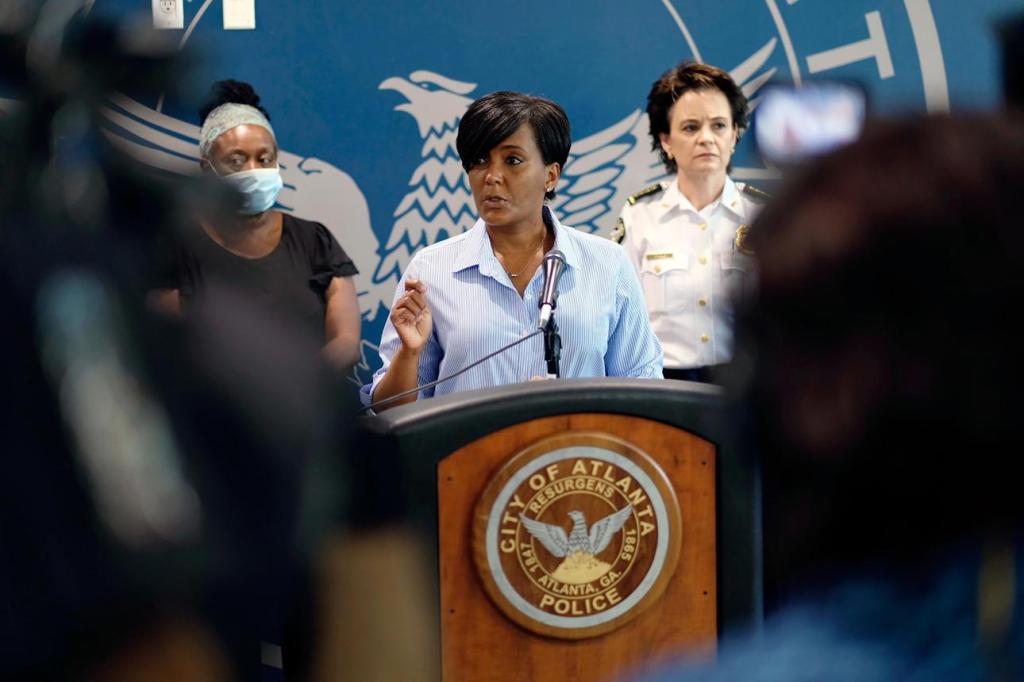
The battle over Atlanta’s controversial police training complex may have faded from national headlines, but its political legacy remains. At the center of that history stands former Mayor Keisha Lance Bottoms, whose administration helped advance the project that would eventually become known nationwide as Cop City.
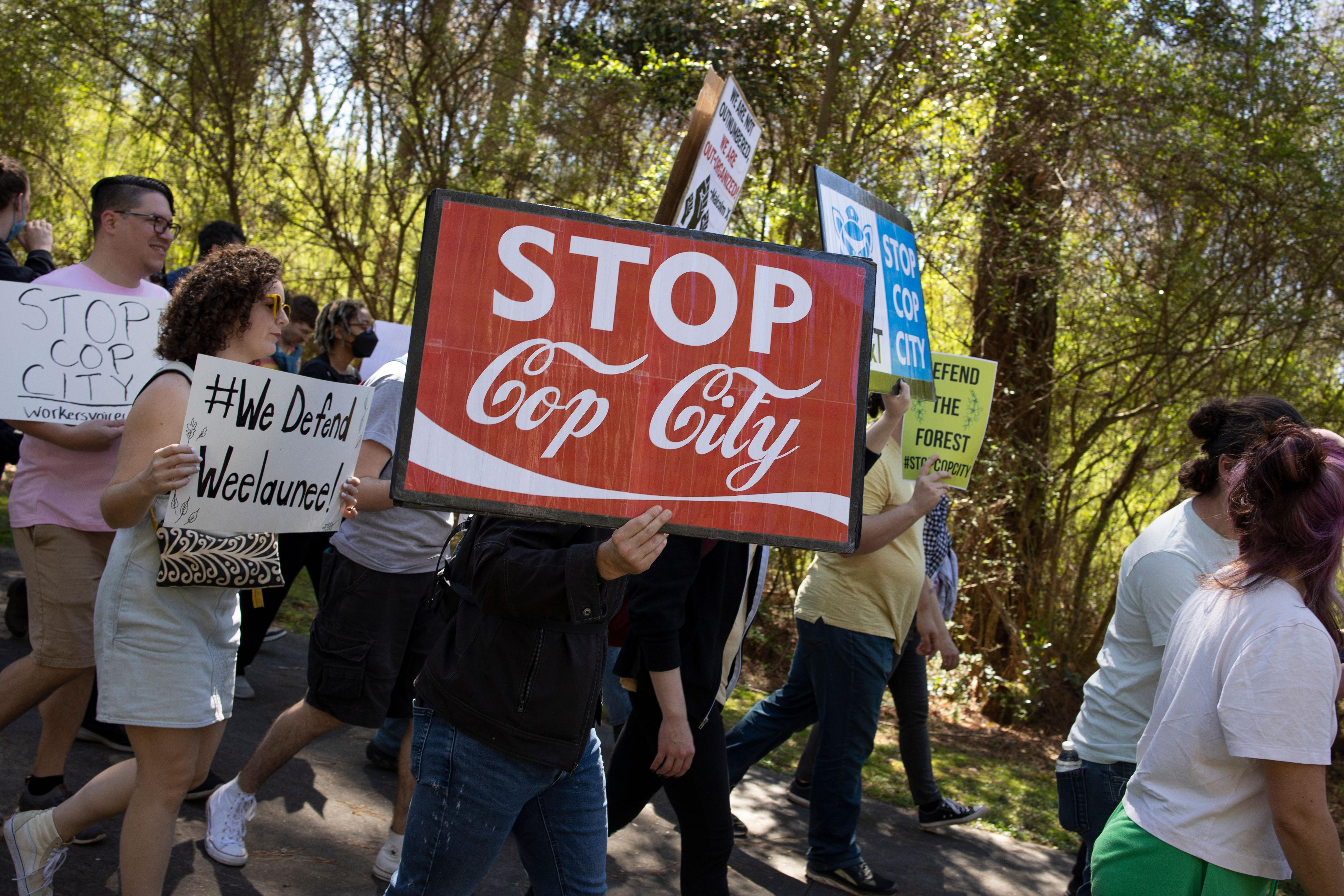
The $117 million Atlanta Public Safety Training Center officially opened in April 2025, following years of demonstrations, legal battles, arrests, and the fatal police shooting of environmental activist Manuel Esteban Paez Terán, known as Tortuguita.
For opponents, the controversy was never simply about building a better police academy. It was about political power, public spending, environmental destruction, and whether Atlanta’s elected officials were listening to the communities most affected by policing.
Bottoms, a Democrat who frequently spoke about racial justice and police accountability, nevertheless became one of the project’s early political supporters.
Keisha Lance Bottoms Helped Set Cop City in Motion
In 2021, Bottoms supported the proposal to transform forested land in DeKalb County into a large public safety training complex.
Her administration argued that Atlanta’s aging police and fire training facilities needed replacement and that modern training would improve emergency response.
But the proposal faced significant public opposition.
During the September 2021 approval process, residents and activists raised concerns about environmental damage, police militarization, and the lack of meaningful community involvement.
The Atlanta City Council ultimately approved the project by a 10–4 vote.
Bottoms defended the proposed location, arguing that the city had limited alternatives.
Her support became particularly controversial because the project emerged shortly after the nationwide protests following George Floyd’s murder and the police killing of Rayshard Brooks in Atlanta.
Many protesters wanted a fundamental reconsideration of policing. City leadership instead advanced a major investment in police infrastructure.
From Police Reform to Police Expansion
Bottoms’ record on policing was not entirely one-dimensional.
Following Brooks’ killing in June 2020, she announced reforms involving police use of force and de-escalation. Her administration also commissioned a broader review of Atlanta Police Department policies and training.
Those measures reflected public demands for accountability.
Yet Bottoms simultaneously maintained that Atlanta needed a functioning, adequately staffed police department.
Her support for Cop City illustrated that distinction.
Rather than reducing the institutional footprint of policing, her administration pursued improved training, facilities, and recruitment as part of its public safety strategy.
Supporters viewed that approach as a practical response to police staffing problems and deteriorating training infrastructure.
Critics questioned whether expanding police facilities would address the underlying causes of misconduct, racial disparities, and community distrust.
The disagreement reflected a broader divide within Democratic politics between reforming existing police institutions and fundamentally restructuring public safety.
Protesters Were Heard, but Were They Listened To?
The Stop Cop City movement brought together environmental activists, racial justice organizers, neighborhood residents, and opponents of police militarization.
Activists challenged the destruction of forested land, the involvement of the Atlanta Police Foundation, and the city’s commitment to a project that many residents opposed.
Their campaign eventually gathered more than 100,000 signatures in an effort to force a public referendum.
The referendum effort became entangled in litigation, and the signatures were never counted for a ballot vote.
Meanwhile, the confrontation escalated.
In January 2023, Georgia state troopers fatally shot Tortuguita during an operation near the proposed facility. Authorities maintained that the activist fired at officers and wounded a trooper. Tortuguita’s family disputed the official account and pursued litigation.
In 2026, a federal judge dismissed the family’s civil rights lawsuit, finding the officers’ actions legally reasonable. The ruling did not eliminate the broader controversy surrounding the operation.
The protest movement also faced extensive criminal prosecutions, including racketeering and domestic terrorism allegations. Some demonstrations involved property destruction and violent confrontations, while many others were peaceful.
The conflict became a national example of how disagreements over public safety infrastructure can develop into prolonged battles over protest rights and government accountability.
Bottoms Still Supports the Facility
Bottoms has not distanced herself from the training center.
After its opening, she reaffirmed her support, arguing that Atlanta needed better facilities for police officers and firefighters.
She also acknowledged that opponents should have been allowed to pursue their referendum effort.
That combination is revealing.
Bottoms continues to defend the facility itself while recognizing concerns about the process through which the public was denied a direct vote.
For critics, that distinction does not fully address the central grievance: city leaders moved forward with a deeply contested project despite substantial opposition.
For supporters, the completed facility represents an investment in training that Atlanta’s emergency services needed.
What Did Atlanta Actually Gain?
One year after Cop City’s opening, police and fire officials reported that hundreds of recruits had trained at the complex.
The facility includes classrooms, simulated urban environments, emergency driving areas, and specialized firefighter training infrastructure.
Officials argue that these resources improve recruitment and prepare personnel for dangerous situations.
Opponents remain concerned that the same investment could expand aggressive policing without producing measurable improvements in community trust or accountability.
Both questions deserve scrutiny.
A modern training center can provide practical benefits. But the existence of better facilities does not, by itself, establish that police misconduct will decline or that residents will feel safer.
Those outcomes require independent evaluation, transparent reporting, and continued public oversight.
The Political Legacy of Cop City
Cop City remains a defining controversy in Atlanta’s recent political history because it exposed competing visions of public safety within a predominantly Black political environment.
Bottoms’ role is central to that history.
She supported police reform after highly publicized killings, but she also championed a major expansion of police training infrastructure. Those positions are not inherently contradictory, yet they represent a governing philosophy that many activists rejected.
The controversy raises a lasting question about political representation: How should elected officials respond when their preferred public safety policies face organized opposition from the communities they represent?
Atlanta’s leaders ultimately built the facility.
The unresolved debate is whether the political process gave residents sufficient influence over that decision and whether the investment will deliver the accountability and public safety improvements its supporters promised.
For the people who spent years opposing Cop City, those questions did not disappear when the ribbon was cut.
—Kerry Hill, B1Daily


Leave a Reply