—Josh Allen, B1Daily
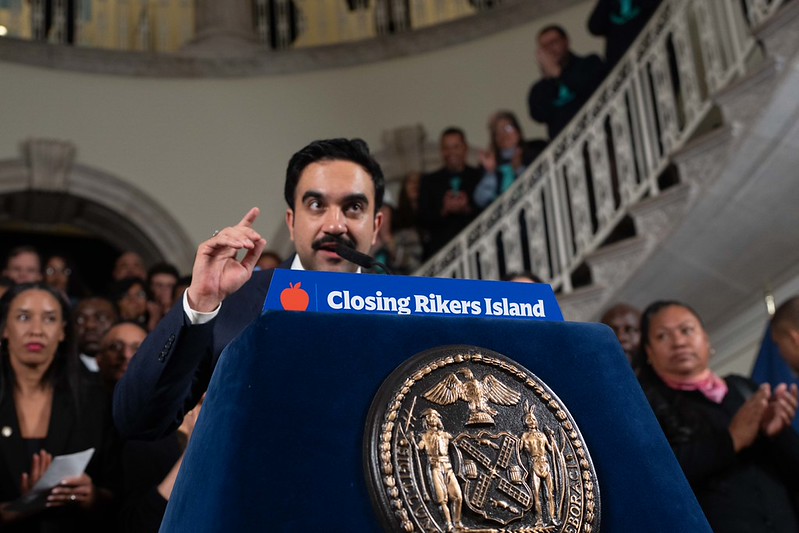
New York City’s promise to close Rikers Island has acquired another deadline. On November 20, Mayor Zohran Mamdani proposed moving the legally mandated closure date from August 2027 to the end of 2032, giving the city five additional years to replace the troubled jail complex. For New Yorkers who regarded ending incarceration on Rikers as an urgent reform commitment, the proposal creates a difficult question: how much longer can the city ask people to wait?
The original 2027 deadline was established by a 2019 City Council law. Mamdani cannot change that date on his own; the Council must approve an amendment. His administration argues that years of construction delays and an oversized jail population have made the existing deadline unattainable. The first of four planned borough-based replacement jails, in Brooklyn, is now scheduled to open in 2029. That logistical problem is real, but so is the human cost of postponement.
Rikers has been the subject of years of scrutiny over violence, deaths in custody, poor medical care and the treatment of people awaiting trial. Federal court-ordered oversight underscores how serious the problems have become. The question for reform-minded residents is not simply whether 2032 is more realistic than 2027. It is what safeguards will exist during the intervening years, when thousands of people may continue to live and work inside facilities the city itself says must close.
The mayor’s proposal contains more than a new date. It calls for reducing the jail population from roughly 6,600 to about 4,100, expanding hospital-based therapeutic beds, speeding up court proceedings and investing $146 million next fiscal year in treatment, education, reentry and victim services. Supporters of the plan argue that these commitments offer a credible route to a smaller, more humane system after earlier administrations failed to deliver the replacement infrastructure.
Still, an extended deadline should not become a substitute for accountability. The city needs publicly reported milestones for each replacement jail, regular figures on the jail population, measurable improvements in safety and healthcare, and clear explanations whenever construction or reform targets slip. Otherwise, 2032 risks becoming another date that looks reassuring in a press release but offers little certainty to people inside Rikers today.
The political tension is especially sharp because Mamdani campaigned on closing Rikers and changing New York’s approach to incarceration. Some supporters may see the new plan as a practical attempt to finish a stalled project. Others may reasonably ask whether a five-year extension weakens the urgency of a promise that helped define the city’s reform agenda. Those reactions are not mutually exclusive: a detailed plan can represent progress while its slower timetable still warrants scrutiny.
City Council Speaker Julie Menin has said previous delays mean additional time is necessary, and several criminal-justice advocates and elected officials have welcomed the roadmap. Their support matters, but it should not foreclose tough oversight. If the Council changes the law, it can also demand interim benchmarks, transparent reporting and enforceable protections for incarcerated New Yorkers and correctional employees.
The immediate test of the Mamdani administration will not be the elegance of its 2032 blueprint. It will be whether conditions improve before the first new jail opens, whether fewer people are detained unnecessarily, and whether each promised construction milestone actually arrives. For voters who treated Rikers reform as a priority, the five-year extension makes those near-term results more important, not less.
—Josh Allen, B1Daily


Leave a Reply