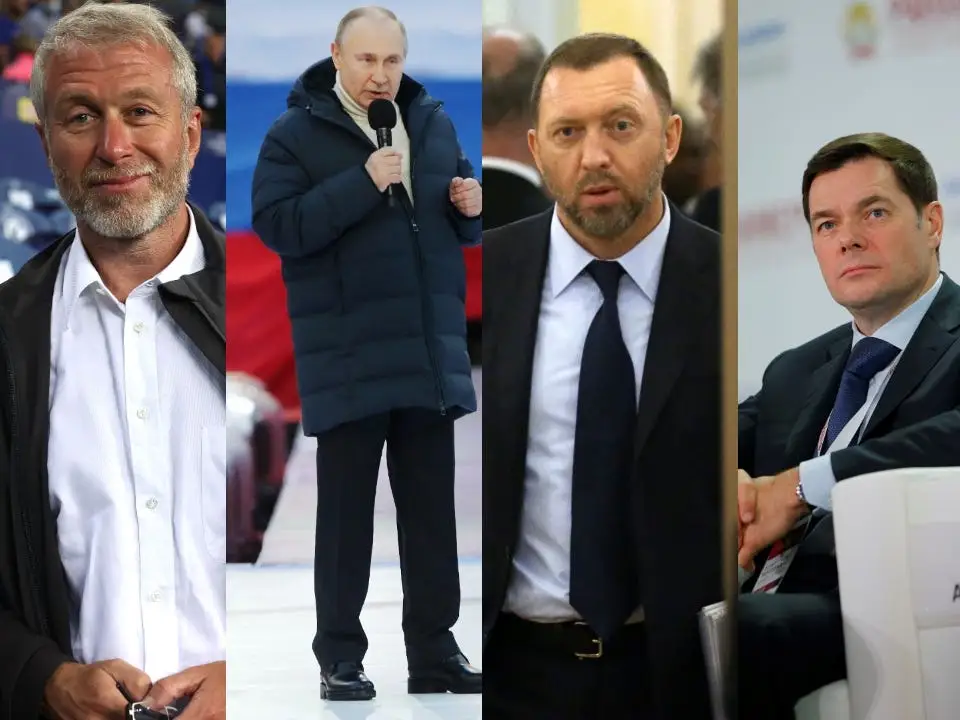
—Terrence Dorner, B1Daily
Russia’s governing elite incorporates overlapping security-service, bureaucratic and commercial networks. The siloviki, broadly defined as figures associated with coercive state institutions, are not a single family or unified organization. Their influence derives from institutional access, personal patronage and control of strategic resources. Confidence: high for documented institutional relationships; lower for informal decision-making.
Historical development
The dissolution of the Soviet Union in 1991 fragmented the KGB into successor organizations. Domestic security functions ultimately consolidated within the FSB, while foreign intelligence and protective services developed separate institutional structures. Vladimir Putin’s accession to the presidency in 2000 accelerated the prominence of officials with security-service backgrounds. This represented continuity of personnel and professional networks rather than uninterrupted control by an identical set of families.
Network assessment: Patrushev
Nikolai Patrushev served as FSB director from 1999 to 2008 and Security Council secretary from 2008 to 2024. His son Dmitry served as agriculture minister from 2018 to 2024 and became deputy prime minister in May 2024. These appointments illustrate the intersection of security-sector relationships and civilian economic administration. Kinship alone does not establish coordination or improper conduct.
Network assessment: Sechin and Chemezov
Igor Sechin, a longtime Putin associate, became chief executive of Rosneft in 2012, placing him at the center of a strategically important energy enterprise. Sergei Chemezov, who knew Putin during their Soviet-era postings in East Germany, became head of Rostec in 2007. Rostec’s industrial portfolio spans defense manufacturing and civilian technology. Their trajectories illustrate how personal networks intersect with state corporate leadership.
Network assessment: Rotenberg and Kovalchuk
Arkady and Boris Rotenberg, longstanding Putin associates, developed major commercial interests in infrastructure and construction. Yuri Kovalchuk became associated with Bank Rossiya and influential media holdings. These commercial networks are adjacent to the security elite but should not automatically be classified as former intelligence officers. Public sanctions designations provide evidence of Western governments’ assessments of their relationships, not proof of every alleged informal arrangement.
Strategic architecture
The principal mechanisms of influence include presidential appointments, security institutions, state-owned enterprises, public procurement and access to financial resources. Energy revenues and defense-industrial capacity provide material support to the state. Overlapping jurisdictions and personal relationships can create both coordination and competition among elite factions.
Vulnerabilities and indicators
Potential structural vulnerabilities include dependence on centralized arbitration, competition for shrinking resources, sanctions exposure and uncertainty surrounding leadership succession. Indicators for monitoring include senior personnel changes, transfers of corporate ownership, shifts in procurement allocations and changes in the formal responsibilities of security institutions. These indicators are analytical priorities, not predictions of imminent instability.
Intelligence gaps
Public records establish many appointments and corporate relationships, but they cannot reliably reveal private agreements, hidden beneficial ownership or the full distribution of influence inside the Kremlin. A current assessment would require updated corporate filings, official appointment records and sanctions documentation. The historical baseline used here does not establish the status of every individual in November 2026.
—Terrence Dorner, B1Daily


Leave a Reply