—Travis Luyindama, B1Daily
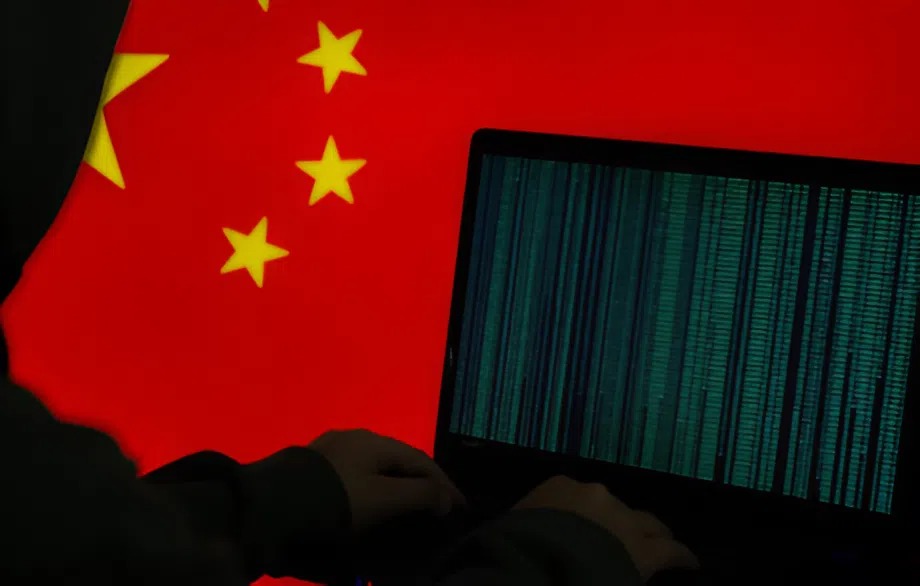
The new Booz Allen Hamilton report on the PRC cyber threat reads less like a technical white paper and more like a warning flare. Its central argument is blunt: China’s cyber operations are not random acts of espionage or isolated hacks, but a long-term, state-directed strategy designed to quietly shape the global balance of power before anyone realizes the ground has shifted beneath them.
What makes the PRC approach distinct is its patience. Rather than chasing flashy breaches, China focuses on persistence—embedding access across networks, infrastructure, and supply chains in ways that can be activated later. The report stresses that this is about positioning, not disruption. Access today becomes leverage tomorrow. Cyber operations are treated as a permanent feature of competition, not something reserved for wartime.
A major theme running through the analysis is scale. The PRC doesn’t rely on a single tactic but amplifies its reach through what the report describes as force multipliers. Trusted business relationships become attack vectors. Edge devices like routers, firewalls, and VPNs are exploited because they sit at the borders of networks and often escape scrutiny. Artificial intelligence accelerates everything—from reconnaissance to targeting to data exploitation—allowing operations to move faster than human-centered defenses can realistically track.
Just as important is deniability. China increasingly operates in the gray space of contested attribution, using techniques and intermediaries that make it difficult to definitively assign blame. The result is paralysis. Even when intrusions are suspected, governments and institutions hesitate to respond forcefully, unsure whether retaliation will be justified or effective. This ambiguity is not a byproduct; it is a feature of the strategy.
The report also makes clear that cyber operations are only half the story. Digital access feeds directly into information operations. Stolen data can be selectively leaked, narratives can be manipulated, and public trust can be eroded at precisely the moments when political or economic pressure matters most. Cyber tools shape the battlefield, while information operations shape how people perceive that battlefield. Together, they influence decision-making long before any overt conflict begins.
Geographically, the strategy is global. In East Asia, cyber activity supports territorial and political ambitions, particularly around Taiwan. Across U.S. and European alliance networks, the focus shifts to undermining cohesion and exploiting political division. In the developing world, the emphasis is on dependency—building digital infrastructure that quietly ties countries into PRC-aligned ecosystems, creating long-term leverage disguised as development.
Artificial intelligence looms large over all of this. The report frames AI not as a future risk, but as a present accelerant. It allows the PRC to scale operations, automate analysis, and compress decision cycles in ways that overwhelm traditional defense models. This creates an asymmetry: defenders must protect everything all the time, while attackers need only find a few overlooked gaps.
The uncomfortable takeaway is that reactive cybersecurity is no longer enough. The report argues that focusing on individual breaches misses the cumulative effect of thousands of small, seemingly disconnected operations. By the time patterns are recognized, strategic advantages may already be locked in. The challenge, then, is not just technical defense but strategic anticipation—understanding where access is being quietly accumulated and why.
In the end, the report’s message is less about fear than about urgency. The PRC cyber threat is not an abstract future problem; it is an ongoing campaign reshaping digital and political environments in real time. If the United States and its allies continue to treat cyber operations as isolated incidents instead of components of a coordinated strategy, they risk waking up to a world where critical systems, alliances, and narratives have already been subtly but decisively influenced.
—Travis Luyindama, B1Daily




 B1Daily
Leave a comment