—Jaheim Rockwell
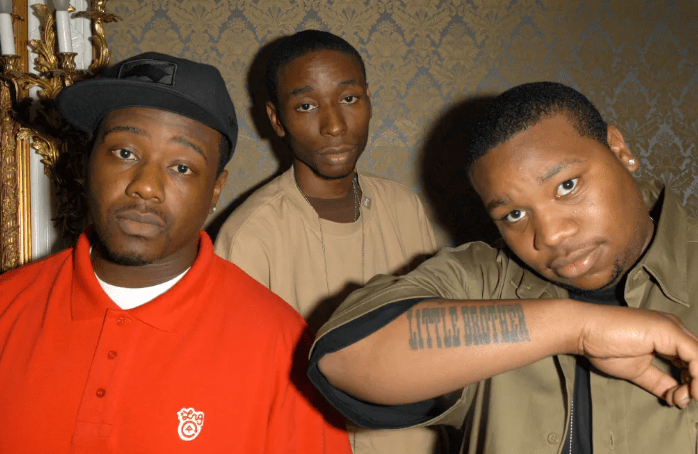
Few stories in underground and alternative hip-hop are as layered as the relationship between 9th Wonder and the group Little Brother. What began as a tight-knit college collective that helped define conscious rap in the early 2000s evolved into years of distance, public tension, reunion attempts, and ultimately separate legacies — with all sides continuing to shape hip-hop culture in different ways.
The Rise of Little Brother
Little Brother formed in Durham, North Carolina, with producer 9th Wonder, rapper Phonte, and rapper Rapper Big Pooh. Their 2003 debut The Listening immediately drew attention for its soulful sampling, sharp lyricism, and nostalgic yet modern take on boom-bap hip-hop. The follow-up, The Minstrel Show, became one of the most celebrated underground rap albums of its era, blending satire, commentary on the music industry, and deeply personal storytelling.
The group became synonymous with intelligent, soulful Southern hip-hop at a time when commercial rap trends were shifting in a different direction. 9th Wonder’s chopped soul production became central to their identity.
The Split
In 2007, during the making of Getback, 9th Wonder parted ways with Little Brother. At the time, statements suggested the split was about moving in different creative directions, but fans sensed deeper tensions.
Over the years, interviews and social media exchanges hinted at disagreements about artistic control, production decisions, communication issues, and business alignment. Phonte in particular spoke candidly at times about frustrations within the group dynamic. What may have begun as creative divergence gradually became a public fracture.
Little Brother continued without 9th Wonder for 2010’s Leftback, but shortly after, the group dissolved altogether.
Individual Career Growth
Despite the split, each member expanded his influence.
9th Wonder became one of the most respected producers in modern hip-hop. He collaborated with major artists across generations, built Jamla Records, mentored emerging talent, and transitioned into academia, teaching hip-hop history and culture at the university level. His production résumé and cultural leadership solidified him as more than just a beatmaker — he became a historian and architect of the genre.
Phonte diversified creatively, achieving acclaim with The Foreign Exchange, blending soul, R&B, and hip-hop. He also released solo albums and expanded into voice acting, hosting, and commentary work, showcasing versatility beyond traditional rap.
Rapper Big Pooh maintained a steady independent career, releasing solo projects and remaining active on the touring circuit. Though often less publicly visible than his former collaborators, he remained respected for consistency and lyricism.
The Reunion That Wasn’t Complete
In 2018, the original trio reunited on stage for a festival performance, sparking excitement among longtime fans. It felt like a potential full-circle moment.
However, when Little Brother released their 2019 comeback album May the Lord Watch, 9th Wonder was notably absent from the production credits. Phonte and Big Pooh explained that creative differences resurfaced during discussions about the reunion project. The duo ultimately chose to move forward without him.
While not framed as explosive hostility, the decision made clear that whatever issues existed between them were not fully resolved.
Where They Stand Today
Little Brother continued as a duo and later announced a farewell tour, signaling the closing chapter of the group’s run. Phonte and Big Pooh have spoken about wanting to end things on their own terms.
9th Wonder continues producing, teaching, curating music projects, and building his cultural footprint. His influence remains strong across both mainstream and independent hip-hop spaces.
More Evolution Than Feud
While headlines often frame the situation as a “feud,” the reality appears more complex. The story of 9th Wonder and Little Brother reflects what happens when creative forces grow in different directions. Early chemistry created classic albums. Later independence allowed each artist to refine his own identity.
Their shared legacy remains intact: they helped redefine early-2000s alternative hip-hop and influenced a generation of lyric-focused artists and producers. Even without a full reconciliation, their impact as collaborators — and as individuals — continues to shape the culture.
Sometimes the most important partnerships aren’t defined by how they end, but by what they built together.
—Jaheim Rockwell



Leave a comment