—Michael Lyles, B1Daily
In the span of a few short years, the Ellison name — once synonymous primarily with Silicon Valley tech wealth — has become an emerging symbol of media consolidation on a scale we haven’t seen since the dawn of the Hollywood studio system. What started as an ambitious push into entertainment by Larry Ellison and his son David Ellison has transformed into a full-blown bid to control much of the media that shapes American culture, politics, and entertainment.
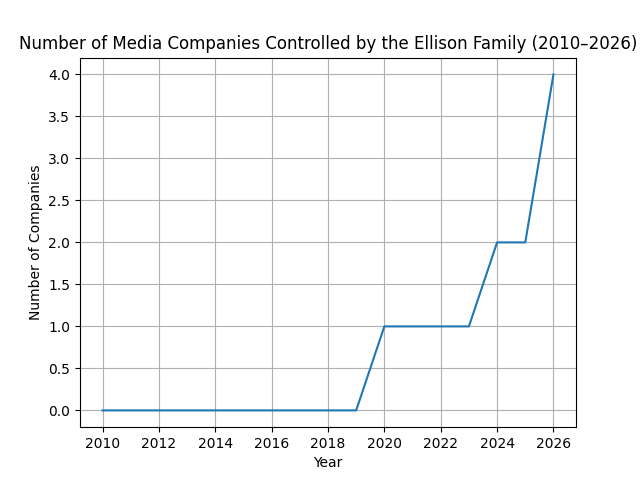
The latest seismic shift in this trajectory is Paramount Skydance’s acquisition of Warner Bros. Discovery — a deal that, pending regulatory approval, would bring under one corporate umbrella iconic brands like Warner Bros., HBO, CNN, and Discovery+, while already encompassing Paramount Global and CBS. Advocates argue it’s simply the next step in surviving the brutal economics of the streaming wars. But the sheer breadth of the Ellisons’ reach now demands serious scrutiny.
From Oracle to Hollywood’s Pinnacle
Historically, media consolidation has been debated in terms of competition and market diversity: fewer owners mean fewer voices, less innovation, and a bottleneck of cultural influence. That debate once focused on giants like The Walt Disney Company and Comcast. Today, the Ellisons have vaulted into that same conversation.
What’s troubling is how quickly this transformation has occurred. A decade ago, Larry Ellison’s interests barely grazed Hollywood. Now, with his financial muscle underwriting massive acquisitions and his son steering a rapidly expanding studio empire, the family stands poised to influence storytelling pipelines, newsrooms, entertainment franchises, and global streaming platforms.
The Monopoly Question
Let’s be clear: owning multiple media assets does not automatically constitute a legal monopoly. But when one family steers news outlets like CNN and CBS, owns premium content libraries such as HBO’s, controls major theatrical and television studios, and holds influence rooted in a tech legacy, we are no longer discussing a simple diversification strategy — we are witnessing the construction of a media empire.
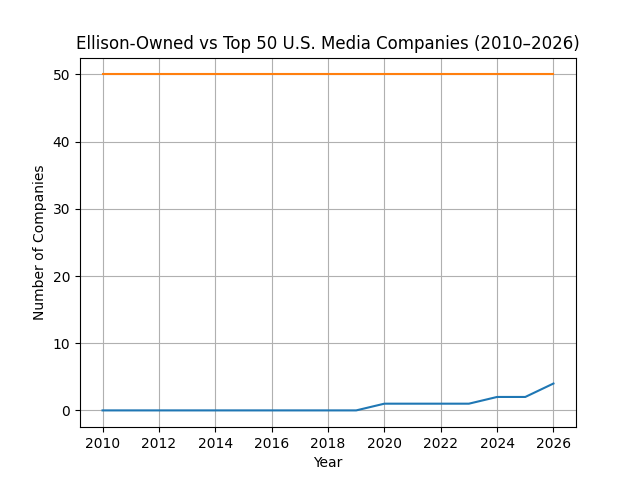
When news networks fall under consolidated ownership, the risk is not necessarily overt censorship but subtle alignment. Editorial direction can shift gradually. Hiring decisions, budget priorities, and executive appointments can nudge coverage in ways that narrow the spectrum of debate. In a democracy, even the perception of centralized narrative control can erode public trust.
Creative diversity faces similar pressure. Independent studios and smaller production houses often serve as incubators for new voices, unconventional stories, and culturally specific narratives. As conglomerates grow, financial imperatives tend to prioritize franchise security over artistic experimentation. The larger the empire, the more risk-averse it may become.
Market power is another unavoidable concern. A conglomerate that bundles flagship properties across film, television, news, sports, and streaming gains enormous leverage in negotiations with distributors, advertisers, and creative talent. That leverage can reshape the competitive landscape, making it harder for smaller players to survive.
Regulators Should Pay Attention
This isn’t an argument against business ambition. Nor is it an indictment of success. The Ellisons have every right to compete in the marketplace. But when the marketplace itself begins to tilt under the weight of consolidation, oversight becomes not hostility but responsibility.
The broader political context also complicates matters. Media ownership carries influence beyond quarterly earnings; it shapes civic discourse, cultural identity, and political narratives. Concentration of that influence in too few hands should concern anyone who values a pluralistic society.
A Call for a New Media Compact
If the Ellison family believes their expansion ultimately benefits consumers and creators, then transparency and regulatory review should not be seen as obstacles but as safeguards. A healthy media ecosystem depends on competition, diversity of ownership, and the space for independent voices to flourish.
The question is not whether one family can legally assemble such an empire. The question is whether society is comfortable allowing so much cultural and informational power to consolidate so quickly. History suggests that when power centralizes, scrutiny must follow.
The screens that shape our world — from box offices to living rooms to smartphone feeds — matter too much to ignore who controls them.
—Michael Lyles, B1Daily





Leave a comment