—Sylvester Loving, B1Daily
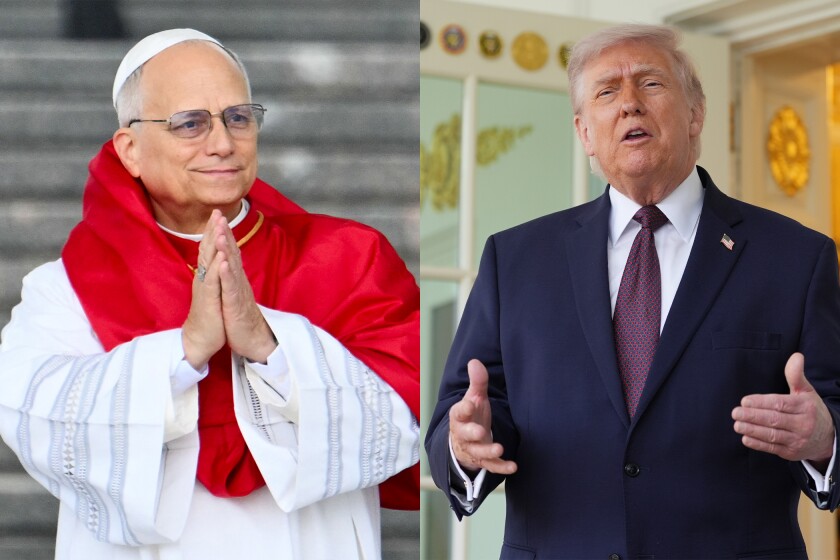
What began as a policy disagreement has erupted into something far more volatile, a transcontinental clash where scripture meets statecraft and neither side is blinking. The escalating feud between Donald Trump and Pope Leo XIV, as detailed in recent reporting, is less a spat and more a slow-burning institutional collision, one that has dragged faith, war, and ego into the same unforgiving spotlight.
The fuse was lit by war. As tensions surged around the 2026 conflict involving Iran, Pope Leo stepped into the global arena with unusually direct language, condemning what he described as a “delusion of omnipotence” driving military escalation. His message was unmistakable: war, particularly one framed in moral or civilizational terms, was incompatible with the Gospel. It was not subtle diplomacy. It was a moral rebuke aimed squarely at the machinery of power.
Trump responded like a man swatting at a challenge to his authority. On social media, he branded the pope “weak on crime” and “terrible for foreign policy,” framing Leo not as a spiritual leader but as a political adversary stepping out of line. The rhetoric didn’t just escalate tensions, it reframed the entire relationship between the White House and the Vatican as adversarial rather than diplomatic.
Then came the moment that turned a feud into a spectacle. Trump posted, and later deleted, an AI-generated image portraying himself in a Christ-like form, a move that triggered backlash not only from critics but from within his own religious base. For many observers, this was the point where political theatre veered into something closer to sacrilege, collapsing the distance between leader and icon in a way that unsettled even loyal supporters.
Pope Leo, for his part, refused to be drawn into the mud. Speaking during international travel, he insisted he had “no fear” of the Trump administration and would continue to advocate for peace, positioning himself as a moral counterweight rather than a political combatant. It was a careful posture, one that allowed him to rebuke policy without engaging in direct personal warfare, even as Trump continued to sharpen his attacks.
Yet beneath the headlines lies something more significant than insults and viral images. This feud represents a rare rupture in modern relations between the United States and the Vatican. Analysts have noted that such open hostility between a sitting American president and a pope is virtually without precedent in contemporary history, echoing tensions more common in medieval power struggles than modern diplomacy.
The divide is philosophical at its core. Trump’s worldview prioritises sovereignty, strength, and decisive action, particularly in matters of war and national security. Pope Leo’s stance, rooted in Catholic social teaching, elevates peace, restraint, and the moral limits of power. Where Trump sees necessity, Leo sees transgression. Where Trump asserts control, Leo warns of consequence.
What makes this confrontation particularly combustible is its audience. American Catholics, long a politically significant bloc, now find themselves caught between competing authorities, one temporal, one spiritual. Early reactions suggest fractures within that base, with some leaders defending the pope’s moral clarity while others wrestle with loyalty to a political figure they have long supported.
This is no passing disagreement. It is a live wire running through politics, religion, and global conflict all at once. And unlike most political feuds, this one cannot be settled by an election cycle or a press conference. It lingers in sermons, speeches, and strategy rooms, a reminder that when power and principle collide, neither side walks away unchanged.
—Sylvester Loving, B1Daily



Leave a comment