—Kerry Hill, B1Daily
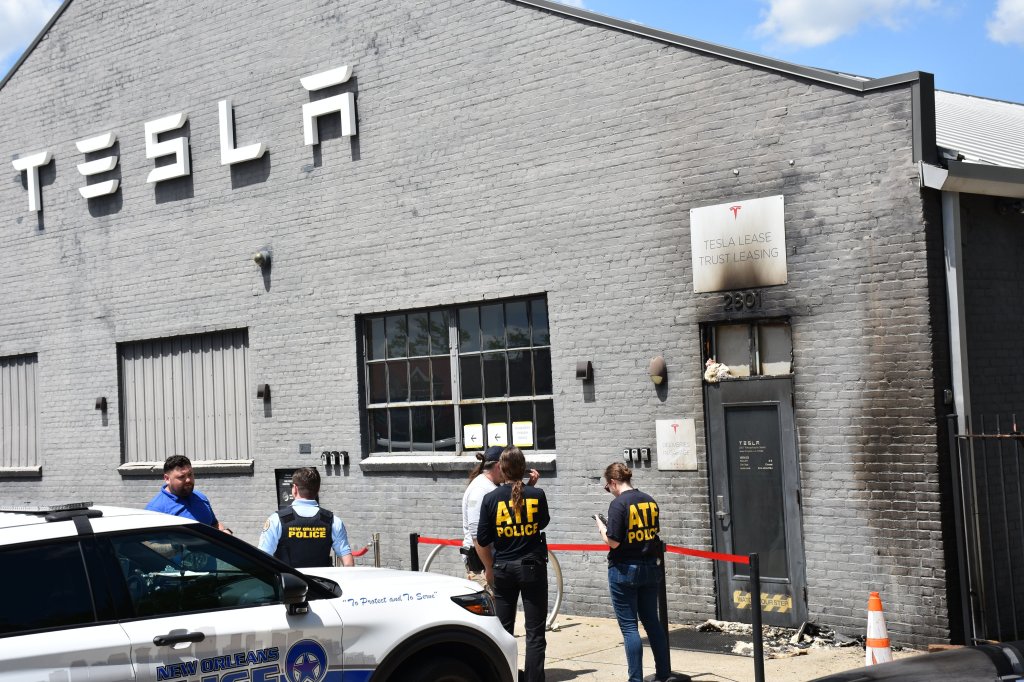
A recent Molotov cocktail attack on a Tesla office in Louisiana has intensified concerns about a growing wave of targeted violence against high-profile tech and infrastructure companies. The incident, reported in mid-April 2026, left the building damaged but no one injured, and is now being investigated by federal authorities as arson involving an incendiary device.
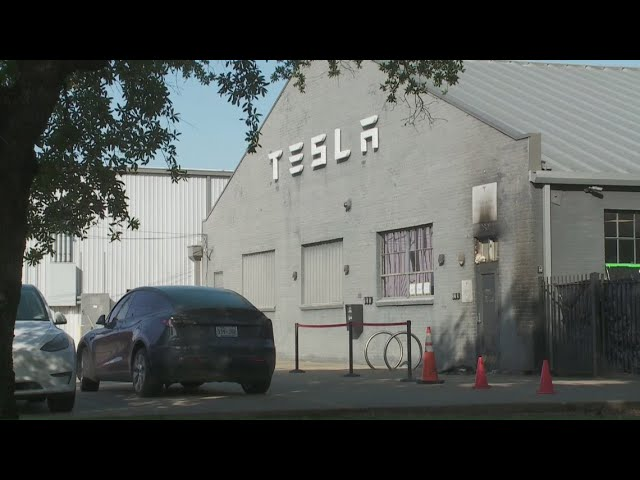
According to officials, the fire was set at the front entrance of the Tesla sales office, with early evidence suggesting the use of a homemade Molotov cocktail. While no suspect has been publicly identified, investigators are treating the case as part of a broader pattern of escalating hostility toward major technology firms.
The attack comes at a moment when tensions surrounding tech companies are already high. In recent years, Tesla has become both a symbol of technological disruption and a lightning rod for political and economic frustration. Its CEO, Elon Musk, has also become a polarizing public figure, further intensifying the company’s visibility in cultural and political debates.
This incident is not isolated. Law enforcement agencies have documented a rise in vandalism, arson attempts, and property attacks targeting Tesla facilities across the United States and abroad. Some incidents have involved spray-painting, broken windows, and sabotage of charging stations, while others have escalated into more dangerous acts involving fire and explosives.
From an environmental and industrial perspective, Tesla occupies a unique position. It is both a flagship for electric vehicle adoption and a major industrial operator with factories, service centers, and retail locations that depend on complex supply chains and high-energy manufacturing. That dual identity has made it a focal point for conflicting sentiments: admiration for its environmental ambitions on one side, and criticism or resentment tied to labor, land use, and corporate influence on the other.
Authorities have not confirmed a motive in the Louisiana attack, but federal investigators are increasingly examining whether such incidents are being driven by broader ideological opposition to large technology firms, economic frustration, or unrelated criminal intent. Similar recent cases involving arson at tech-related sites have sometimes been linked to anti-corporate sentiment, though not always consistently.
Security experts warn that even isolated acts of vandalism can have a chilling effect on local operations. Dealerships and offices are often embedded within communities, meaning that damage doesn’t just affect corporate assets but also employees, nearby businesses, and public safety infrastructure.
At the same time, officials are cautious about overgeneralizing. While the pattern of attacks is concerning, most public opposition to technology companies remains nonviolent and expressed through protests, policy advocacy, and legal challenges. The challenge for law enforcement is distinguishing between symbolic dissent and criminal escalation.
Still, the symbolism of fire at a Tesla office is hard to ignore. It reflects a broader friction point in modern society: the speed of technological expansion versus the slower, more uneven pace of public consensus about its consequences.
As investigations continue, the Louisiana case is likely to be studied not just as an isolated criminal act, but as part of a larger question facing the tech industry: what happens when innovation becomes a target?
—Kerry Hill, B1Daily






Leave a comment