—Barrington Williams, B1Daily
Washington has rediscovered one of America’s oldest political truths: sometimes you don’t need to change the voters. You just change the lines around them.
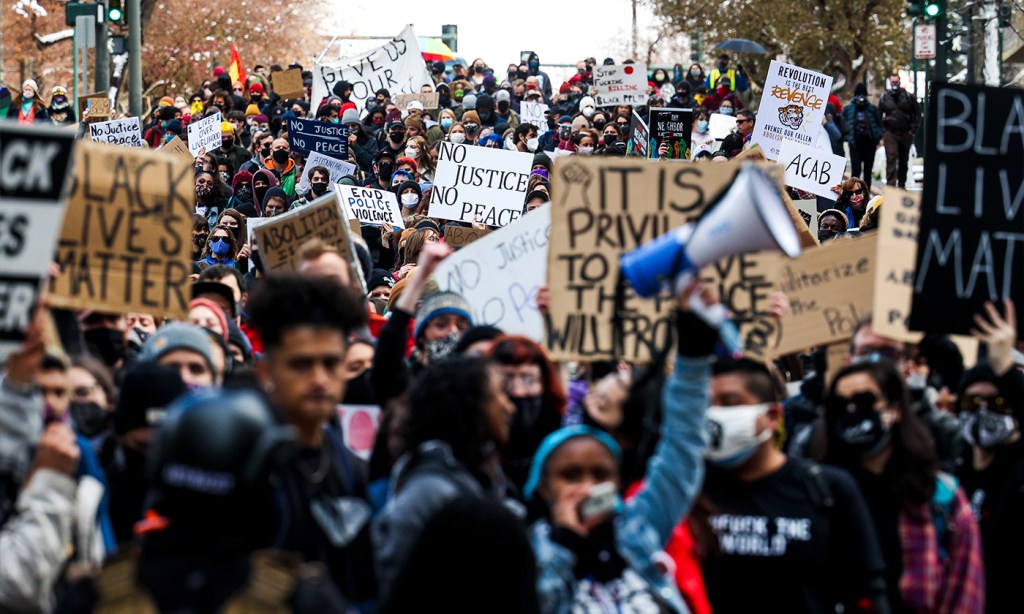
Across the country, congressional maps are being redrawn in an extraordinary mid-decade redistricting battle ahead of the 2026 elections. Nearly 35 million Americans now live in different congressional districts than they did during the 2024 election cycle, according to a recent analysis reported by the Associated Press.
For Black Americans, however, this isn’t merely another Democratic-versus-Republican cage match.
It raises a considerably older question:
Does Black population translate into Black political power?
The answer depends increasingly on where somebody draws a line.
Black Voters Actually Made Major Gains
The current story didn’t begin with losses.
In Alabama, Georgia and Louisiana, litigation under Section 2 of the Voting Rights Act produced additional congressional districts where Black voters had an opportunity to elect their preferred candidates.
The results were significant.
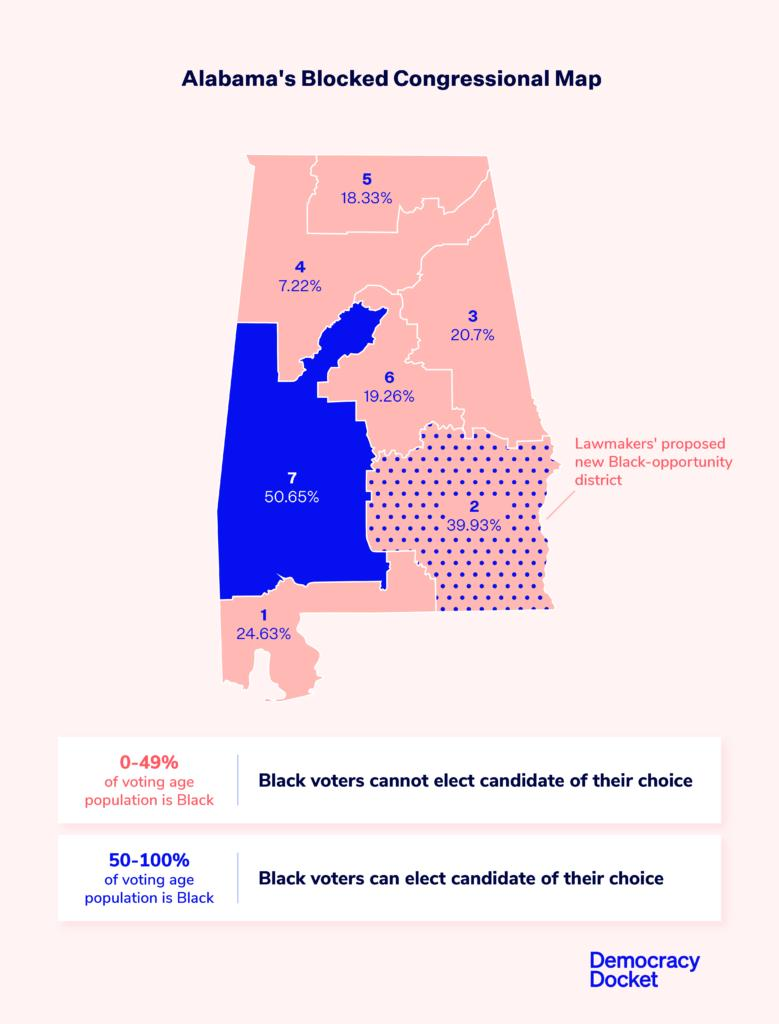
In Alabama, the court-ordered map used in 2024 created two districts offering Black voters meaningful electoral opportunities. Shomari Figures subsequently joined Terri Sewell in Congress, giving Alabama two Black members of Congress simultaneously for the first time in the state’s history.
Research from the Brennan Center found another interesting effect: placing Black voters into majority-Black districts in Alabama, Georgia and Louisiana increased Black participation by as much as six percentage points in the 2024 election and reduced portions of the Black-white turnout gap.
That is representation producing participation.
People are considerably more enthusiastic about voting when they believe their votes can actually determine who represents them.
But then the Supreme Court changed the battlefield.
Louisiana v. Callais Just Rewrote the Rules
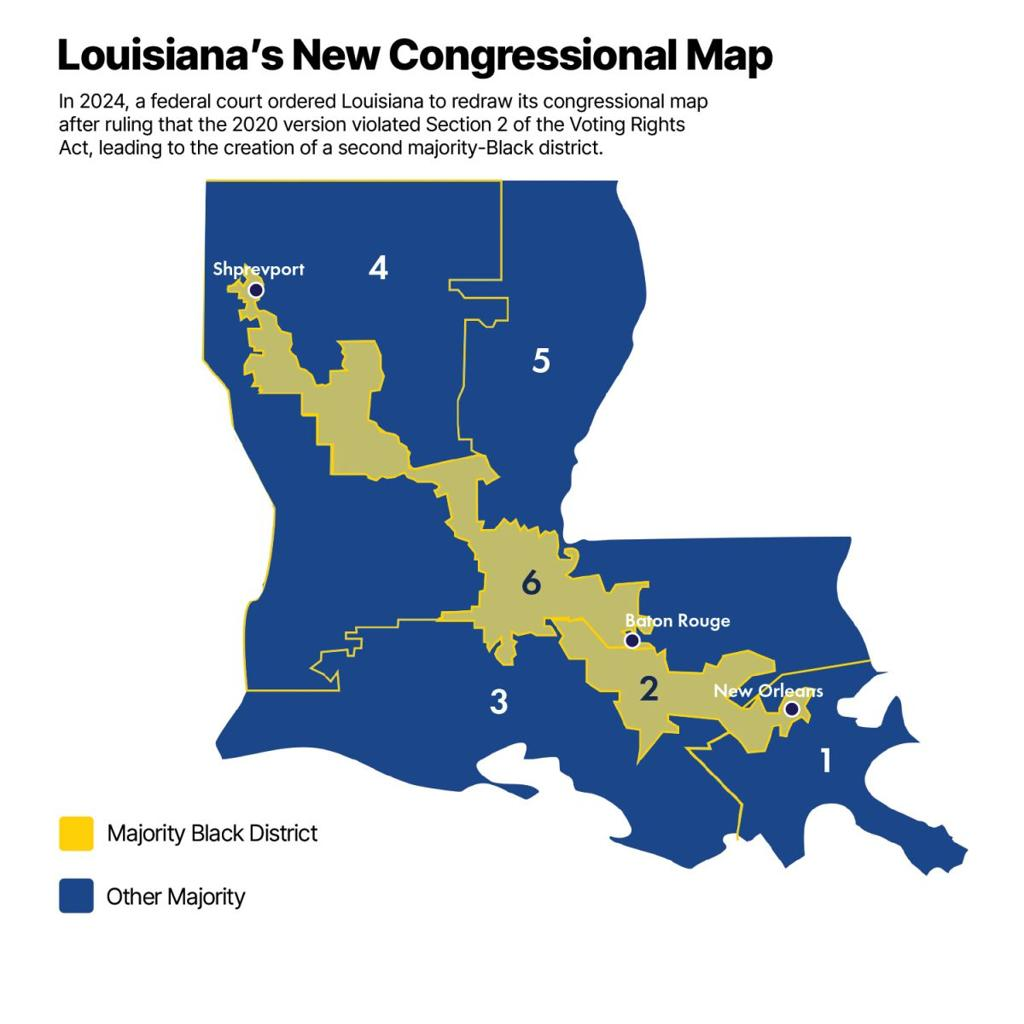
In April, the Supreme Court struck down Louisiana’s second majority-Black congressional district.
The majority concluded that the Voting Rights Act did not require Louisiana to create that additional majority-minority district and that race had been used unconstitutionally in drawing it.
The implications reach far beyond Louisiana.
The decision significantly restricts when states can use race while attempting to remedy alleged vote dilution under Section 2 of the Voting Rights Act.
Supporters of the ruling see an important constitutional principle: government cannot sort citizens predominantly by race without sufficient justification.
Critics see something considerably more dangerous.
Justice Ketanji Brown Jackson warned in dissent that the ruling threatens congressional districts that have given minority voters meaningful political voices for decades.
That disagreement now sits directly underneath America’s redistricting war.
Alabama Shows How Quickly Representation Can Disappear
Alabama provides perhaps the clearest demonstration.
In 2024, Alabama elected two Black members of Congress under its court-ordered map.
That map will not govern the November 2026 election.
After the Callais decision, Alabama moved toward a different map. A lower federal court found the state’s approach intentionally discriminatory and said it diluted Black voting power.
The Supreme Court nevertheless allowed Alabama to use the map for the 2026 election while litigation continues.
The immediate consequence is remarkable.
The additional Black-opportunity district that existed in 2024 is gone for this election.
This doesn’t guarantee which candidates voters will elect. District demographics aren’t election results.
But the structural change is unmistakable: Black Alabamians have fewer districts in which they possess the same opportunity to elect their preferred candidates that existed two years earlier.
That is how quickly redistricting can alter political power.
Texas Is Playing Congressional Tetris
Then there is Texas.
Texas launched the modern mid-decade redistricting scramble in 2025 after President Donald Trump pushed Republican-controlled states to redraw congressional districts ahead of the midterms.
Republicans have described the Texas effort primarily as partisan redistricting designed to improve Republican electoral prospects.
But political affiliation and race overlap heavily in parts of Texas.
Black voters overwhelmingly support Democratic candidates.
That means cracking Democratic districts can simultaneously fracture Black voting blocs.
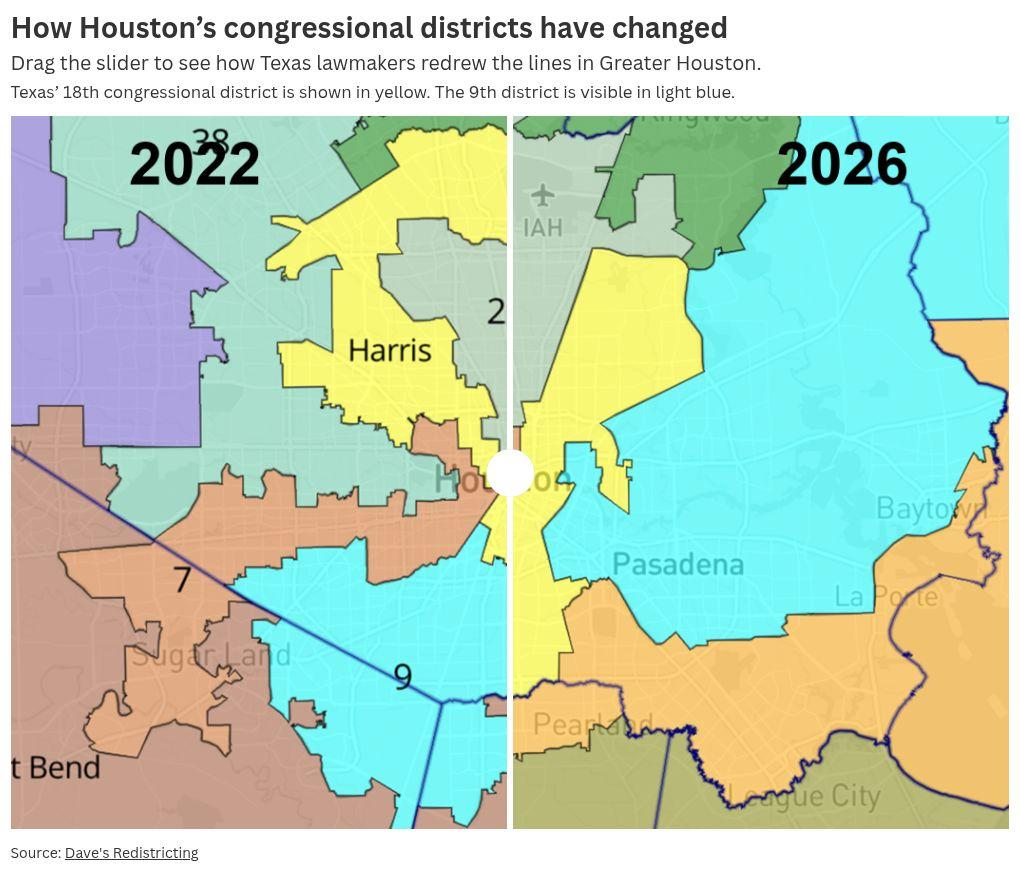
Houston provides a dramatic example.
Predominantly Black communities including Sunnyside and portions of the Third and Fifth Wards were rearranged under the new congressional map.
The redraw also placed Black Democratic incumbents into competition with one another.
That’s the strange alchemy of modern redistricting.
Nobody has to write:
“Reduce Black representation.”
Mapmakers can instead say:
“Maximize Republican seats.”
But where Black voters overwhelmingly support Democrats, the practical consequences can overlap.
Packing and Cracking: Gerrymandering’s Favorite Magic Tricks
Understanding what is happening requires understanding two wonderfully innocent-sounding words:
packing and cracking.
Packing means concentrating a political group into relatively few districts.
Imagine a congressional district that is 80 percent Black.
Black voters there possess enormous influence.
But perhaps they don’t need 80 percent to elect their preferred candidate.
Move some of those voters into neighboring districts and they might influence multiple elections.
Packing can therefore create one overwhelmingly powerful district while weakening the same population everywhere surrounding it.
Cracking does the opposite.
Take a concentrated Black community and divide it among several districts where it becomes a minority in each.
Twenty percent here.
Twenty-five percent there.
Thirty percent somewhere else.
Suddenly a population large enough to control one congressional district may control none.
No votes disappeared.
No voter was disenfranchised.
Everyone can still walk into a polling place.
But political power evaporated through cartography.
The Most Important Number Isn’t How Many Black Politicians Exist
This is where discussions about Black representation frequently become too simplistic.
Having Black elected officials matters.
But descriptive representation and electoral power aren’t identical.
A district doesn’t necessarily need to be majority-Black to elect a Black representative.
Likewise, a Black politician representing a district doesn’t automatically mean Black voters possess decisive electoral influence within it.
The better question is:
Can Black voters meaningfully participate in choosing their representative?
That is what Voting Rights Act litigation has historically attempted to determine.
Coalition districts complicate things further.
In some areas, Black voters can join Latino, Asian or white voters to elect candidates they prefer without constituting a numerical majority.
That means simply counting majority-Black districts can underestimate Black political influence.
But ignoring district composition altogether can hide genuine vote dilution.
The mathematics becomes complicated quickly.
The political consequences don’t.
Republicans Say This Is Partisanship, Not Race
Republicans defending these maps make an important counterargument.
Black voters aren’t constitutionally entitled to Democratic congressional seats.
If Republican legislatures redraw districts to maximize Republican representation, they argue, the fact that Black voters disproportionately support Democrats doesn’t automatically transform partisan gerrymandering into racial discrimination.
That distinction matters legally.
The Supreme Court has already ruled that federal courts generally cannot adjudicate claims of purely partisan gerrymandering.
Race is different.
Section 2 of the Voting Rights Act still prohibits electoral practices that unlawfully dilute minority voting power.
So modern mapmakers operate inside an extraordinarily narrow corridor.
They may aggressively pursue partisan advantage.
They may not intentionally discriminate against voters because of race.
But when race and party preference strongly correlate, distinguishing the two can become extraordinarily difficult.
That is precisely why these cases keep ending up before judges.
Democrats Aren’t Above Gerrymandering Either
Republicans aren’t alone in the redistricting arms race.
California responded to Republican redistricting efforts with its own mid-decade congressional map after voters approved Proposition 50 in 2025.
The California map was designed in the context of Democrats attempting to counter Republican gains elsewhere, and it has faced its own legal challenges alleging unconstitutional racial considerations.
That exposes the increasingly dangerous logic consuming both parties:
If they redraw, we redraw.
Texas moves.
California responds.
Another Republican state considers new districts.
Another Democratic state searches for opportunities.
Congressional maps, which Americans traditionally expect to last between censuses, become political weapons capable of being reopened whenever one party sees an advantage.
And voters become pieces on the board.
Black Voters Could Become Collateral Damage
This is where Black America should pay particularly close attention.
The Democratic-versus-Republican scoreboard can obscure what happens underneath it.
A map might produce five additional Republican seats.
Another might produce five additional Democratic seats.
Cable television declares the battle even.
Black political representation may not be.
The Black Belt stretching across parts of the South isn’t merely an electoral statistic.
These communities share histories, economies, institutions and political concerns.
The same is true of historically Black neighborhoods in Houston, Atlanta, Birmingham, Memphis, New Orleans and elsewhere.
Split those communities across enough congressional districts and they can remain numerically large while becoming politically small.
That’s the paradox.
Population is not power.
Organization plus representation creates power.
And district boundaries determine how efficiently votes become representation.
The Voting Rights Act Is Entering Dangerous New Territory
For decades, Section 2 of the Voting Rights Act provided one of the primary tools for challenging maps that diluted minority voting strength.
The Supreme Court’s 2026 Callais decision substantially narrowed the circumstances in which race-conscious districting can be justified.
Supporters believe that moves American redistricting closer toward constitutional race neutrality.
Civil-rights advocates fear it could dismantle minority-opportunity districts across the South.
The next several election cycles will reveal which effect dominates.
But the early evidence already shows that districts created through earlier Voting Rights Act litigation are vulnerable.
Louisiana is reconsidering its configuration.
Alabama has changed maps.
Other states are examining what the new constitutional landscape allows.
This isn’t some abstract law-school debate.
Congressional seats are attached to these doctrines.
So Are Black Voters Winning or Losing?
The answer is frustratingly unsatisfying:
Both have happened.
Earlier Voting Rights Act litigation produced meaningful gains in Black electoral opportunity in Alabama, Georgia and Louisiana.
Those changes coincided with measurable increases in Black voter participation.
But the 2025-26 mid-decade redistricting wave, combined with the Supreme Court’s new restrictions on race-conscious districting, has placed some of those gains under significant pressure.
Texas has fractured established Black political geography.
Alabama has moved away from the two-opportunity-district arrangement used in 2024.
Louisiana’s second majority-Black district was struck down.
And other states are watching closely.
The map is moving underneath Black voters’ feet.
The Real Fight Isn’t Over Maps. It’s Over Power.
Redistricting sounds painfully boring.
Census blocks.
Precinct boundaries.
Population deviations.
GIS software.
Judicial standards.
It sounds like something designed specifically to make normal human beings change the television channel.
That’s precisely why it matters.
Because congressional maps determine how millions of individual votes are converted into 435 seats in the House of Representatives.
Black Americans spent generations fighting for access to the ballot.
But possessing a ballot and possessing political power are not necessarily the same thing.
A community can vote overwhelmingly.
It can organize.
It can register voters.
It can march to the polls.
And if its population has been divided cleverly enough among surrounding districts, it can still struggle to elect candidates it prefers.
That is why the next phase of the voting-rights battle won’t necessarily involve somebody standing in front of a polling place.
It may involve somebody sitting quietly behind a computer screen.
Moving a line.
One precinct at a time.
—Barrington Williams, B1Daily





Leave a comment