—Josh Allen, B1Daily
College football has discovered an interesting definition of financial responsibility.
A coach can make $13 million.
Universities can construct palatial training facilities.
Conferences can sign television contracts worth billions.
But when the athlete producing the touchdowns, ratings and ticket sales finally gets a meaningful piece of the money, suddenly Washington discovers the urgent need for spending limits.
That contradiction sits at the center of criticism surrounding the Protect College Sports Act of 2026.
The bipartisan legislation contains genuine protections for college athletes, including NIL rights, scholarship guarantees, health-care provisions, degree-completion assistance and athlete representation in governance. Supporters, including Sens. Ted Cruz and Maria Cantwell, argue that federal rules are necessary to stabilize a college sports system transformed by NIL and direct athlete compensation.
But buried inside that promise of “protection” is something athletes should examine very carefully:
Congress would put a federal stamp of approval on limiting how much money schools can collectively pay their players.
Yes, There Really Is a Compensation Cap
This isn’t rhetorical sleight of hand.
The Congressional Budget Office says the bill would require schools, conferences, athletic associations and certain third parties to ensure athlete compensation doesn’t exceed the revenue-share cap established through the House v. NCAA settlement.
More importantly, the legislation would permanently extend that cap beyond 2035, when the settlement’s current arrangement is scheduled to expire.
For the current year, the House settlement permits schools to distribute approximately $21.58 million per school, based on 22 percent of specified athletic revenue. The legislation also contains a separate $27.5 million retention mechanism under its updated structure.
The Senate Commerce Committee has been remarkably explicit about what it wants. When announcing revisions in August, the committee said the legislation would ensure a “hard” revenue-share cap and close loopholes by bringing certain associated-entity payments underneath it.
Read that again.
Not a minimum.
A cap.
Why Is the Labor Cost the Emergency?
This is where critics have a point that Congress shouldn’t casually brush aside.
The bill doesn’t impose a comparable ceiling on what schools can pay coaches.
CBO specifically says the legislation “would not cap salaries or require a decrease in compensation” for coaches. Schools generating more than $80 million in athletic revenue would merely have to fund compensation above $500,000 from athletic-department revenue or donations.
And those coaching salaries are enormous.
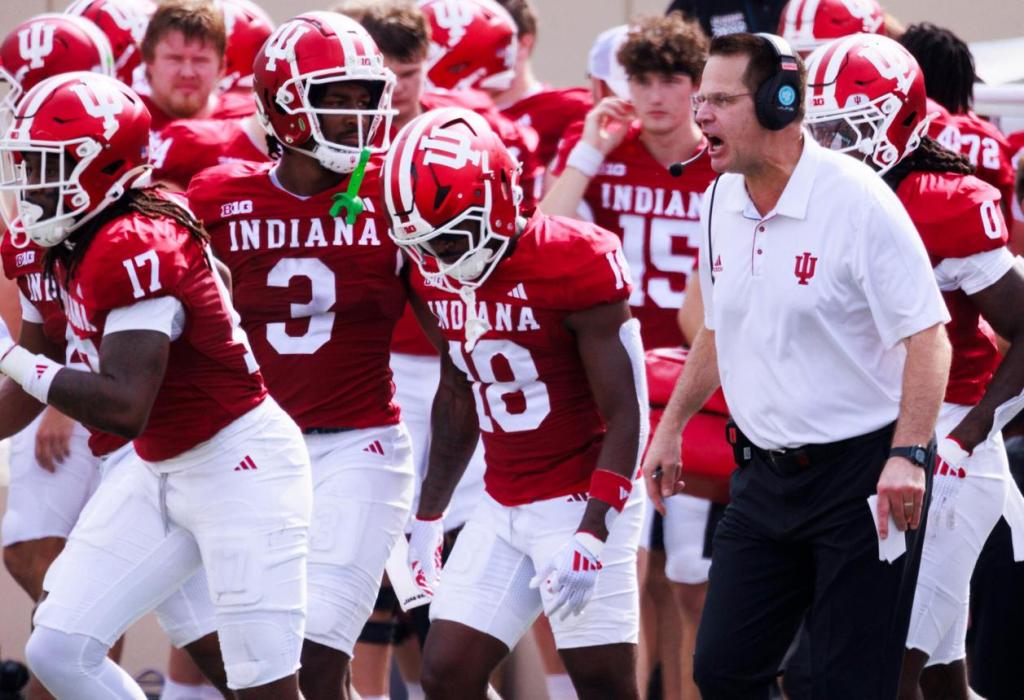
In 2026, Georgia’s Kirby Smart is listed at approximately $13.3 million, while Indiana’s Curt Cignetti and LSU’s Lane Kiffin are each around $13 million.
Apparently, $13 million for one coach can coexist with amateur tradition.
But allowing the market to determine what elite players collectively receive requires congressional intervention.
That is an extraordinary economic double standard.
The Players Are the Product Too
Nobody buys a Saturday ticket to watch the athletic director answer emails.
Television networks aren’t paying enormous rights fees because Americans are fascinated by university accounting departments.
College football and basketball generate enormous commercial value because people want to watch elite athletes compete.
Those athletes train year-round, risk serious injuries and perform under enormous public scrutiny while universities, conferences, broadcasters, sponsors and coaches participate in an industry generating billions of dollars.
Yet for most of NCAA history, direct payment from schools to players was prohibited.
Athletes could receive scholarships, but the NCAA fought for years to preserve restrictions on additional compensation. The legal structure began collapsing through antitrust litigation, culminating in the House settlement that opened the door to direct revenue sharing.
And almost immediately after athletes finally gained meaningful access to the revenue their performances help create, Congress began debating how much of that revenue they should be allowed to receive.
That’s quite a coincidence.
Antitrust Protection Is the Bigger Story
The compensation ceiling becomes even more consequential when combined with the bill’s legal protections.
CBO says the Protect College Sports Act would provide antitrust exemptions covering institutions, conferences and associations enforcing specified rules involving NIL, eligibility and compensation.
That means athletes and other parties would lose some ability to challenge those arrangements under federal and state antitrust law.
This is one reason opponents are furious.
Sen. Chris Murphy has accused colleges, conferences and the NCAA of seeking congressional permission to collude over athlete compensation. He argues that the legislation leaves spending on facilities and coaching largely untouched while restricting the portion flowing to athletes.
Whether one accepts Murphy’s characterization or not, the structural question is legitimate:
Why should universities that compete viciously for coaches, facilities and television revenue receive federal protection for collectively restricting compensation paid to athletes?
In most industries, competing employers gathering together and agreeing to limit employee compensation would immediately raise antitrust questions.
College athletics wants Congress to give its version of that arrangement legal protection.
Black Athletes Have Particular Reason to Pay Attention
This debate also has a racial dimension that cannot simply be ignored.
The Congressional Black Caucus opposes the legislation in its current form, arguing that Black athletes have played an enormous role in building the commercial value of major college athletics while lacking sufficient influence over legislation determining their future economic rights.
The NAACP has joined the opposition.
It estimates that Black men constitute roughly 66 percent of football rosters across the ACC, SEC and Big 12, conferences the organization says generated approximately $16 billion in athletic revenue over the past decade, excluding NIL activity.
That doesn’t automatically make every restriction racially discriminatory.
It does mean restrictions on football compensation can disproportionately affect a labor pool containing enormous numbers of Black athletes.
When Congress writes economic rules governing that workforce, their voices deserve more than a seat somewhere near the back of the room.
Supporters Do Have a Serious Counterargument
The legislation shouldn’t be portrayed as containing nothing for athletes.
It protects athletes’ ability to earn legitimate third-party NIL compensation, regulates agents, establishes scholarship protections, provides post-eligibility health benefits, offers degree-completion assistance and gives athletes representation within college-sports governance.
Supporters also argue that unrestricted spending could push wealthy programs into an arms race that damages smaller sports, women’s athletics and less wealthy universities. The NCAA says national rules are necessary to create stability and preserve opportunities across college sports.
Those are legitimate concerns.
But protecting Olympic sports doesn’t logically require Congress to permanently suppress the market value of football and basketball players.
If universities believe non-revenue sports are valuable educational programs, universities can choose to fund them.
Athletes shouldn’t automatically become the piggy bank.
College Sports Suddenly Loves Capitalism Until Players Get Paid
This is ultimately what makes the compensation debate so difficult to swallow.
College sports has already become an enormous commercial industry.
Coaches negotiate multimillion-dollar contracts.
Conferences negotiate billion-dollar media agreements.
Universities chase sponsorships.
Networks sell advertising.
Boosters pour fortunes into programs.
Nobody tells the television network it has made enough money.
Nobody tells the head coach his economic value must fit underneath a federally protected industry-wide ceiling.
But when the athletes finally gain leverage, the vocabulary suddenly changes.
Now we hear about “stability.”
“Guardrails.”
“Protecting the game.”
“Runaway spending.”
Funny how runaway spending becomes a national emergency precisely when the money starts running toward the people wearing helmets.
The Protect College Sports Act contains provisions that could genuinely improve athletes’ lives. Congress should debate those protections on their merits.
But athletes should not have to surrender economic freedom as the admission price for receiving basic health care, scholarship guarantees and NIL rights.
College athletes spent decades helping build a multibillion-dollar industry while being prohibited from receiving direct salaries from their schools.
Now that the door to compensation has finally opened, Congress should be extremely cautious about helping the industry bolt a salary ceiling directly above it.
If college sports truly wants to protect its players, protecting their right to negotiate the value of their own labor would be a pretty good place to start.
—Josh Allen, B1Daily



 B1Daily
Leave a comment