—Kerry Hill, B1Daily
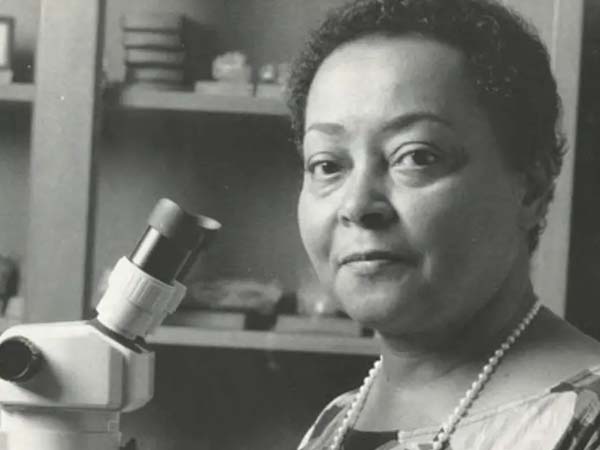
Some discoveries arrive with fireworks. Others rise slowly, like something ancient lifting through dark water. The life of Dr. Joan Murrell Owens belongs to the second kind, a quiet force that reshaped marine science from the margins inward.
A Black American scholar rooted in the Freedmen lineage, Owens built her legacy far from the spotlight. She began as an educator, teaching at institutions that historically opened doors when others slammed them shut. But beneath the lectures and lesson plans, there was a deeper current pulling at her curiosity: the ocean’s forgotten architecture.
A Scientist Who Studied What She Could Not See
Here’s the twist that makes her story feel almost mythic.
Owens was legally blind.
Where many would have stepped away from a field so dependent on visual detail, she leaned in. She developed methods to study coral specimens through touch, magnification, and painstaking analysis, turning limitation into a kind of scientific sonar. Imagine mapping a cathedral in the dark, stone by stone, until the blueprint becomes clear in your mind. That was her process.
Her focus settled on deep-sea button corals, small, easily overlooked organisms that most researchers passed by without a second thought. Owens didn’t pass. She interrogated.
Naming a New Branch of Life
What she uncovered wasn’t just variation. It was entirely new ground.
Owens identified a previously unknown genus of button coral, which she named Rhombopsammia. In taxonomy, that’s not a footnote, it’s a structural addition to how science understands life itself. A new genus redraws the family tree.
She didn’t stop there.
Within that genus, she described three new species, expanding the scientific record and giving form to organisms that had existed for centuries without recognition. Each classification required meticulous comparison, documentation, and verification. No shortcuts. No guesswork. Just disciplined inquiry carving clarity out of obscurity.
Working Against the Current
Owens’ achievements didn’t unfold in a vacuum. As a Black woman in science, particularly in earlier decades, she navigated institutions that were not built with her in mind. Access to resources, recognition, and collaboration often came harder and slower.
Yet she persisted, building a body of work that spoke louder than any barrier placed in her path.
Her career stands as a reminder that innovation doesn’t always come from well-funded labs or elite pipelines. Sometimes it emerges from determination sharpened under pressure, from minds that refuse to be boxed in by circumstance.
Legacy Beneath the Surface
The discovery of Rhombopsammia and its species is more than a scientific milestone. It’s a signal. A marker that the contributions of Black American scholars, including those descended from Freedmen, are etched into the foundations of modern knowledge, even when history tries to overlook them.
Owens didn’t just study the ocean. She expanded it, at least in the way humanity understands it.
And somewhere in the quiet, lightless depths, the corals she named continue their slow, patient existence, carrying her legacy forward one unseen moment at a time.
—Kerry Hill, B1Daily




Leave a comment