—Kel McKnight, B1Daily
Some comics invite you in with a handshake. Spencer & Locke kicks the door open, drags you through a rain-soaked alley, and hands you a case file that smells faintly of trauma and childhood nostalgia.
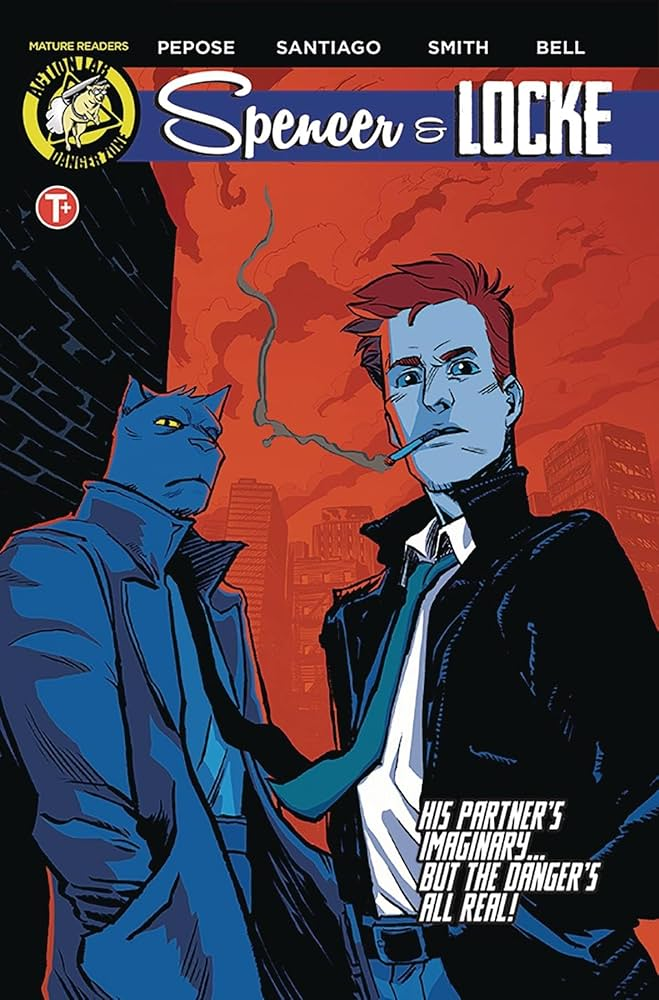
Created by David Pepose, this series is what happens when a hardboiled detective story crashes headfirst into the bright, chaotic universe of a newspaper strip, and refuses to apologize for the collision.
Imagine the emotional DNA of Calvin and Hobbes spliced with the grit of Sin City, then left to simmer in a city where innocence didn’t just fade, it got mugged.
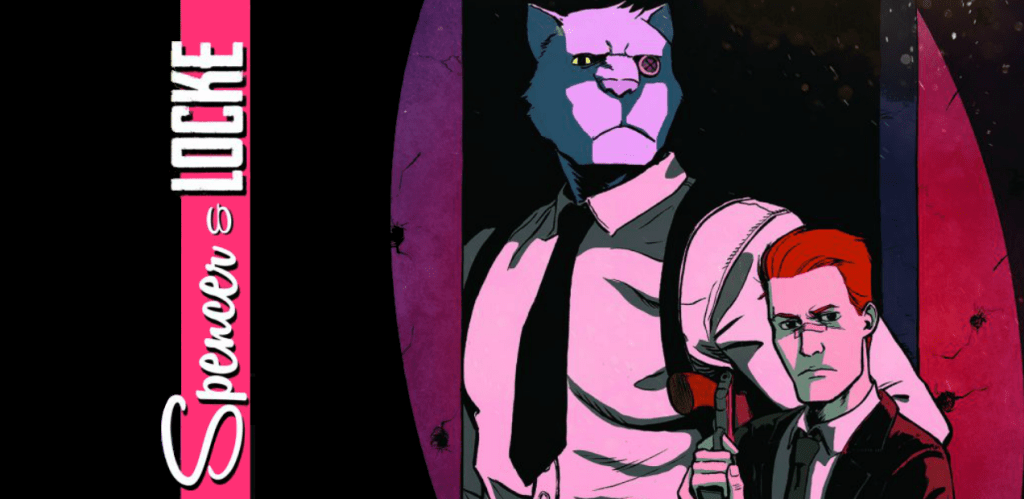
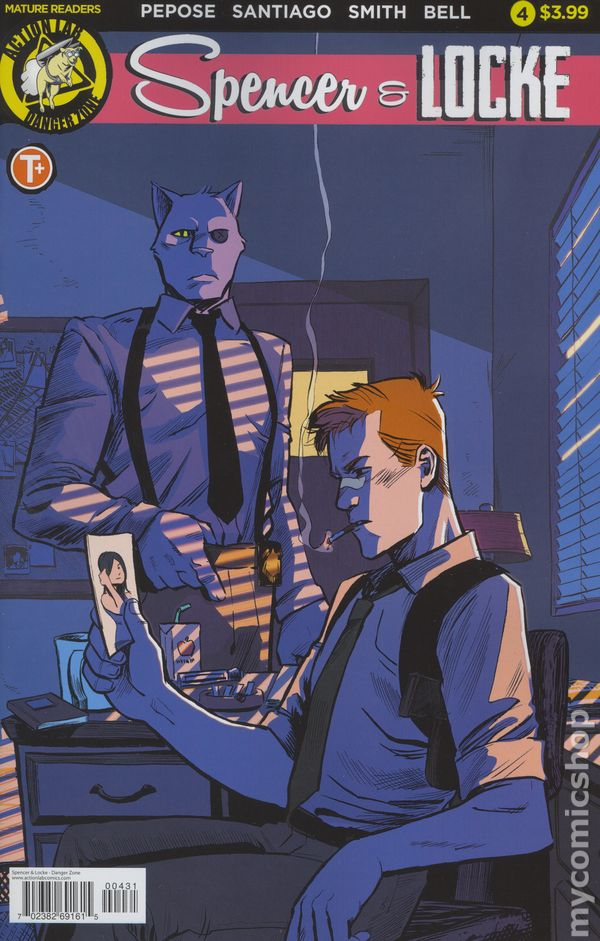
At the center is Detective Locke, a man stitched together with bad memories and worse coping mechanisms, and Spencer, his wisecracking blue panther partner who just happens to be invisible to everyone else. That’s not a gimmick. That’s the key. Spencer isn’t comic relief, he’s a lifeline, a defense mechanism, and possibly the last fragment of a childhood Locke never got to keep.

The mystery itself doesn’t play around. Murders stack up. Clues twist into darker shapes the longer you stare at them. The narrative moves with the confidence of a noir veteran, tossing you into interrogations, crime scenes, and emotional landmines without a safety rail. But the fantasy twist, the presence of Spencer, keeps bending reality just enough to make you question everything. Is Spencer real in any meaningful sense, or is he the only thing keeping Locke from collapsing under the weight of his past?
That tension is where the book shines. It doesn’t just tell a mystery; it weaponizes imagination. Every panel feels like a tug-of-war between brutal reality and the softer, brighter world Locke once knew. The contrast hits hard. One moment you’re staring at a crime scene soaked in shadow, the next you’re watching Spencer inject humor that feels both comforting and deeply unsettling.
Pepose writes with a surgeon’s precision and a street poet’s edge. He understands that the real mystery isn’t just who committed the crime, it’s what happened to Locke long before the first body dropped. Trauma isn’t background noise here; it’s the architecture of the story. And Spencer? Spencer is the graffiti on those walls, colorful, defiant, refusing to be erased.
Visually, the book leans into that duality. The world around Locke is harsh, angular, unforgiving. Spencer moves through it with a kind of elastic charm, bending tone without breaking it. It creates a reading experience that feels unstable in the best way, grounded enough to hurt, surreal enough to haunt.
“Spencer & Locke” doesn’t just remix genres, it interrogates them.
It asks what happens when childhood imagination survives into adulthood not as whimsy, but as armor. It dares to suggest that the line between fantasy and survival strategy isn’t clean, it’s blurred, messy, and sometimes necessary.
This is a mystery comic, sure. There are clues, suspects, reveals. But the real puzzle sits inside Locke’s head, and every issue peels back another layer. By the time the truth starts to surface, it lands with the weight of something personal, not just procedural.
If you’re expecting a lighthearted throwback, adjust your expectations. This isn’t nostalgia, it’s a reckoning wearing a cartoon grin.
And somehow, against all odds, that grin might be the only thing keeping the darkness from swallowing the whole story.
—Kel McKnight, B1Daily





Leave a comment