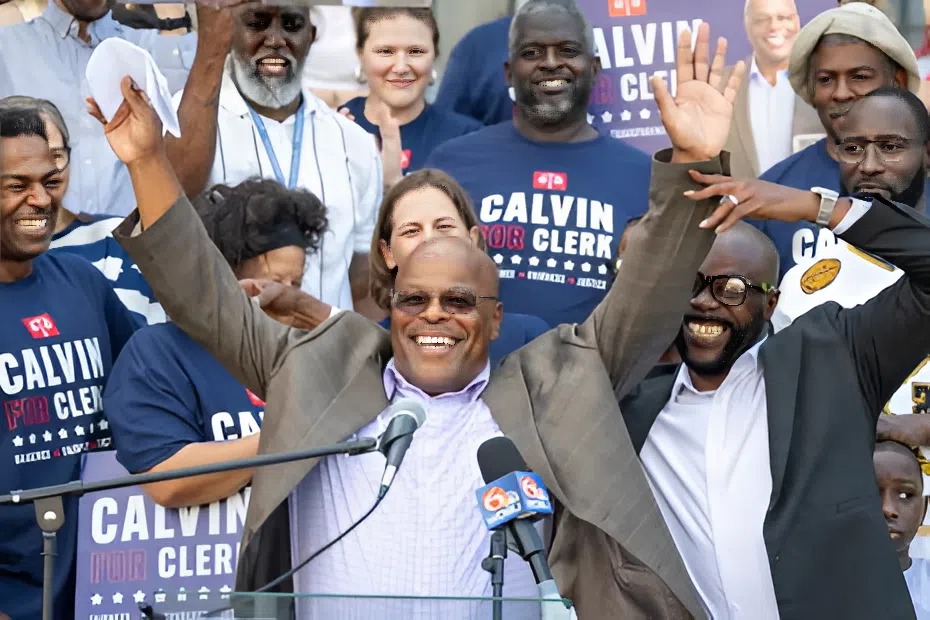
—Barrington Williams, B1Daily
There is something deeply rotten about a state government watching a Black man survive a wrongful conviction, claw his way out of prison, win an election by a landslide, and then suddenly deciding the office itself needs to disappear.
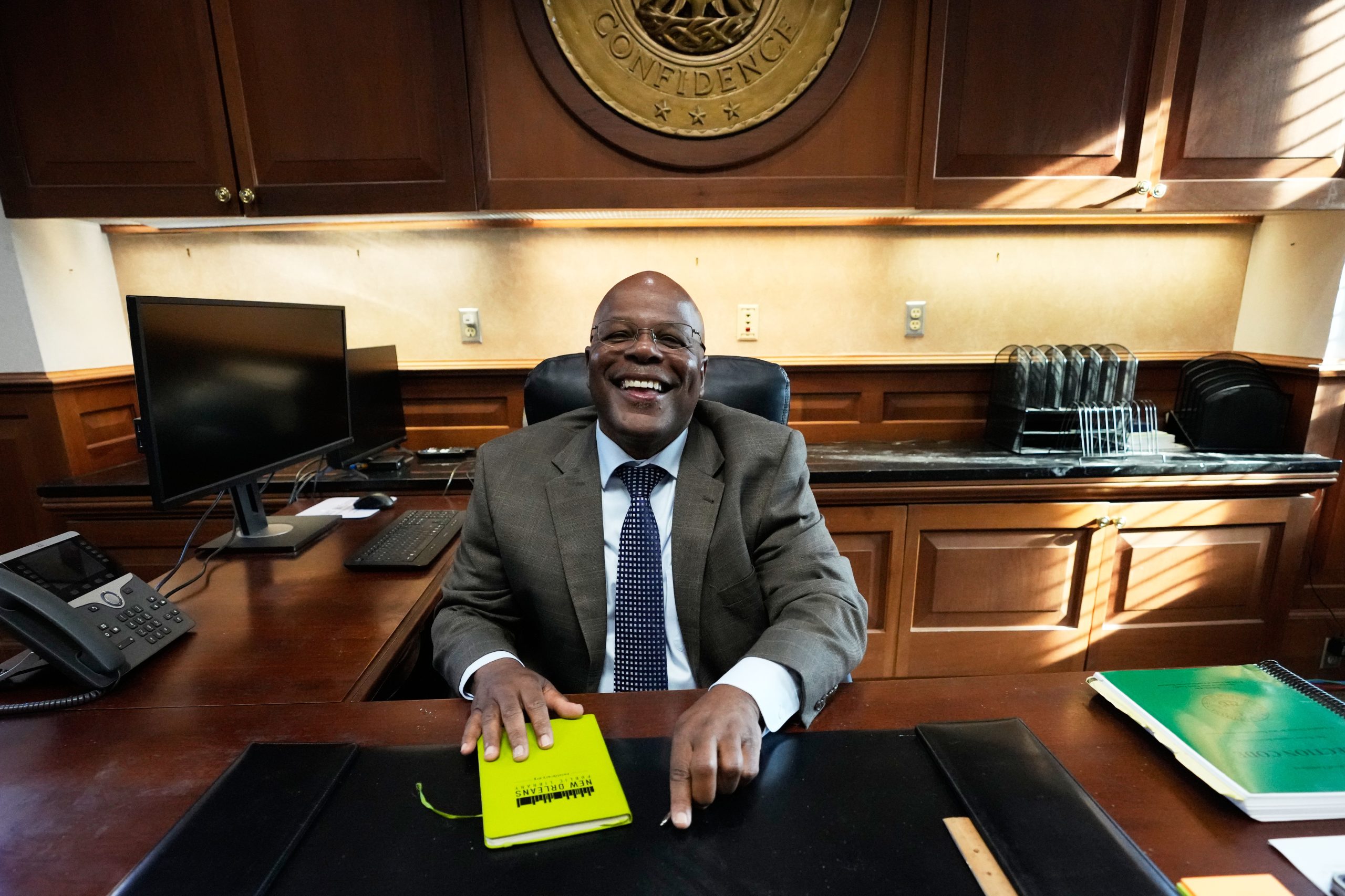
That is the storm now surrounding Calvin Duncan in Louisiana, where a federal judge recently blocked the state’s attempt to stop Duncan from taking the office voters overwhelmingly elected him to hold.
Duncan’s story already reads like a political earthquake cracking through concrete. He spent nearly three decades imprisoned over a murder conviction that was later overturned. While locked inside Angola, he became what many called a “jailhouse lawyer,” teaching himself the law while fighting for access to the very court records that could prove his innocence. Eventually, he won his freedom, became a licensed attorney, and ran for Orleans Parish Criminal District Court clerk. Then the people voted. Hard. Duncan captured roughly 68% of the vote.
And suddenly, the political establishment moved like someone had pulled a fire alarm in the governor’s mansion.
Republican lawmakers, backed by Governor Jeff Landry, rushed legislation through the statehouse to eliminate the very office Duncan had just won. The duties would instead be folded into another office through a court restructuring plan the state framed as “efficiency.” Critics saw something else entirely: a targeted political hit job aimed at preventing one specific Black man from taking power.
That accusation does not exist in a vacuum. Louisiana has already been at the center of ugly national fights over racial gerrymandering, congressional map redrawing, and repeated legal battles involving Black voting strength. Civil rights advocates argue the state has spent years trying to weaken Black political influence while hiding behind procedural language and “administrative reform.”
Now many see Duncan’s case as another chapter in that same playbook.
The timing alone raised alarms across New Orleans. Lawmakers did not wait years to discuss restructuring. They did not gradually phase in reform. They accelerated the process right before Duncan’s term was set to begin. Even proposed amendments that would have allowed him to simply serve the term voters gave him were rejected.
That detail matters. A lot.
Because once the public sees a legislature effectively scrambling to erase an office only after a formerly incarcerated Black man wins it, the optics stop looking like government efficiency and start looking like panic.
Federal Judge John W. deGravelles appeared to recognize that danger when he temporarily blocked the law, ruling that Louisiana’s approach likely violated Duncan’s constitutional rights. But the legal battle immediately turned chaotic after appellate intervention threw Duncan’s status back into uncertainty.
Still, the image remains unforgettable: a man once caged by the system walking into the courthouse as its elected clerk, only to watch politicians try to move the walls around him.
Supporters say Duncan represents transparency, reform, and a challenge to a Louisiana power structure that has long operated like an old riverboat casino, smoky rooms full of insiders deciding whose votes matter and whose victories can be negotiated away. His critics claim the office consolidation is merely administrative modernization.
But plenty of people are not buying that explanation.
Not after the racial tensions surrounding Louisiana’s redistricting wars. Not after repeated court fights over Black representation. And not after the state legislature appeared willing to rewrite the rules at lightning speed the moment Calvin Duncan won.
For many observers, the message feels chillingly familiar:
A Black man can survive prison.
A Black man can clear his name.
A Black man can win the election.
But power still may try to slam the courthouse door before he reaches the desk.
—Barrington Williams, B1Daily





Leave a comment