—Kel McKnight, B1Daily
The Friday franchise has always lived somewhere between neighborhood folklore and pure comedic anarchy. Ice Cube’s original 1995 classic captured South Central Los Angeles with a kind of relaxed authenticity Hollywood rarely gets right anymore. It was funny without trying too hard, quotable without feeling manufactured, and chaotic in the way real neighborhoods often are: loud arguments, bad decisions, porch philosophy, and people somehow surviving another ridiculous day.
Now imagine handing that universe to Aaron McGruder.
That is not just a screenplay assignment. That is like throwing a flamethrower into a cookout and somehow expecting the ribs to come out perfect.
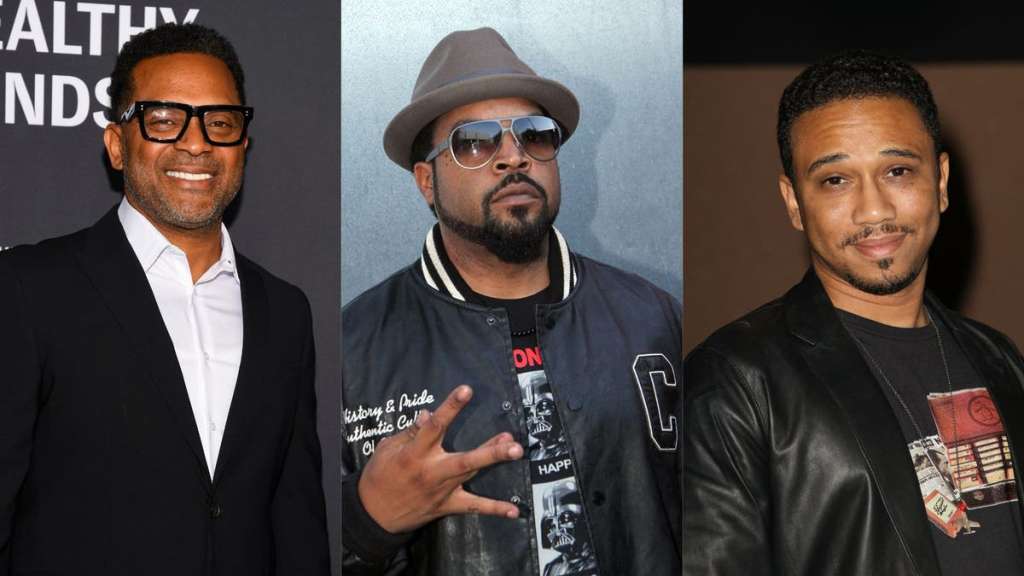
Reports surrounding Last Friday, the long-awaited fourth entry in the franchise spearheaded by Ice Cube, have reignited fan excitement largely because McGruder’s involvement immediately changes expectations. Suddenly this is not just another nostalgia sequel. It becomes something potentially sharper, meaner, smarter, and far more dangerous than a typical legacy comedy.
Because McGruder does not really do “safe.”
The creator of The Boondocks built his reputation weaponizing satire with the subtlety of a brick through a storefront window. His writing thrives on discomfort. Politicians, celebrities, fake revolutionaries, media culture, racial hypocrisy, internet stupidity, capitalism, and Black America’s contradictions all get dragged into the arena. Sometimes elegantly. Sometimes like folding chairs in a WWE match.
That energy mixed with Friday could either become a masterpiece or a beautiful catastrophe.
Honestly, that unpredictability is exactly why fans are excited.
For years, Hollywood legacy sequels have felt embalmed. Studios keep resurrecting classic comedies only to sand off every rough edge until the films feel algorithmically assembled for social media clips. But McGruder’s presence suggests Last Friday might actually have something to say instead of merely replaying old catchphrases for applause.
And there is plenty to talk about.
The world that produced the original Friday barely exists anymore. Gentrification has transformed many historically Black neighborhoods. Social media turned local clowns into influencers. Police surveillance evolved into digital surveillance. Weed culture went corporate. Everybody has podcasts now. Scammers livestream their crimes. Every block has at least one guy trying to become a crypto millionaire from a folding chair outside the liquor store.
A modern Friday written by McGruder practically writes itself.
You can already picture the madness: Smokey returning as a spiritually enlightened conspiracy theorist with a YouTube channel. Deebo becoming a washed-up viral celebrity after prison interviews turned him into an internet folk villain. Craig trapped between middle age responsibilities and neighborhood absurdity that refuses to die. Tiny becoming an Uber driver ranting about AI replacing everybody.
McGruder’s greatest strength is understanding how Black culture mutates under capitalism and media attention. He knows how quickly authenticity gets commodified. He understands the weird performance layer modern society forces onto everyday life. That perspective could give Last Friday something rare for a comedy sequel: relevance.
The challenge, however, is balancing satire with the laid-back chemistry that made Friday beloved in the first place.
The original film worked because it never felt like it was lecturing the audience. It simply existed. The conversations felt overheard rather than scripted. The humor came from recognizable personalities bouncing off each other naturally. McGruder sometimes leans more cerebral and confrontational, which works brilliantly in animation but can become exhausting in live action if not carefully balanced.
Still, if anybody can thread that needle, it may be him.
Especially because modern comedy desperately needs edge again.
The entertainment industry has become bizarrely risk-averse despite pretending to celebrate bold storytelling. Comedies now often feel terrified of offending advertisers, streaming platforms, online outrage cycles, or global markets. McGruder has spent most of his career ignoring those boundaries entirely. His writing style operates like a smoke detector screaming inside America’s cultural living room.
And Friday has always functioned best when it reflects uncomfortable truths underneath the jokes.
The franchise was never really just about getting high on a porch. It was about economic stagnation, survival, neighborhood ecosystems, and finding humor inside pressure-cooker environments. The comedy worked because the circumstances surrounding the characters were often deeply real.
That is where McGruder could elevate Last Friday beyond nostalgia bait.
Not by recreating 1995.
But by exposing what the neighborhood became after thirty years of internet culture, surveillance capitalism, influencer brain rot, rising costs of living, and the endless commercialization of Black identity.
If done correctly, Last Friday could become more than a sequel.
It could become an autopsy report on modern America disguised as a stoner comedy.
Which, honestly, sounds exactly like something Aaron McGruder would write.
—Kel McKnight, B1Daily



Leave a comment