—Travis Luyindama, B1Daily
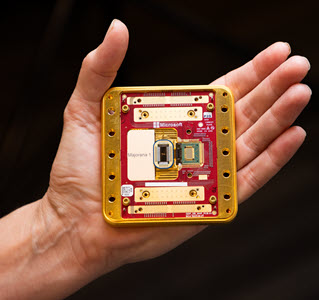
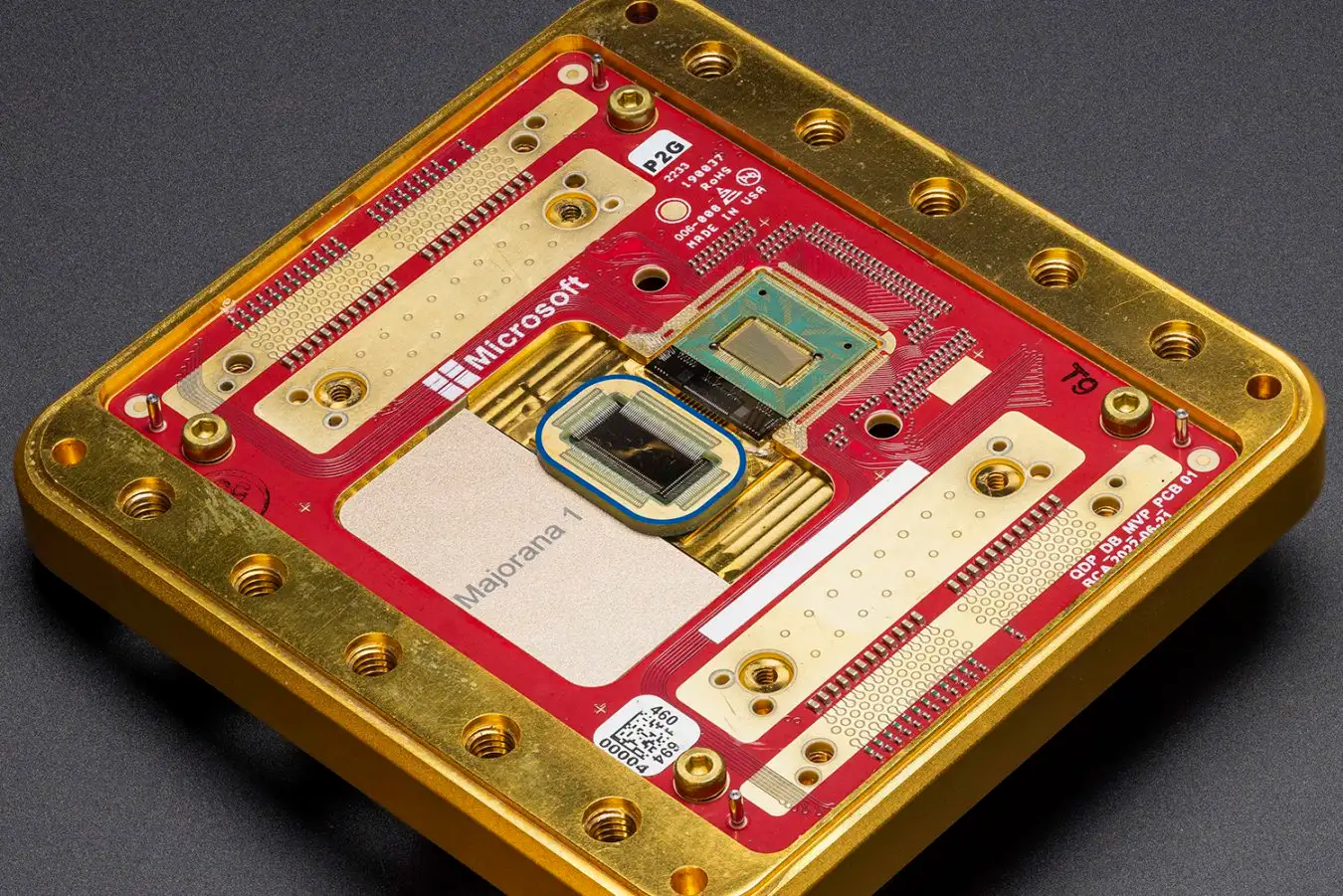
Microsoft’s latest push into quantum computing is centered on a new chip architecture designed around topological qubits, marking a bold attempt to solve one of the field’s longest-standing problems: quantum instability. Developed under Microsoft, this approach aims to make quantum information far more resistant to environmental noise that typically destroys calculations before they can be completed.
At the heart of quantum computing is the qubit, a unit of information that can exist in multiple states at once. While this property gives quantum computers their theoretical power, it also makes them extremely fragile. Heat, vibration, and even stray radiation can collapse their quantum state, forcing systems to rely heavily on error correction just to function. For years, this instability has been the main barrier preventing quantum computers from scaling beyond experimental systems.
Microsoft’s solution focuses on topological qubits, which store information in a more distributed and structurally protected way. Instead of relying on a single fragile quantum state, the information is encoded across a system that is theoretically less sensitive to local disturbances. This concept is closely tied to exotic quantum phenomena such as Majorana states, which are still being actively studied and tested in laboratory environments.
If successful, this design could significantly reduce the need for constant error correction, one of the most resource-heavy aspects of current quantum systems. That would allow more qubits to be dedicated to actual computation rather than maintaining stability, potentially unlocking more practical and scalable quantum machines.
However, the technology remains highly experimental. Quantum computing as a whole is still in a developmental stage, with competing approaches such as superconducting qubits, trapped ions, and photonic systems all vying for viability. Microsoft’s topological approach is particularly ambitious because it attempts to solve the stability problem at the hardware level rather than compensating for it after the fact.
Despite the promise, experts caution that proving consistent, large-scale functionality is the real challenge. Even if early demonstrations succeed, scaling quantum systems to commercially useful levels remains an open engineering problem.
Still, the significance of Microsoft’s work lies in its long-term implications. Even incremental progress in quantum stability pushes the entire industry forward, accelerating research into materials science, cryptography, pharmaceuticals, and complex optimization problems that classical computers struggle to handle.
In the broader picture, Microsoft’s quantum chip effort represents a strategic bet that the future of computing will not come from simply making current systems faster, but from fundamentally changing how information itself is stored and processed at the quantum level.
—Travis Luyindama, B1Daily






Leave a comment