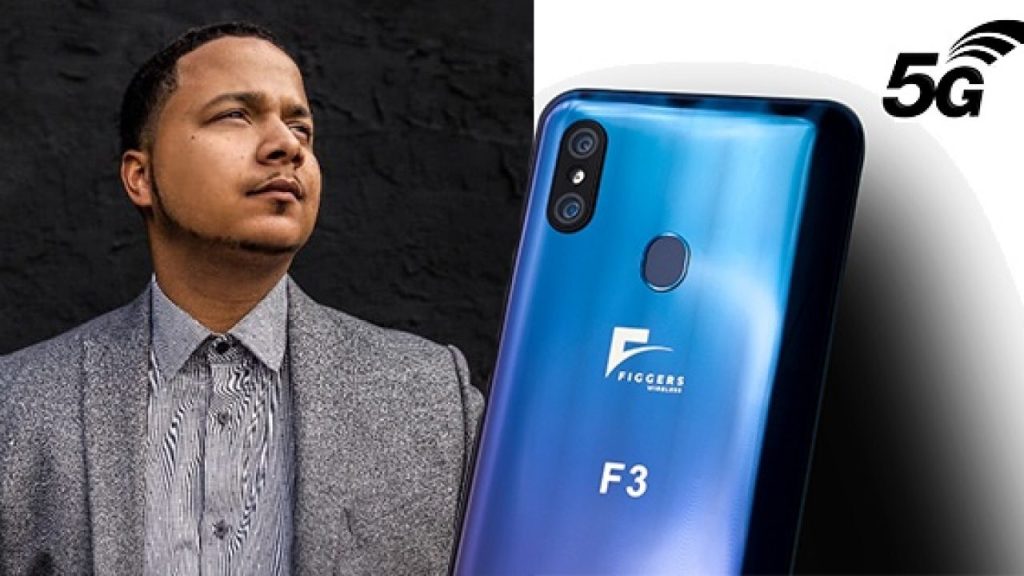
—Michael Lyles, B1Daily
The American wireless industry is often portrayed as a closed club. Three national carriers command the overwhelming majority of subscribers, billions of dollars are spent annually on spectrum licenses and network infrastructure, and entering the market appears financially impossible for anyone outside the Fortune 500. Yet entrepreneur Freddy Figgers has built a business that challenges the assumption that only telecommunications giants can compete.
Rather than attempting to outspend the industry’s largest players, Figgers focused on identifying underserved customer segments while controlling as much of the business ecosystem as possible. His company, Figgers Wireless, illustrates an increasingly important strategy in modern telecommunications: competing through specialization, operational efficiency, and ownership of critical assets rather than sheer scale.
Freddy Figgers’ entrepreneurial journey began long before launching a wireless carrier. Raised in Quincy, Florida, he developed a reputation for repairing electronics at an early age. That technical background became more than a trade. It became the foundation of a business philosophy centered on solving practical problems instead of simply reselling existing products.
Unlike many startup founders who emerge from venture capital incubators or Silicon Valley engineering teams, Figgers built his expertise through hands-on experience repairing phones, computers, and communications equipment. This practical knowledge would later influence every aspect of his business model, from device development to customer support.
Building a Wireless Carrier Without Owning Every Tower
One of the biggest misconceptions about wireless companies is that every carrier owns every tower customers connect to.
In reality, many smaller carriers operate as Mobile Virtual Network Operators (MVNOs), purchasing wholesale network access from larger infrastructure providers while focusing on branding, pricing, customer service, and specialized offerings.

This dramatically lowers the capital required to enter the market. Instead of spending tens of billions of dollars constructing nationwide radio networks, companies negotiate wholesale agreements that allow them to deliver wireless service using existing infrastructure.
That business model shifts competition away from raw infrastructure spending and toward customer acquisition, operational efficiency, and product differentiation.
For a company like Figgers Wireless, this means management can invest capital into software systems, billing platforms, customer service, marketing, and device innovation rather than duplicating expensive nationwide networks.
Vertical Integration Creates Higher Margins
Perhaps the most interesting aspect of Freddy Figgers’ business strategy is the attempt to control multiple stages of the telecommunications value chain.
Instead of relying exclusively on third-party smartphones, Figgers has promoted proprietary devices under the Figgers brand.
From a financial perspective, this matters.
Selling only wireless subscriptions generally produces recurring monthly revenue but relatively modest gross margins after wholesale network costs.
Selling proprietary hardware creates additional profit opportunities through device sales, accessories, warranties, financing, and ecosystem lock-in.
This strategy mirrors approaches used by larger technology companies that combine hardware, software, and subscription services into a unified customer experience.
Every additional service attached to a customer, whether cloud storage, insurance, accessories, or financing, increases customer lifetime value while reducing customer churn.
The Economics of Monthly Subscribers
Wireless businesses are fundamentally subscription businesses.
Investors typically evaluate carriers using metrics such as monthly recurring revenue (MRR), average revenue per user (ARPU), customer acquisition cost (CAC), customer lifetime value (LTV), and churn rate.
Recurring revenue is especially valuable because each retained subscriber generates predictable monthly cash flow. A customer paying $50 per month who remains with a carrier for four years represents roughly $2,400 in gross service revenue before considering upgrades or additional products.
The challenge is acquiring those customers efficiently.
Marketing, promotions, free devices, referral programs, and customer support all increase acquisition costs. Sustainable growth depends on keeping subscribers long enough for recurring revenue to exceed those upfront expenses.
Owning Intellectual Property
Another important component of Freddy Figgers’ business portfolio has been product development and patented technology.
Rather than relying solely on distribution, Figgers has pursued inventions intended to solve communication problems. Intellectual property can become a significant strategic asset because patents may generate licensing opportunities, strengthen a company’s competitive position, and increase overall enterprise valuation.
For technology companies, patents often represent intangible assets that investors value alongside revenue growth and customer expansion.
Serving Underserved Markets
One recurring theme in Figgers Wireless’ marketing has been accessibility.
Instead of positioning itself exclusively as a premium luxury carrier, the company has emphasized affordable plans, financing options, and service aimed at consumers who may not fit the traditional postpaid customer profile.
This market can include entrepreneurs, small businesses, budget-conscious households, and consumers seeking alternatives to larger carriers.
Large telecommunications companies often optimize for scale, while smaller competitors can be more agile in tailoring products to specific customer segments.
Branding as a Competitive Weapon
In telecommunications, network quality is only one part of the competitive equation.
Brand identity plays an increasingly important role.
Freddy Figgers has cultivated a public image as a self-made inventor and entrepreneur, making his personal story part of the company’s marketing strategy. Consumers are often drawn to founder-led brands because they perceive a stronger sense of authenticity and accountability than they might associate with large corporations.
That founder narrative also generates earned media coverage, reducing dependence on expensive advertising campaigns.
Challenges Facing Independent Wireless Companies
Despite its advantages, operating an independent wireless company remains difficult.
The industry is characterized by thin operating margins, high customer acquisition costs, intense price competition, rapid technological change, constant investment in software, cybersecurity, billing systems, and customer support, and dependence on wholesale network agreements when operating as an MVNO.
In addition, national carriers possess marketing budgets that smaller competitors cannot realistically match.
To survive, independent providers must differentiate themselves through customer experience, pricing flexibility, specialized products, or unique branding.
Looking Ahead
Freddy Figgers’ story demonstrates that entrepreneurship in telecommunications is no longer limited to building cell towers or owning nationwide spectrum licenses. Today’s market allows innovative companies to combine wholesale network access, proprietary technology, subscription revenue, and targeted branding into viable businesses that compete on value rather than size.
Whether Figgers Wireless ultimately grows into a major national player or remains a successful niche carrier will depend on its ability to retain subscribers, expand its service offerings, manage operating costs, and continue building trust in an industry where customer loyalty is notoriously difficult to earn.
For aspiring entrepreneurs, perhaps the most important lesson is not that the wireless business is easy, but that even industries dominated by giants can leave room for focused companies willing to solve problems differently.
—Michael Lyles, B1Daily





Leave a comment