—Gus Aylen, B1Daily
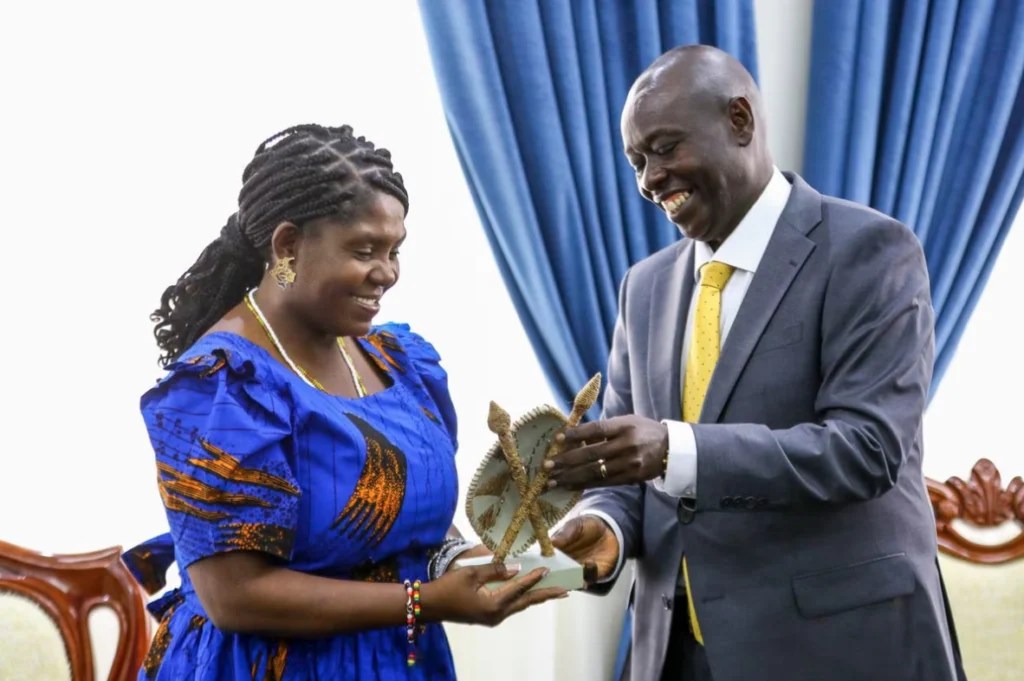
For many political leaders, foreign policy is measured in trade agreements and diplomatic visits. For Colombia’s Vice President, Francia Márquez, diplomacy with Africa has also been about history, identity, and redefining Colombia’s place in the Global South.
Since taking office in 2022 as Colombia’s first Afro-Colombian vice president, Márquez has sought to strengthen relationships with African nations, arguing that Colombia has overlooked the continent despite the deep historical and cultural ties created by the African diaspora. Her visits to countries including South Africa, Kenya, Ethiopia, and Gabon laid the groundwork for expanded cooperation in trade, education, environmental policy, technology, and culture.
Yet while she has earned praise from many advocates of South-South cooperation, Márquez has also become one of Colombia’s most polarizing political figures, facing attacks that many observers describe as deeply rooted in racism, sexism, and class prejudice.
Reconnecting Colombia With Africa
Márquez has consistently argued that Africa should be viewed not simply as the ancestral homeland of millions of Afro-Colombians but as a strategic economic and diplomatic partner.
Her vision goes beyond symbolic gestures.
She has promoted stronger commercial ties with African economies, academic exchanges, environmental partnerships, and cooperation on renewable energy, food security, peacebuilding, and innovation. Supporters say the strategy recognizes Africa as one of the world’s fastest-growing regions and an increasingly important player in global affairs.
Her efforts have continued into 2026 through initiatives such as the CELAC-Africa High-Level Forum, which seeks to deepen cooperation between Latin America, the Caribbean, and numerous African nations.
An Outsider Within Her Own Government
Although Márquez helped energize Gustavo Petro’s successful 2022 presidential campaign, political analysts have frequently described her as an outsider within the governing coalition.
Her political roots lie in grassroots environmental activism and Afro-Colombian social movements rather than Colombia’s traditional political establishment. That independent background has sometimes placed her at odds with influential figures inside government and limited her influence over key policy decisions.
Observers have noted periods in which Márquez appeared sidelined from major political debates despite holding the nation’s second-highest office. The challenges surrounding the Ministry of Equality, which she initially led before leaving the role in 2025, reinforced perceptions that her political agenda often faced institutional resistance.
Racism Beyond Political Criticism
Political disagreement is expected in any democracy.
The treatment directed toward Márquez has often gone much further.
She has been subjected to racist and classist insults that critics say reflect long-standing prejudices against Afro-Colombians. During her rise to national office, some commentators suggested she belonged in domestic service rather than government, while others referred to her in ways that reduced her to “the help” or implied she should remain a maid instead of serving as vice president. Márquez herself has responded by highlighting how those remarks reveal entrenched ideas about race and class in Colombian society.
International human rights organizations have also condemned the racist and gender-based attacks directed at her, arguing that legitimate political criticism should never cross into discriminatory rhetoric.
Why Africa Matters
For Márquez, engagement with Africa is not simply about heritage.
It is also about economics.
She has argued that Colombia should diversify its international partnerships rather than relying almost exclusively on North American and European markets. Africa’s growing population, expanding middle class, and the African Continental Free Trade Area present opportunities for new investment and commercial relationships.
Her supporters believe stronger ties could benefit agriculture, pharmaceuticals, education, renewable energy, tourism, and cultural industries while creating new markets for Colombian businesses.
A Different Vision of Leadership
Francia Márquez entered politics as an environmental activist and community organizer, not as a career politician.
That background continues to shape her approach.
She frequently frames diplomacy around shared experiences of colonialism, environmental justice, racial equality, and cooperation among developing nations. Rather than focusing solely on traditional geopolitical alliances, she has emphasized partnerships based on mutual development and shared challenges.
Whether that vision ultimately reshapes Colombian foreign policy remains to be seen.
A Legacy Still Being Written
Francia Márquez’s political journey has already broken historic barriers.
As Colombia’s first Afro-Colombian vice president, she has expanded the country’s conversation about race, representation, and international engagement.
Her outreach to Africa represents one of the most ambitious attempts in recent Colombian history to strengthen South-South diplomacy. At the same time, the resistance she has encountered highlights the social and political obstacles that can accompany transformational leadership.
Whether remembered primarily as a diplomat, activist, or reformer, Márquez has forced Colombia to confront difficult questions about who gets to lead, whose voices are heard, and how the nation defines its place in an increasingly interconnected Global South.
—Gus Aylen, B1Daily





Leave a comment