—Kerry Hill, B1Daily
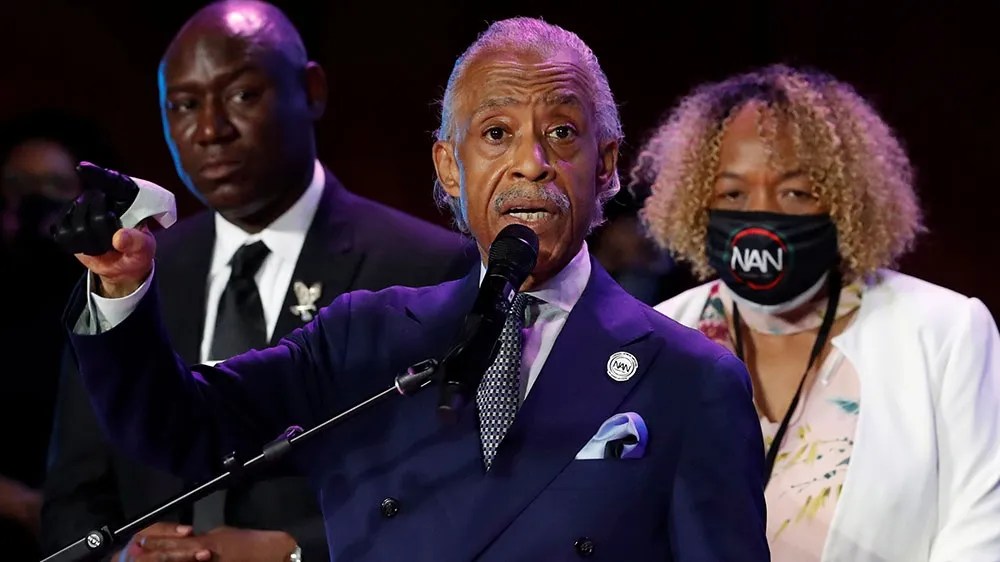
Few debates in modern Black political history ignite as much emotion as the controversy surrounding America’s favorite bootlick, Reverend Al Sharpton, the FBI, and allegations that he attempted to make contact with Assata Shakur during her years as a fugitive.
To critics, the allegations represent one of the most painful contradictions in American activism: a prominent Black civil rights figure allegedly working alongside federal authorities against members of a radical Black liberation movement. To Sharpton and his defenders, the accusations distort his actions, confusing cooperation against criminal organizations with betrayal of political activists.
The controversy remains one of the most disputed chapters of Sharpton’s long and complicated public career.
The Assata Shakur Allegations
Assata Shakur, born Joanne Chesimard, became one of the most controversial figures of the Black liberation era. A former member of the Black Liberation Army, she was convicted in the 1973 death of New Jersey State Trooper Werner Foerster after a shootout on the New Jersey Turnpike. Shakur maintained that she was innocent and argued that her trial was politically motivated.
In 1979, she escaped from prison and eventually received asylum in Cuba, where she has lived for decades.
For law enforcement, Shakur became one of America’s most wanted fugitives.
For many activists, she became a symbol of resistance against what they viewed as systemic racism, government surveillance, and political repression.
That divide set the stage for the controversy involving Sharpton.
The Alleged Contact Attempt
According to accounts from activists and reports surrounding the controversy, Sharpton allegedly attempted to establish contact with members of Black nationalist circles during the years Shakur was underground.
One allegation claimed Sharpton presented himself as someone who had access to $50,000 from supporters that could be provided to Shakur. Critics argued that the offer was an attempt to draw her or her supporters into a controlled interaction.
Activists have also claimed that Sharpton attempted to arrange meetings through intermediaries, including photographer Kwame Brathwaite, and sought opportunities to communicate with individuals connected to Shakur’s network.
The most serious accusations involve claims that Sharpton used recording equipment or devices allegedly provided by law enforcement during interactions with activists and political figures.
These allegations became a source of deep distrust among some members of the Black activist community, who viewed them through the broader history of government surveillance of Black organizations.
The FBI Informant Controversy
The controversy intensified after reports examined documents related to Sharpton’s cooperation with federal investigators.
In 2014, reporting based on FBI records and other investigations renewed debate over whether Sharpton had served as a confidential informant. Some reports identified him as “CI-7”, a confidential source who provided information to federal authorities during investigations.
The focus of those investigations reportedly included organized crime figures and alleged criminal activity.
Sharpton has acknowledged cooperating with law enforcement in certain investigations but has strongly rejected the claim that he was a government operative sent to infiltrate Black political movements or target Assata Shakur.
He has argued that helping investigators pursue criminal organizations does not make someone a traitor or an informant working against their own community.
The Shadow of COINTELPRO
Understanding why the accusations became so explosive requires looking at the history between the FBI and Black political movements.
During the 1950s, 1960s, and 1970s, the FBI operated COINTELPRO, a controversial counterintelligence program that targeted political organizations and activists. The program monitored, infiltrated, and disrupted groups ranging from civil rights organizations to Black nationalist movements.
The FBI’s actions against figures such as Martin Luther King Jr. and organizations like the Black Panther Party created generations of mistrust toward federal law enforcement among many activists.
Because of that history, allegations that a Black activist worked with federal authorities against radical organizations carried enormous symbolic weight.
To critics, cooperation with the FBI represented a betrayal of movements that had already experienced government surveillance and interference.
To supporters, cooperation against criminal activity represented a legitimate effort to protect communities.
A Battle Over Legacy
The Sharpton controversy reveals a larger debate about activism, power, and survival.
Can activists cooperate with government agencies while maintaining independence?
Can someone fight crime without becoming part of a system that historically targeted political movements?
Those questions have followed Sharpton throughout his career.
His supporters point to decades of civil rights activism, including campaigns against police brutality, racial discrimination, and economic inequality.
His critics argue that his history with federal investigators raises serious questions about trust and accountability.
The Unresolved Question
The debate over Al Sharpton and Assata Shakur remains powerful because it sits at the intersection of two deeply emotional histories: the struggle for racial justice and the government’s controversial surveillance of political movements.
The allegations surrounding Sharpton’s contact attempts with Shakur and his cooperation with federal authorities continue to fuel arguments about whether he was a responsible activist working against crime or someone who crossed a line by cooperating with institutions many activists viewed as hostile.
Decades later, the controversy remains a reminder that political movements are rarely simple stories of heroes and villains. They are often filled with conflicts over strategy, loyalty, survival, and the difficult choices people make when navigating power.
—Kerry Hill, B1Daily



Leave a comment