—Barrington Williams, B1Daily
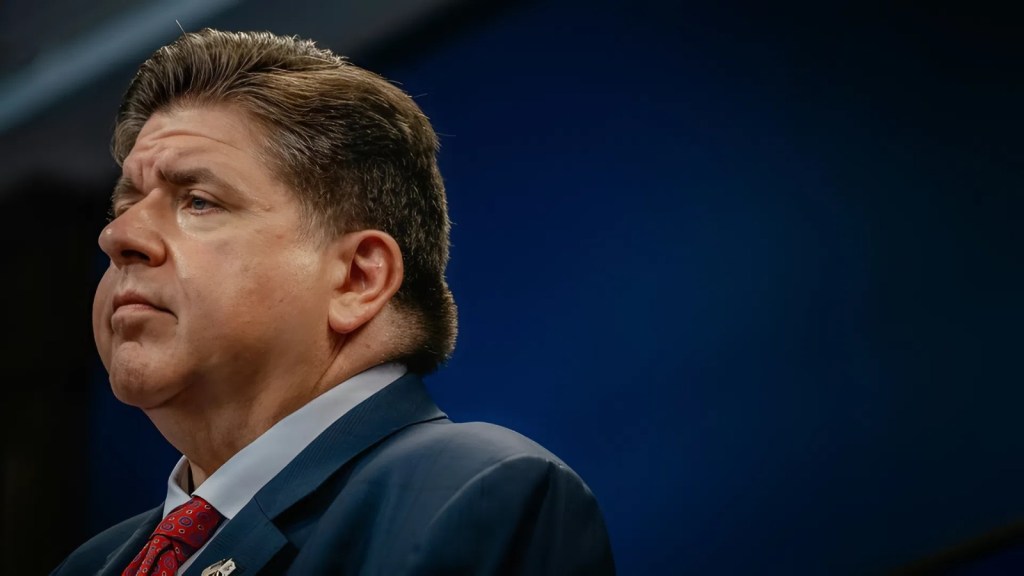
As Illinois Governor J.B. Pritzker weighs a potential 2028 Democratic presidential campaign, few decisions could prove as politically explosive as whether to commute Larry Hoover’s remaining Illinois sentence. After President Donald Trump commuted Hoover’s federal life sentence in 2025, Hoover remains incarcerated solely because of his 150 to 200-year Illinois sentence for the 1973 murder of William “Pooky” Young. Hoover has since sought executive clemency from Pritzker, and the recommendation from the Illinois Prisoner Review Board has reached the governor’s desk.
For many Black voters, particularly in Chicago, the issue is no longer simply about Larry Hoover’s crimes. It has become a broader conversation about redemption, aging prisoners, sentencing disparities, and whether someone who has spent more than five decades behind bars deserves another chance. Hoover’s supporters argue that at 75 years old, after spending over 50 years in prison and with his federal sentence already commuted, continued incarceration no longer serves public safety. Religious leaders, community activists, and public figures have urged Pritzker to grant clemency.
That does not mean Black voters speak with one voice. Many oppose Hoover’s release because of the lasting harm caused by the Gangster Disciples and because Hoover was convicted of murder. Others believe mercy after decades of imprisonment is consistent with criminal justice reform. There is no evidence that commuting Hoover’s sentence would, by itself, secure broad Black support in a Democratic primary, where voters prioritize a wide range of issues including healthcare, economic opportunity, voting rights, education, housing, and policing.
Politically, however, the decision carries symbolic weight. Pritzker has built a national reputation as a progressive Democrat on issues such as abortion rights, labor protections, and LGBTQ+ rights. A clemency decision would place him at the center of another difficult debate: balancing accountability for serious crimes with the possibility of rehabilitation and executive mercy. Supporters would likely praise such a move as an act of compassion and criminal justice reform, while opponents would almost certainly argue that releasing the founder of the Gangster Disciples would demonstrate poor judgment and disrespect for victims.
Whatever Pritzker decides, the Larry Hoover case has become more than a question about one prisoner. It is a test of how Democratic leaders navigate competing values of justice, public safety, redemption, and political risk. Granting clemency could energize some criminal justice reform advocates and some segments of the Black community, but it could also alienate other Black voters and many voters outside that coalition. Denying clemency could reassure those focused on accountability while disappointing supporters who believe Hoover has already paid his debt to society.
In the end, there is no politically painless option. The Hoover decision may become one of the defining moments of Pritzker’s national profile, but it is unlikely to determine Black voter support on its own. Presidential primaries are won and lost on broad coalitions and multiple issues, not a single clemency case.
—Barrington Williams, B1Daily




Leave a comment