—Barrington Williams, B1Daily
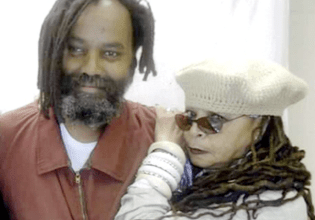
After more than four decades behind prison walls, imprisoned journalist, author, and former Black Panther Mumia Abu-Jamal has taken his fight for freedom beyond the American legal system and onto the international stage.
On July 28, Abu-Jamal’s legal team filed a petition with the United Nations Working Group on Arbitrary Detention, arguing that his continued imprisonment violates international human rights standards and that his conviction was tainted by racial discrimination, judicial bias, and constitutional violations.
For supporters, the filing represents one final effort after years of unsuccessful appeals through Pennsylvania and federal courts. The petition was submitted by the Abolitionist Law Center, the Center for Constitutional Rights, and the American Civil Liberties Union, organizations that argue Abu-Jamal has exhausted virtually every domestic legal avenue available.
Abu-Jamal, now 72 years old, has maintained his innocence since being convicted in 1982 for the 1981 killing of Philadelphia Police Officer Daniel Faulkner. His supporters have long argued that his trial was marred by prosecutorial misconduct, the exclusion of Black jurors, and bias from the presiding judge. Court records and advocacy groups have repeatedly pointed to evidence that prosecutors disproportionately struck Black jurors during jury selection, while critics of the conviction continue to cite the trial judge’s alleged racist statements as evidence that Abu-Jamal did not receive a fair trial.
The case has remained one of the most polarizing criminal justice cases in modern American history. Civil rights advocates, international human rights organizations, labor unions, and legal scholars have questioned the fairness of the proceedings, while the Fraternal Order of Police and the family of Officer Faulkner continue to maintain that the conviction was just and should remain undisturbed.
Although Abu-Jamal’s death sentence was overturned in 2011, he continues serving a sentence of life imprisonment without the possibility of parole. His attorneys argue that permanent imprisonment under these circumstances amounts to arbitrary detention under international law, particularly given what they describe as decades of procedural violations and the inability of U.S. courts to fully address newly disclosed evidence.
From prison, Abu-Jamal has remained a prolific writer, publishing numerous books and essays on race, incarceration, policing, and American democracy. Despite significant health challenges in recent years, including diabetes, heart problems, hepatitis C treatment battles, and deteriorating eyesight, he continues writing and recently completed work connected to his doctoral studies.
The United Nations Working Group on Arbitrary Detention does not have the authority to overturn U.S. criminal convictions. However, its opinions can carry significant international weight, placing diplomatic and public pressure on governments while influencing global human rights discussions. Should the Working Group determine that Abu-Jamal’s imprisonment violates international standards, supporters hope the decision could strengthen future efforts seeking executive clemency, renewed judicial review, or legislative action.
Whether one views Mumia Abu-Jamal as a political prisoner or as someone properly convicted of murdering a police officer, his case continues to provoke intense debate about racial bias in the criminal justice system, prosecutorial conduct, judicial impartiality, and the role of international human rights institutions in reviewing long-standing criminal convictions. The UN petition ensures that, after 44 years behind bars, those debates are once again taking place on a global stage.
—Barrington Williams, B1Daily





Leave a comment