
—Travis Luyindama, B1Daily
Artificial intelligence is no longer a futuristic concept confined to Silicon Valley laboratories. It is writing computer code, assisting doctors, screening job applications, managing warehouses, driving customer service, and increasingly performing work that was once reserved exclusively for humans. The rapid expansion of automation is forcing governments, businesses, and workers to confront a difficult question: Who will benefit from the next industrial revolution, and who risks being left behind?
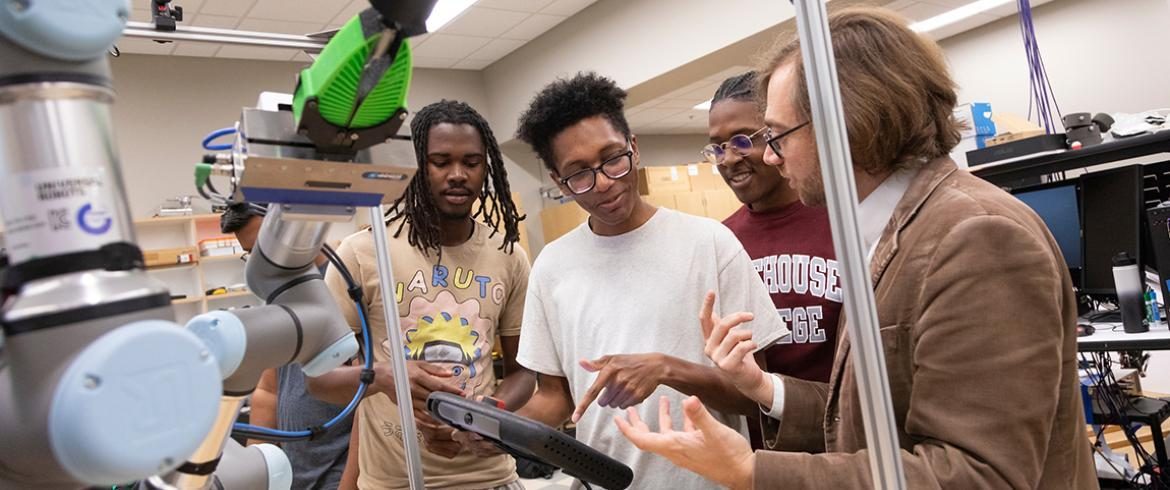
For Black workers, that question carries particular weight.
Black Americans have historically experienced disproportionate disruption during periods of major economic transformation. From exclusion during the Industrial Revolution to discriminatory hiring practices during the twentieth century and the outsourcing of manufacturing jobs that devastated many urban communities, technological change has often widened existing economic inequalities before public policy eventually caught up.
The rise of artificial intelligence presents both a warning and an opportunity. Whether Black communities emerge stronger or further marginalized will depend largely on investments in education, workforce development, entrepreneurship, and equitable access to emerging industries.
Automation Is Reshaping the Labor Market
Automation is expected to affect jobs across nearly every sector of the economy.
Manufacturing, transportation, retail, customer service, logistics, banking, healthcare administration, and even portions of legal and accounting work are becoming increasingly automated.

While automation is expected to eliminate certain tasks, economists generally anticipate it will also create new occupations requiring different skills, including artificial intelligence management, robotics maintenance, cybersecurity, advanced manufacturing, data analysis, and software development.
The challenge lies in the transition.
Workers whose positions are displaced may not automatically possess the education or training necessary to enter these emerging fields.
Black Workers Face Unique Risks
Black workers remain overrepresented in several occupations considered vulnerable to automation, including transportation support, warehouse operations, food service, administrative support, retail, and certain manufacturing positions.
These sectors have already experienced significant investment in robotics and artificial intelligence.
Automation itself is not targeting Black workers.
However, because occupational representation differs across industries, technological disruption may have disproportionate economic effects unless workforce transitions are managed effectively.
This concern has led many labor economists to argue that workforce development policies should pay particular attention to communities facing higher concentrations of automation-sensitive employment.
Artificial Intelligence Could Also Expand Opportunity
The future is not exclusively about job displacement.
Artificial intelligence is lowering barriers for entrepreneurs, freelancers, and small business owners.
Black-owned businesses now have access to AI tools capable of producing marketing campaigns, managing customer service, analyzing financial data, designing products, automating bookkeeping, generating software, and expanding operations at costs that would have been prohibitive only a decade ago.
For entrepreneurs with limited startup capital, these technologies can dramatically increase productivity while reducing operating expenses.
Historically, Black entrepreneurship has often been constrained by unequal access to financing rather than a lack of innovation.
Artificial intelligence has the potential to reduce some of those structural barriers by making sophisticated business tools available to companies of every size.
Education Will Determine Who Benefits
One of the most important factors shaping Black labor over the next decade will be education.
Traditional four-year degrees remain valuable, but employers increasingly emphasize practical skills alongside formal credentials.
Programs in artificial intelligence, cybersecurity, cloud computing, software engineering, robotics, advanced manufacturing, data science, and digital infrastructure are expected to become increasingly important.
Community colleges, Historically Black Colleges and Universities, apprenticeship programs, trade schools, and workforce development initiatives all have opportunities to prepare students for occupations less vulnerable to automation.
Expanding access to these educational pathways could significantly influence future employment outcomes.
HBCUs Have an Opportunity to Lead
Historically Black Colleges and Universities have long served as engines of economic mobility.
Today, they have an opportunity to become national leaders in artificial intelligence education, semiconductor research, robotics, engineering, and emerging technology.
Strategic partnerships with technology companies, federal research agencies, and private industry could position HBCUs at the center of workforce preparation for the next generation of innovation.
Producing more Black engineers, software developers, AI researchers, cybersecurity specialists, and technology entrepreneurs may prove just as important as recruiting students into traditional professions.
Labor Policy Must Evolve
Technology alone will not determine the future of work.
Public policy will also shape economic outcomes.
Lawmakers continue debating issues such as workforce retraining, tax incentives for business investment, portable benefits for gig workers, unemployment insurance modernization, and incentives for domestic manufacturing.
Some economists advocate stronger investments in lifelong learning so workers can continually update their skills as technology evolves.
Others emphasize encouraging innovation while minimizing regulatory barriers that could slow economic growth.
For Black workers, effective policy may require balancing innovation with targeted investments that expand access to emerging industries rather than simply responding after jobs have disappeared.
Ownership May Matter More Than Employment
One lesson emerging from previous technological revolutions is that ownership often creates more lasting wealth than wages alone.
As artificial intelligence reshapes the economy, many financial experts argue that Black Americans should consider not only preparing for AI-related careers but also investing in the companies developing these technologies.
Ownership can take many forms. Investing in publicly traded technology firms. Launching AI-powered businesses. Acquiring intellectual property. Developing software products. Building technology startups. Creating digital platforms.
These opportunities may help generate wealth that extends beyond traditional employment income.
The Next Economy Is Already Arriving
The automated economy is not a distant possibility. It is unfolding today.
Companies are integrating artificial intelligence into hiring, manufacturing, finance, healthcare, logistics, education, and customer service at an accelerating pace.
The question is no longer whether automation will reshape the labor market.
The question is whether Black workers, entrepreneurs, educators, policymakers, and investors will position themselves to lead rather than merely adapt.
History demonstrates that every technological revolution creates winners and losers.
The communities that invest early in education, innovation, ownership, and workforce development often capture the greatest long-term benefits.
For Black America, the future of labor may depend less on resisting automation than on ensuring that the next generation possesses the skills, capital, and opportunities necessary to help build the automated economy rather than simply work within it.
—Travis Luyindama, B1Daily





Leave a comment