—Travis Luyindama, B1Daily
The artificial-intelligence revolution is usually described in the language of clouds.
Cloud computing. Digital infrastructure. Virtual assistants. Machine learning.
The vocabulary makes AI sound weightless, almost magical.
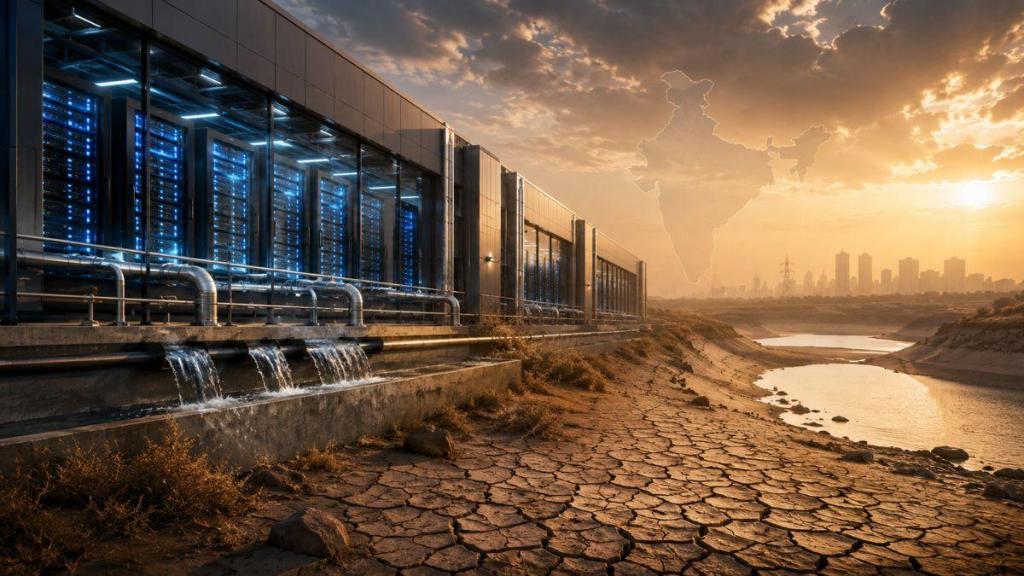
But artificial intelligence does not live in a cloud. It lives inside enormous industrial buildings filled with hot computer processors, cooling equipment, electrical systems and water pipes.
As governments across Africa, Asia and the Middle East race to establish national AI industries, they are confronting an uncomfortable reality: the digital future can be extraordinarily thirsty.
Data centers require water directly to cool computing equipment. They also carry an indirect water footprint because power plants use water to generate the electricity those facilities consume. Additional water is used manufacturing semiconductors and other hardware.
The result is a resource conflict hiding inside the technology boom.
Countries already struggling with drought, unreliable municipal supplies and agricultural water shortages are preparing to host facilities that can consume millions of liters annually.
The AI race may therefore produce a bizarre new form of inequality: communities rationing water while computers drink around the clock.
AI Infrastructure Is Physical Infrastructure
Governments frequently discuss artificial intelligence as though software alone will determine who wins the global competition.
But serious AI capacity requires physical assets.
Data centers.
Graphics-processing units.
Transmission lines.
Power stations.
Cooling systems.
Fiber-optic networks.
Backup generators.
Water supplies.
The servers processing AI workloads generate enormous heat. If that heat is not removed, equipment performance declines and hardware can fail.
Many facilities use evaporative cooling because it can be highly efficient at moving heat. Water absorbs that heat and some of it evaporates, meaning it cannot immediately be returned to the municipal system.
That water consumption may appear manageable when examined as a single facility’s annual total. The pressure becomes more serious when multiple campuses cluster around the same city and demand peaks during the hottest and driest portions of the year.
A 2026 study examining U.S. infrastructure estimated that new data centers could collectively require between 697 million and 1.45 billion gallons of additional daily water-system capacity by 2030 if 2024 water-use intensity continued. Even with substantial efficiency improvements, the researchers projected hundreds of millions of gallons in added capacity demand.
That comparison matters because municipal water systems are not limitless reservoirs.
They are networks of treatment plants, pumps, pipes and storage facilities built around expected demand. A community may possess sufficient annual water in theory while lacking the infrastructure to deliver enormous volumes to an industrial user during a summer peak.
A data center can therefore strain a system without literally draining the local lake dry.
The problem may be the size of the pipe.
The Most Vulnerable Countries Are Being Told to Join the Race
Governments across the Global South have legitimate reasons to pursue AI infrastructure.
They do not want sensitive national data stored entirely overseas. They want domestic computing capacity, technology employment and access to tools that could improve health care, agriculture, education, transportation and public administration.
They also fear digital dependency.
A country without computing infrastructure may become permanently reliant on foreign corporations and governments for access to essential AI services.
That concern has fueled what is often called sovereign AI: the effort to build national or regional computing capacity under domestic control.
More than $200 billion in state-backed sovereign-AI commitments were announced across the Global South between 2024 and 2026, according to recent research examining planned infrastructure in the United Arab Emirates, Bangladesh, India and Africa.
But sovereignty has a physical price.
The same research estimated that a 1,024-GPU cluster using evaporative cooling in the United Arab Emirates could consume more than 30 million liters of water per year. The UAE already faces extreme water stress and depends heavily on energy-intensive desalination.
The contradiction is glaring.
A desert country may burn energy to desalinate seawater, pump that water through an urban system and then consume part of it cooling computers that also require enormous amounts of electricity.
The intelligence may be artificial.
The resource bill is painfully real.
India Shows the Scale of the Coming Conflict
India is one of the world’s most ambitious digital economies, but many of its major data-center markets are already exposed to water stress.
Mumbai, Bengaluru, Chennai and Hyderabad combine rapid urban growth with intense competition among households, industry and agriculture for reliable water supplies.
The country faces a legitimate strategic imperative to expand computing capacity. It also has an obligation to ensure that the expansion does not deepen existing scarcity.
This is where transparency becomes essential.
Communities cannot evaluate the benefits and risks of a proposed facility without knowing how much water it will consume, where that water will originate and whether usage will peak during drought.
A corporation may advertise an annual average that sounds manageable while withholding the maximum daily withdrawal required during extreme heat.
Annual averages can become a magician’s cape.
The infrastructure must still handle the worst day.
Africa Cannot Allow Digital Development to Repeat Extractive Development
The water implications of AI should receive particular scrutiny in Africa.
The continent has repeatedly been promised development through large foreign investments. Too often, communities later discover that profits flowed outward while pollution, land loss and resource pressure remained local.
Data centers are cleaner than many traditional extractive industries, but that does not make them impact-free.
An AI campus may arrive with promises of employment, innovation and global connectivity. Governments may offer tax exemptions, subsidized land and favorable electricity rates.
Yet hyperscale facilities may create fewer permanent jobs than the public expects once construction ends. Meanwhile, households could face higher electricity costs, water-system expansions funded by taxpayers and reduced access during droughts.
That would create a digital variation of an old economic arrangement: the public supplies land, water, electricity and subsidies while private corporations capture the most valuable returns.
African governments should reject that model before the concrete is poured.
Data centers must be required to disclose water usage, finance necessary infrastructure and guarantee that residential supplies will not be sacrificed during shortages.
AI development should expand national capacity, not transform scarce public water into another underpriced export.
Water Use Is More Than Cooling Towers
The direct water consumed inside a facility is only part of the story.
Data centers use enormous amounts of electricity, and electricity generation may itself require water.
Thermal power stations, including coal, gas and nuclear facilities, often withdraw water for cooling. The indirect water footprint associated with supplying electricity to a data center can exceed the water used visibly at the facility.
Analysis cited by The Wall Street Journal found that indirect water consumption associated with U.S. data-center electricity had historically been approximately 12 times greater than direct water consumption.
This means companies can advertise efficient on-site cooling while shifting the water burden elsewhere.
A facility may use relatively little municipal water but consume electricity from power stations drawing heavily from rivers or reservoirs.
Environmental reporting must therefore include both direct and indirect water use.
Otherwise, the accounting becomes a shell game.
The water did not disappear from the footprint.
It merely moved outside the property line.
Location Determines Whether Water Use Is Responsible
A million gallons of water does not carry the same environmental cost everywhere.
A facility located in a water-rich region using reclaimed wastewater may create manageable pressure.
The same facility in a drought-prone region dependent on drinking water could become socially reckless.
Recent research has proposed stress-adjusted accounting that evaluates data-center water consumption according to both location and season. Under this approach, water consumed in a highly stressed basin during the hottest month would count as more environmentally damaging than the same volume consumed where supplies are abundant.
That is a far more meaningful standard than corporate declarations about reducing total water use.
Efficiency ratios can obscure the central question:
Should this facility be using water here at all?
A highly efficient data center built in the wrong location may still be a bad project.
Governments should require climate and water-risk assessments before approving facilities. Those reviews must consider drought projections, population growth, agricultural demand and the resilience of the local water network.
Siting decisions should not be determined solely by cheap land, generous subsidies and access to fiber.
Water availability must be treated as a hard constraint.
Communities Are Being Denied Basic Information
One of the greatest problems surrounding data centers is secrecy.
Local residents may not learn projected water consumption until after agreements are signed. Corporate contracts can contain confidentiality provisions. Public officials eager to announce investment may emphasize construction spending while downplaying long-term utility demands.
In the United States, states are beginning to respond with reporting requirements and restrictions.
Minnesota has adopted requirements related to projected water usage and supply sources, while lawmakers in other states have proposed closed-loop cooling mandates, limits on groundwater extraction and stronger public disclosure.
California researchers have also examined policy options for managing data-center water consumption and protecting communities as the sector expands.
These debates should not be confined to wealthy countries.
Developing nations may face even greater risks because regulatory agencies can be underfunded, municipal infrastructure may already be fragile and governments may feel pressured to accept unfavorable terms to attract technology investment.
A country desperate to participate in the AI economy may agree to resource commitments it would reject in almost any other industry.
That urgency gives technology companies leverage.
Public disclosure takes some of it back.
Water Reporting Must Become Mandatory
Every major data-center proposal should disclose several basic facts before approval.
How much water will the facility consume annually?
What is its peak daily requirement?
Will it use drinking water, groundwater, surface water or treated wastewater?
How much water is expected to evaporate?
What happens during drought restrictions?
Does the facility receive priority over households or farmers?
Who pays for new pipes, treatment plants and pumping stations?
What is the indirect water footprint of the electricity supplying the site?
These should not be treated as proprietary secrets.
Water is a public resource and water infrastructure is commonly financed by the public. Communities have a right to understand how a major industrial customer will affect their supply.
Corporate promises of future conservation should not substitute for enforceable limits.
A pledge is a press release wearing a necktie.
A permit condition has teeth.
Technology Can Reduce the Damage
The water problem is serious, but it is not technologically hopeless.
Closed-loop systems can recirculate cooling water rather than continuously withdrawing new supplies. Air cooling and other dry-cooling technologies can reduce direct water use, although they may consume more electricity and operate less efficiently during extreme heat.
Facilities can use treated wastewater instead of potable water.
Rainwater harvesting may provide supplementary supplies in suitable climates.
AI workloads can also be shifted geographically or scheduled during periods when local water and power systems face less pressure.
Smaller, more efficient AI models may perform many national tasks without requiring the enormous computing clusters associated with frontier-model development.
The Global South should not blindly copy the most resource-intensive technological architecture developed by the wealthiest corporations.
A country does not need to train the world’s largest language model merely to improve public records, translate local languages or assist farmers.
Frugal AI could provide more social value per unit of water, electricity and public money.
The Water-Energy Trade-Off Must Be Acknowledged
Some technical solutions create trade-offs.
Dry cooling saves water but may increase electricity consumption.
Evaporative cooling can reduce power use while consuming more water.
Moving a workload to a water-rich region might increase reliance on a carbon-intensive electrical grid.
There is no universal cooling method that solves every environmental problem.
Policy must account for local conditions.
In a desert region, conserving water may justify greater electricity use, particularly when that power comes from abundant solar energy.
In a water-rich but carbon-intensive region, reducing electricity consumption may be more urgent.
The correct strategy must be determined basin by basin and grid by grid.
This is why a single corporate efficiency score cannot tell the whole story.
The AI Boom Could Widen Water Inequality
Water scarcity is never experienced equally.
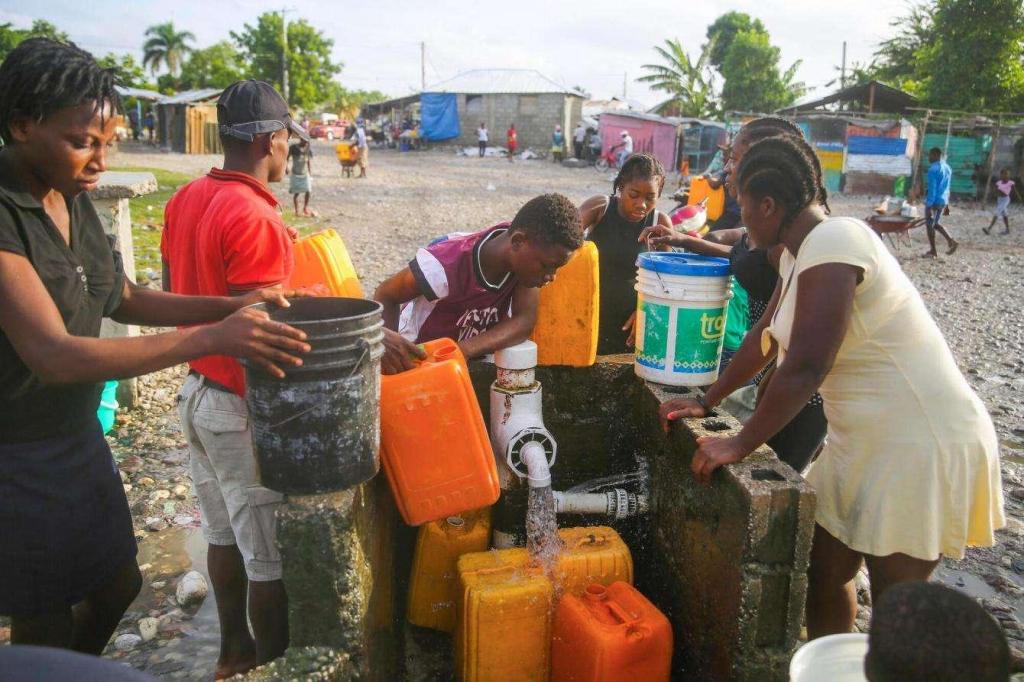
Wealthy neighborhoods can purchase storage tanks, filtration systems and private deliveries. Industries can negotiate guaranteed supplies. Poor communities wait for municipal service or stand in line at public taps.
If data centers receive priority access during droughts, the AI economy could deepen that inequality.
A government might argue that keeping a major technology facility online protects jobs and tax revenue. Families may reasonably ask why machines were considered more economically valuable than their kitchens, schools and clinics.
That conflict is not hypothetical.
It is built into every agreement that promises uninterrupted industrial supply without clearly protecting residential users.
Governments must establish drought rules before shortages begin.
Households, hospitals and essential public services should receive priority. Companies should be required to reduce consumption, shift workloads or activate alternative cooling systems when supplies fall below defined thresholds.
No community should discover during a crisis that its water was contractually promised to a server farm.
Digital Sovereignty Should Not Produce Resource Dependence
The desire for national control over AI infrastructure is understandable.
But a country has not achieved meaningful technological sovereignty if its data centers depend on imported hardware, foreign cloud companies, subsidized electricity and water taken from vulnerable communities.
That is not independence.
It is dependency with a national flag attached.
True digital sovereignty should include domestic skills, public oversight, transparent contracts and infrastructure designed around local environmental realities.
The goal should not simply be possessing GPUs.
It should be ensuring that computing capacity serves the population without undermining the resources that population needs to survive.
The Global South Has a Chance to Set Better Rules
Many countries are still at the beginning of their data-center expansion.
That creates an opportunity.
Governments can establish standards before facilities are built rather than attempting to retrofit accountability after water disputes erupt.
They can require reclaimed water.
They can prohibit potable-water cooling in severely stressed regions.
They can demand publication of monthly and peak consumption.
They can require companies to finance water infrastructure.
They can reject projects proposed for unsuitable locations.
They can promote regional computing centers in areas with renewable electricity and sustainable water supplies rather than encouraging every city to build its own hyperscale campus.
Most importantly, they can refuse the false choice between technological development and environmental protection.
Poorly regulated AI infrastructure is not progress.
It is merely another industry externalizing its costs.
The Cloud Must Be Brought Back Down to Earth
Artificial intelligence is often presented as the engine that will solve climate change, water shortages and agricultural inefficiency.
Perhaps it will help.
But a technology cannot claim to solve resource problems while concealing its own appetite.
The public deserves to know how much water AI consumes, where that water comes from and who will lose access when supplies tighten.
The Global South should participate fully in the digital future. It should build infrastructure, develop local expertise and reject permanent technological dependence.
But it should do so with its eyes open.
Every government signing an AI-infrastructure agreement must remember that data centers are not weightless clouds floating above society.
They are factories for computation.
They consume land.
They consume electricity.
They produce heat.
And increasingly, they consume water in places where every drop already has a claimant.
The next great technological revolution should not be cooled with the drinking water of the people it promises to uplift.
—Travis Luyindama, B1Daily





Leave a comment